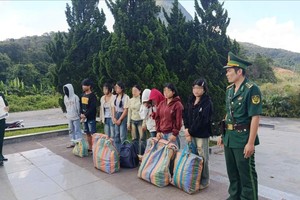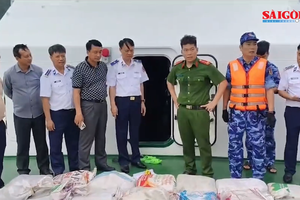
With the discovery of over 11.3kg of narcotics hidden inside the luggage of four female flight attendants, the HCMC Public Security Department established VN10 Case to dismantle a series of syndicates, branches, and sub-branches across various provinces and cities.
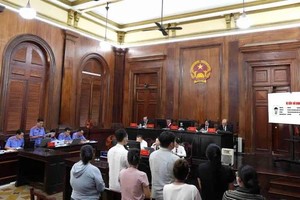
They’ve then initiated legal proceedings for a total of 525 cases involving 3,799 suspects, seizing approximately 667kg of drugs. Among these, 227 defendants involved in 20 cases were recently tried and sentenced by the HCMC People’s Court.
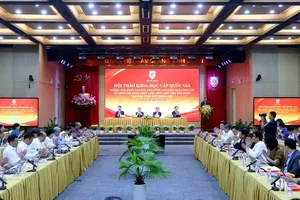
Deputy Head Huynh Thi Ngoc Hoa of the HCMC People’s Procuracy provided deeper insights into the process of exercising prosecutorial power and supervising the trial of this massive case.
When the incident was reportedly uncovered, she and the HCMC Police Investigation Agency Head directly interrogated the four flight attendants to clarify who hired them, the handling of illicit goods, their wages, communication methods, and the ultimate Vietnamese recipients.
By meticulously cross-referencing testimonies with hard evidence, the officials couldn’t firmly establish whether the attendants knew the cargo contained narcotics or had colluded with the syndicate. Consequently, those suspected people weren’t criminally prosecuted.
Using the collected data, authorities relentlessly tracked hirers, recipients, and money trails. This ultimately exposed multiple drug rings, prosecuting 227 defendants across 20 distinct cases.
They’ve adhered to the core principle of maintaining close coordination while ensuring independent supervision to uncover the truth without overstepping responsibilities. Both incriminating and exculpatory evidence must undergo comprehensive scrutiny. They strive to thoroughly penalize criminals, ensuring they don’t miss a single link while never wrongfully accusing the innocent.
Deputy Head Huynh Thi Ngoc Hoa highly commended the HCMC Public Security Department’s investigative results, highlighting their rigorous approach in dismantling this massive drug ring.
From the initial incident, investigators didn’t merely stop at the transporters. Instead, they determinedly traced back to supply sources, masterminds, and distribution outlets. Since many suspects reportedly concealed their roles using encrypted apps, proving their crimes required reconstructing the entire chain of behavior from multiple sources, including digital data, money flows, and physical exhibits.
From a prosecutorial perspective, she firmly believes the most outstanding point is prioritizing evidentiary quality over the quantity of prosecuted individuals. When lacking sufficient grounds, investigators kept verifying facts until they had enough proof for decisive action, ensuring no ringleaders slipped through the cracks. Complex issues concerning incrimination were debated by the investigative agency and the procuracy early on to solidify proof prior to making procedural decisions.
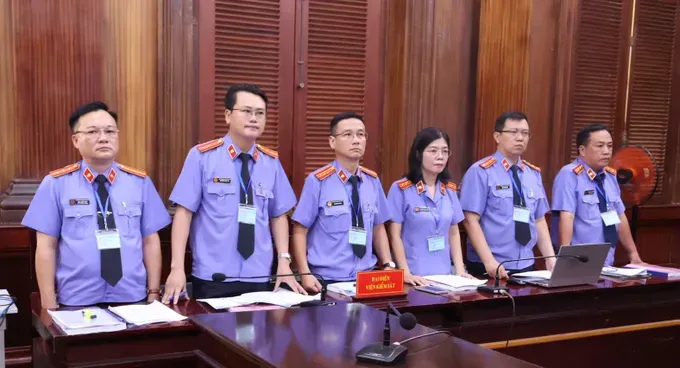
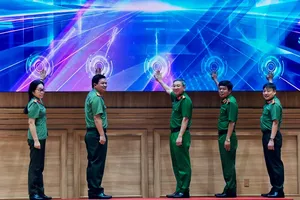
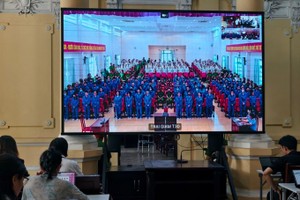
Regarding the aid of digital transformation in studying case files and litigating in court, the Deputy Head shared that VN10 Case encompasses 20 cases and 227 defendants, featuring an exceptionally colossal volume of documents and evidence with numerous intertwined connections.
She’s directed the creation of electronic prosecutorial files, resolutely digitizing and systematizing documents according to each case, defendant, behavioral group, and matter requiring proof, which directly assists prosecutors in rapidly retrieving data to cross-reference testimonies, transaction records, and forensic conclusions right in the courtroom.
For defendants claiming innocence or altering their testimonies, prosecutors don’t just rely on confessions but systematically compare physical evidence, images, and relevant statements to publicly present and debate at trial, collaborating with the trial panel to unveil the objective truth of the case.
Deputy Head Huynh Thi Ngoc Hoa stressed the challenges that the novel methods and tricks employed by drug criminals pose for the HCMC People’s Procuracy.
Drug crimes are rapidly evolving in their methods and tactics. Illicit substances are routinely camouflaged inside food, electronic cigarettes, and ordinary consumer goods. These culprits exploit apartment complexes and lodging facilities for storage and packaging; they utilize social networks, unregistered accounts, and ride-hailing delivery services to operate while shielding their identities and money trails.
Numerous interprovincial and transnational syndicates operate across multiple tiers and stages, where the involved subjects never meet face-to-face or truly know one another. A significant challenge is that electronic evidence is highly susceptible to alteration, deletion, or overseas storage, so if the authorities don’t promptly seize devices, extract digital data, or audit financial statements, proving the organizational and mastermind roles becomes an incredibly grueling endeavor.
Resolution No. 02-NQ/TU issued by the Executive Committee of the HCMC Party Committee sets a firm goal of striving to build a drug-free city by 2030. The HCMC People’s Procuracy clearly defines its role and responsibility in helping the city actualize this ambitious target.
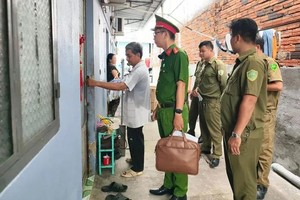
It’s continuing to elevate the quality of handling drug-crime-related intelligence, ensuring timely detection and processing of the right individuals for the right offenses. By closely linking prosecution with investigation, it meticulously supervises arrests, temporary detentions, searches, seizures, sealing protocols, physical evidence appraisals, and expanded probes.
It also aims to expose the entire syndicate, the supply sources, the ringleaders, accomplices, distributors, and financial flows, especially concerning interprovincial, transnational, and cyber-based cases.
Through every single case, the HCMC People’s Procuracy synthesizes the root causes and conditions breeding these crimes to propose effective remedies, significantly contributing to cutting off supply lines, reducing consumer demand, preventing the formation of complicated drug hotspots, and ultimately realizing the ultimate goal of establishing a drug-free city by 2030.