On August 21, the Ho Chi Minh City Party Committee issued Directive No. 20-CT/TU on strengthening Party leadership in the prevention and combat of “street crime” across the city under the new circumstances.
The directive calls for a shift from responding to incidents to proactively preventing “street crime” as the city enters a new development phase.
Ho Chi Minh City identifies crime prevention and control in general, and “street crime” in particular, as an important and regular task.
The city will pursue a policy of “proactive, flexible, continuous, comprehensive and thorough prevention,” starting early and at the grassroots level, including neighborhoods, residential areas and local communities. Authorities will also proactively detect, combat and strictly handle criminal activities.
Relevant agencies are required to promptly detect and address violations such as petty theft, distributing loan advertisements, illegal drug use, illegal waste discharge and the transportation of prohibited goods. The directive stresses that crime prevention is the responsibility of the entire political system, with the police playing a core role.
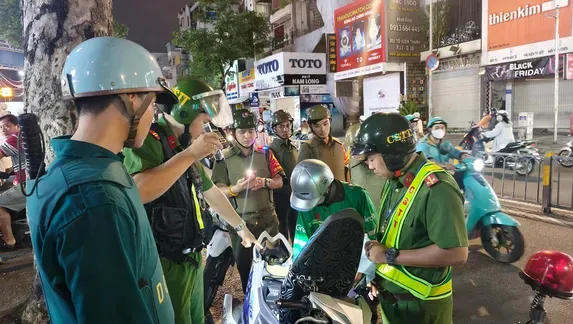
The Ho Chi Minh City Public Security Department are tasked with promptly detecting, investigating and dismantling criminal gangs and groups; eliminating hotspots involving criminal, economic, drug-related and environmental offenses, as well as social vices; swiftly handling cases that cause public concern; and strictly punishing individuals suspected of providing protection or acting as “backers” for criminals.
The city will also strengthen coordination with other provinces and cities, as well as specialized units under the Ministry of Public Security and other ministries and agencies, in the fight against street crime.
Ho Chi Minh City will also leverage science, technology and digital transformation to stay ahead of criminals.
Key measures include developing network surveillance technology centers and databases, expanding digital infrastructure, and applying artificial intelligence, big data, blockchain technology and AI-integrated surveillance camera systems.
The city also plans to develop a data-driven crime prevention system capable of analyzing and forecasting social risks, along with a digital map of security and public order.
Directive No. 20 also calls for stronger social welfare measures for vulnerable groups as part of efforts to prevent crime at its roots. The city will provide compensation and emergency support to families, legal representatives and individuals who suffer loss of life, injury or property damage while helping prevent and combat crime.