The draft Law on Cultural Industry Development is being formulated to remove regulatory bottlenecks, unlock resources, and connect value chains, creating momentum for the cultural industry to become an increasingly vital contributor to the nation's economic growth.
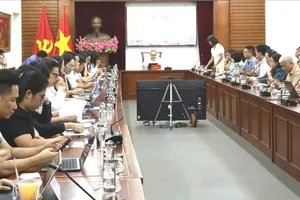
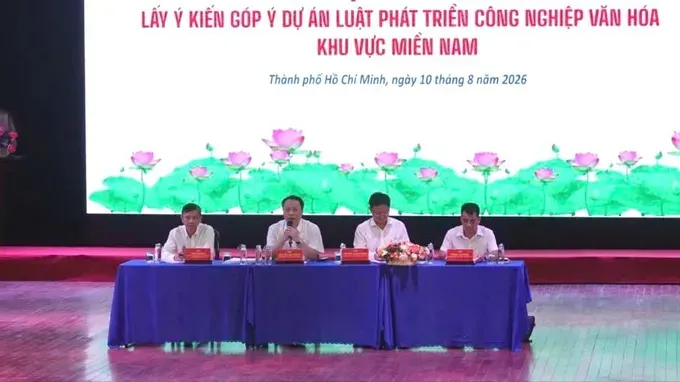
On the afternoon of August 10, at the Ho Chi Minh City University of Culture, the Ministry of Culture, Sports and Tourism hosted a workshop to gather feedback on the draft law.
The workshop was co-chaired by Deputy Minister of Culture, Sports and Tourism Nguyen Huy Dung and Vice Chairman of the Ho Chi Minh City People's Committee Nguyen Manh Cuong. Attendees included representatives from state management agencies, localities, experts, associations, enterprises, educational institutions, and individuals operating in the cultural and cultural industry sectors.
According to the Ministry of Culture, Sports and Tourism, drafting the law concretizes Resolution No. 80-NQ/TW dated January 7, 2026, of the Politburo on developing Vietnamese culture, while implementing directives from General Secretary and President To Lam at the second session of the Central Steering Committee on Vietnamese Culture Development. The draft law is scheduled to be submitted to the National Assembly at its October 2026 session.
During the 2018-2025 period, the cultural industry's share of Vietnam's GDP is estimated at 4 percent to 5 percent, with a target of reaching at least 7 percent of GDP by 2030. Although Vietnam possesses rich cultural resources, a young creative workforce, a market of over 100 million people, and rapid digital economic growth, these potentials remain underutilized.
A primary cause is that regulations concerning the cultural industry are scattered across various specialized laws, mostly governing individual sectors in isolation. There is currently a lack of proactive mechanisms to fully connect the value chain—spanning creativity, intellectual property, capital, production, distribution, revenue, reinvestment, and export.
The draft law aims to establish an intersectoral policy framework, remove obstacles, fill policy gaps, and transform cultural identity into intellectual property, and intellectual property into cash flow generating economic value. It targets three main goals: establishing the cultural industry's position within Vietnam's economic structure; connecting value chains to boost economic value, exports, and strategic investment; and projecting Vietnam's cultural identity, national brand, and soft power internationally.
Fostering the ecosystem and lowering market entry costs
Speaking at the workshop, Vice Chairman Nguyen Manh Cuong emphasized that Ho Chi Minh City views the cultural industry both as a fulfillment of cultural development requirements and as a new growth engine for the economy. Leveraging its market scale, creative workforce, business community, and international connectivity, the city is focusing on building a professional, modern, and regionally competitive cultural industry ecosystem.

Vice Chairman Nguyen Manh Cuong noted that the draft law should be designed not merely to "manage" the cultural industry, but more importantly to "create" the market and development ecosystem. Ho Chi Minh City proposed breakthrough, synchronized, and feasible incentive mechanisms regarding finance, land, urban planning, investment, taxation, administrative procedures, intellectual property, and access to cultural infrastructure. These measures aim to lower market entry costs, encourage investment, and enhance the competitiveness of cultural enterprises.
The city also requested a legal basis to establish and develop cultural industry centers, clusters, zones, and creative complexes, creating a linked ecosystem among artists, creators, enterprises, investors, educational institutions, and the market. Furthermore, the draft should adopt an open approach toward the intersection of culture, technology, the digital economy, and artificial intelligence to accommodate new business models and creative distribution methods.
The draft Law on Cultural Industry Development currently focuses on six major policy groups including the cultural industry ecosystem; intellectual property within cultural industries; human resources and talent; cultural industry infrastructure; the cultural industry market; and financial support and investment incentives.