Director Uong Viet Dung of the Civil Aviation Authority of Vietnam (CAAV) confirmed airports remain fully prepared to handle rogue drones and ensure safety. To have tighter security, the authorities are urged to unify response protocols, invest in advanced detection systems instead of me rely relying on naked-eye verification or manual notifications as they currently do, and implement robust criminal sanctions so they don’t simply just rely on manual visual verification.
Regarding the responsibilities of the air traffic management agency, the Vietnam Air Traffic Management Corporation (VATM) stated that it’s continuously reviewing and perfecting contingency plans for Unmanned-Aerial-Vehicle-related (UAV) scenarios. The corporation is intensely augmenting briefings and practical situational training for air traffic controllers, thereby elevating their capacity to seamlessly detect threats, comprehensively assess impact levels, and select appropriate operational responses whenever risks to aviation activities materialize.
VATM will also continue coordinating and proposing highly suitable technological solutions, state-of-the-art equipment, and responsive organizational plans based strictly on real-world requirements and regulations mandated by competent authorities.
For CEO Azmi Bin Wan Hussin Wan of CT Semiconductor, a CT Group subsidiary, technological innovation remains paramount. He observed that balancing a low-altitude spatial economy with airport safety strictly demands specialized tech solutions. CT Group holds a patent for “Legal compliance control microchip for unmanned aerial vehicles” and is navigating approvals to kick off manufacturing. It’s expected this chip will act as hard infrastructure, ensuring every UAV operating in Vietnam inherently complies with law.
For Mr. Trinh Xuan An from the National Assembly’s National Defense and Security Committee, the unauthorized UAV appearance near Tan Son Nhat International Airport on August 11 is an undeniably grave matter. He asserted it must be taken seriously, not solely for aviation safety, but because it directly correlates with national defense and sovereign airspace protection. As drones become ubiquitous, remarkably smaller, and cheaper, it’s obvious that management methodologies must urgently adapt.
To tackle this, he proposed relentlessly focusing on four solution groups.
- Authorities must manage the issue from its roots, strictly overseeing everything from manufacturing to the ultimate operational usage of UAVs.
- An extraordinary protection mechanism tailored for airport airspace must be established. Consequently, security personnel must be adequately equipped with the overriding authority to swiftly neutralize any drone posing a direct threat.
- It’s crucial to introduce a distinct criminal offense into the Penal Code targeting the illicit utilization of UAVs. In the end, legislation must stay one step ahead to proactively prevent catastrophes.
- Authorities must establish clear management responsibilities and seamless real-time coordination connecting air traffic controllers, military units, and law enforcement. Simultaneously, they must relentlessly track down and decisively penalize rogue operators to the fullest extent of the law.
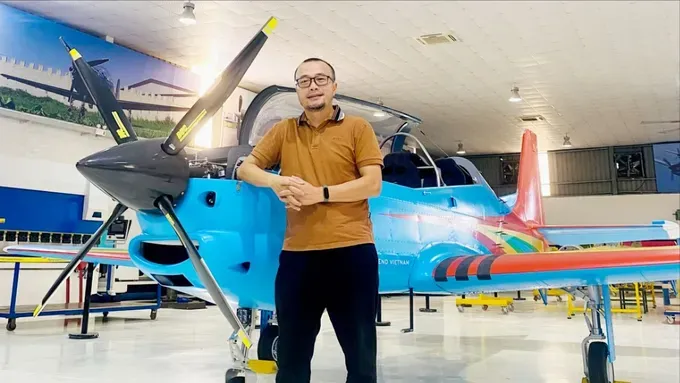
Dr. Tran Thien Phuong, Director of Mismart Intelligent Technology (licensed by the Ministry of National Defense to research, manufacture, test, produce, repair, and maintain UAVs) weighed in on this extremely serious incident, focusing on loopholes in the warning operations at Vietnamese airports that the intrusion blatantly expose.
The UAVs were actively detected hovering at altitudes of roughly 3,000 feet (or 900m) and 1,800 feet (around 550m), and at certain perilous moments, they were a mere 500m away from commercial aircraft. This wasn’t about an ordinary low-flying flycam anymore; this was a rogue target that brazenly encroached into a high-risk zone, creating an imminent threat of mid-air collision with planes actively taking off or landing.
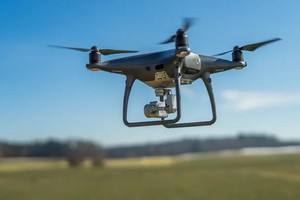
Current aviation radars are predominantly engineered to track massive, high-speed aircraft that continuously transmit identification signals. Conversely, UAVs are notoriously small, fly at sluggish paces, possess the uncanny ability to halt or abruptly alter their trajectories, and can easily be mistaken for birds or generic objects blending into an urban background clutter.
Therefore, the critical loophole demanding immediate remediation is the glaring absence of a specialized, multi-faceted system capable of concurrently detecting, precisely identifying, and persistently tracking UAVs in absolute real time.
The aforementioned incident sends a stark warning to UAV owners regarding their absolute responsibility, even when devices unexpectedly spiral out of control. Therefore, before taking off, it’s imperative to verify whether designated areas permit drone flights.
Operators must refrain from flying near airports, active runways, or restricted airspace without prior authorization. Furthermore, they must double-check altitude limits, flight durations, and requisite permits rather than blindly relying on app maps.
It’s crucial to correctly configure altitude constraints, return-to-home points, and contingency plans for signal losses. They absolutely shouldn’t fly beyond visual lines of sight, operate during inclement weather, or ignore abnormal warnings. Ultimately, operators must register and attach electronic remote IDs when legally mandated.
Concrete actions are required to curb similar incidents in the future. For airports, the immediate priority is constructing real-time UAV detection and tracking systems. According to technical experts, an optimal system should seamlessly integrate three distinct layers of high-resolution radar, radio frequency (RF) reception devices, and electro-optical and infrared (EO/IR) thermal cameras. They definitely shouldn’t rely on a single equipment type.
Relying exclusively on radar makes it difficult to differentiate drones from birds, while RF devices miss autonomous drones, and cameras depend heavily on favorable weather. Furthermore, this multi-layered system needs to connect with Remote ID protocols and an overarching Traffic Management framework to get the ball rolling on mid-air conflict prevention.
Regarding the legal corridor, Vietnam must expeditiously mandate electronic identification for all UAVs. Whenever a drone materializes on radar, functional agencies must instantly pull up its device code, operator identity, location, and altitude. Subsequently, it’s vital to enforce the “no permit, no takeoff” principle.
Authorities desperately need a unified portal for citizens to register drones and submit flight plans. Regulations must be comprehensible so legitimate users comply, while punitive sanctions must remain sufficiently stringent to deter intentional incursions. In the end, ensuring airspace safety requires both cutting-edge technology and robust legal enforcement across Vietnam.