Accordingly, under the Government Decree No. 281/2026/ND-CP, effective August 31, 2026, administrative penalties for land violations are up to VND250 million (US$9,586), giving local authorities an additional tool to respond quickly to violations at the grassroots level.
HCMC wards crack down on illegal land use
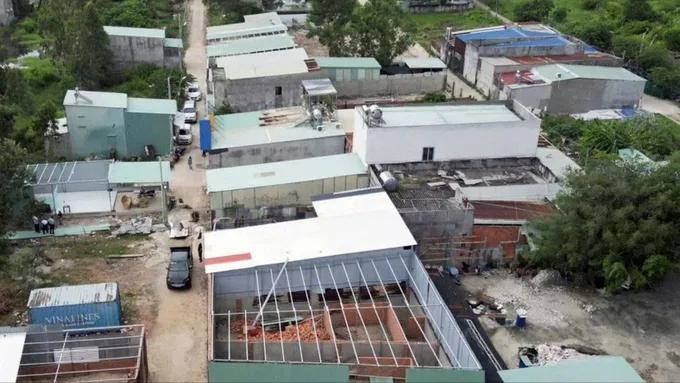
Land management remains complicated in many communes and wards in Ho Chi Minh City, particularly in areas outside the central zone where large land reserves remain and urbanization is accelerating. Unauthorized construction, improper land use and encroachment on public land have become increasingly common, placing significant pressure on local authorities to inspect and handle violations.
The situation in Phuoc Thang Ward illustrates this pressure. During the first six months of 2026, the ward repeatedly conducted inspections and handled violations along routes and in areas where violations frequently occurred, including 30 Thangg 4 (April 30), Vo Nguyen Giap, 2 Thang 9 (September 2), Phuoc Thang, Do Luong and Nguyen Gia Thieu streets.
In the area along Vo Nguyen Giap Street near Long Son intersection alone, the ward recorded 14 cases of encroachment on land managed by the State. In several other land areas, authorities also detected numerous cases of encroachment and illegal construction.
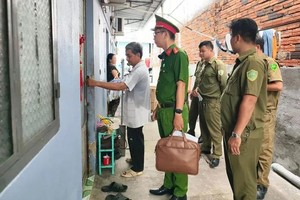
Overall, from July 1, 2025, to date, Phuoc Thang Ward has handled and forcibly dismantled more than 230 structures, including many cases involving encroachment on public land.
Chairman Nguyen Viet Dung of the Phuoc Thang Ward People's Committee said the new regulations would allow grassroots authorities to proactively handle violations throughout the process, from detection and preparation of violation records to issuance of penalty decisions and application of remedial measures. This would improve enforcement effectiveness and help limit violations.
According to the chairman, consolidating the various stages at a single administrative level would have a major impact. However, greater authority would also require localities to prepare their personnel, focusing on improving officials' knowledge, capacity and experience in law enforcement. Local authorities would also need to establish handling procedures and coordination mechanisms among police, military forces and residential areas to ensure inspections, enforcement and supervision are conducted in a strict and coordinated manner.
Cu Chi Commune is also among the localities reporting numerous cases of improper land use and illegal construction on agricultural land.
Ngo Thi Thanh Loan, head of the Economic, Infrastructure and Urban Division of Cu Chi Commune, said some cases involved serious violations in terms of nature and scale. Previously, because the maximum fine that all chairpersons of people's committees in communes could impose was only VND5 million, the locality had to complete the case file and transfer it to an authority with the power to handle the violation.
In practice, the relatively light penalties caused some violators to disregard the law and regulations, reducing the deterrent effect.
Based on preparations to exercise the new authority, Chairman Nguyen Viet Dung of the Phuoc Thang Ward People's Committee said professional support from higher-level specialized agencies was essential.
The Chairman of the Phuoc Thang Ward People's Committee pointed out that continued training and specific guidance were needed for issues that could give rise to differing interpretations. For complex cases, local authorities should also receive professional and personnel support when carrying out enforcement measures to ensure consistent, lawful handling and minimize errors.
Chairman Pham Kieu Hung of the Cu Chi Commune People's Committee said raising the maximum penalty that chairpersons of people's committees in communes can impose on an individual violator to VND250 million was an appropriate adjustment that met the requirements for stronger decentralization and delegation of authority to the grassroots level.
First and foremost, the change would allow people's committees in communes to proactively handle violations within their authority instead of having to transfer case files through multiple levels. As a result, processing times would be shortened, responses would become more timely, and prolonged violations or more complicated consequences could be limited.
Under the new regulations, in addition to the authority to impose fines of up to VND250 million, chairpersons of people's committees in communes may suspend consulting services for up to three months and apply remedial measures as prescribed.
To prepare for implementation of the new regulations, Chairman Phan Ngoc Tuan of the Chau Duc Commune People's Committee said the Commune was reviewing and strengthening its personnel while improving the capacity of officials providing advice and standardizing procedures from inspection, preparation of violation records and verification to identification of violations, determination of penalties and application of remedial measures.
The locality is also strengthening coordination with higher-level specialized agencies to verify land origins, current conditions and legal land records.
Greater powers and stricter discipline required
According to lawyer Nguyen Thi Thu Thuy of the HCMC Bar Association, the new regulations give grassroots authorities, which have direct knowledge of local conditions, additional legal tools to promptly handle violations as they arise. Handling violations locally can also help prevent violations before the acts are completed while reducing the workload for higher-level agencies.
However, the female lawyer pointed out expanded penalty powers also bring greater requirements for power oversight at the grassroots level. If a penalty decision is issued improperly, people's rights and interests could still be affected.
Therefore, along with granting additional authority, authorities need to strengthen transparency and disclosure in violation handling, tighten public-service discipline and order, and increase both regular and surprise inspections to promptly detect and correct violations and prevent abuse of power.
Particular attention should be paid to the capacity of personnel directly involved in advising on and handling violations. Chairpersons in commune people's committees must have sufficient appraisal capacity to ensure that penalty decisions are issued within the proper authority, follow the correct procedures and target the appropriate violators, while also being capable of conducting dialogue and effectively resolving complaints.