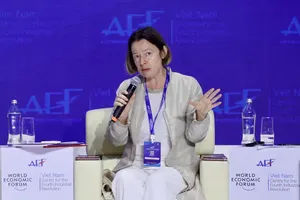
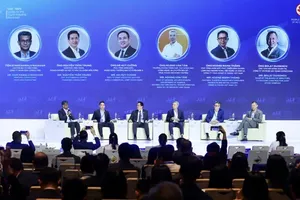
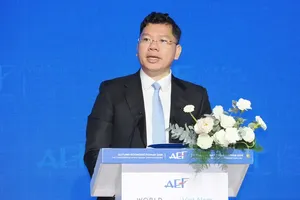
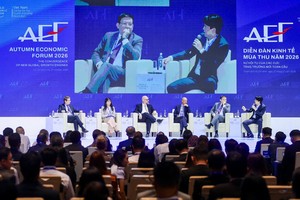
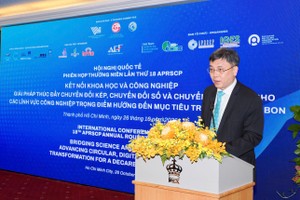
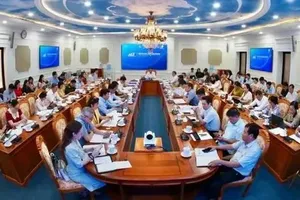
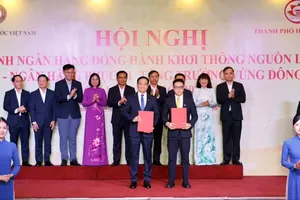
At a conference on "Enhancing International Economic Integration Capacity for the Food, Food Processing and Agricultural Products Sector" held on July 16, the Ho Chi Minh City Investment and Trade Promotion Center (ITPC), in collaboration with the Ho Chi Minh City Food and Food Association (FFA), discussed strategies to strengthen the global competitiveness of Vietnamese food and agricultural businesses.
Opening the event, Ho Thi Quyen, Deputy Director of ITPC, said that Vietnam's agricultural, forestry and fishery exports were estimated at US$35.88 billion in the first six months of 2026, up 6 percent year-on-year.

In Ho Chi Minh City, the food and food processing industry accounts for around 30–35 percent of production value in the Southern Key Economic Region and 14–15 percent of the city's total industrial output. During the first quarter of 2026, the industry's industrial production index rose 12 percent, ranking second among the city's key industrial sectors.
According to her, significant room remains for market expansion thanks to new-generation free trade agreements, particularly the Comprehensive and Progressive Agreement for Trans-Pacific Partnership (CPTPP), which provides substantial tariff reductions. Many CPTPP members have committed to eliminating 97–100 percent of tariff lines on goods originating from Vietnam, creating opportunities for food processors and agricultural exporters to increase shipments, expand market share and strengthen their brands.
However, tariff preferences alone are not enough to secure export orders. Businesses must also meet the specific standards and regulations of each market.
Vietnam still faces challenges, including unstable domestic raw material supplies, a low rate of deep processing, and uneven capabilities in product traceability and supply chain management.
Meanwhile, the European Union, the United States, Japan and other developed markets continue to tighten requirements on environmental protection, labor standards, food safety and origin transparency.
Dang Bui Khue, Senior Advisor at SMP Consulting and Training Company Limited, noted that zero-percent import tariffs do not automatically guarantee market access.

Exporters must comply with regulations on animal and plant quarantine, technical standards, internationally recognized labor rights, environmental protection, biodiversity conservation and the legality of raw material sources. The costs of testing, certification and maintaining compliance systems also place considerable pressure on small and medium-sized enterprises.
To better tap high-potential export markets, Hoang Van Viet, a lecturer at the University of Economics Ho Chi Minh City, said businesses need to shift their mindset from maximizing output to creating value.
He said that the value of agricultural products is created not only during processing but throughout the entire production chain from seed selection and farming practices to harvesting, storage and logistics. International markets recognize that value only when products are backed by quality standards, certifications, traceability data and strong branding.
Green standards have evolved from a marketing tool into a core competitive advantage, he added. Businesses must move from making claims to providing verifiable evidence, shift from one-off transactions to responsible supply chains, and identify the right markets and consumer segments while developing products that match customers' purchasing power.

Nguyen Le Gia Khanh, Senior Account Manager at Amazon Global Selling Vietnam, encouraged Vietnamese businesses to leverage cross-border e-commerce to sell directly to consumers, build their own brands and gain valuable market insights instead of relying primarily on exports of raw products through intermediaries.