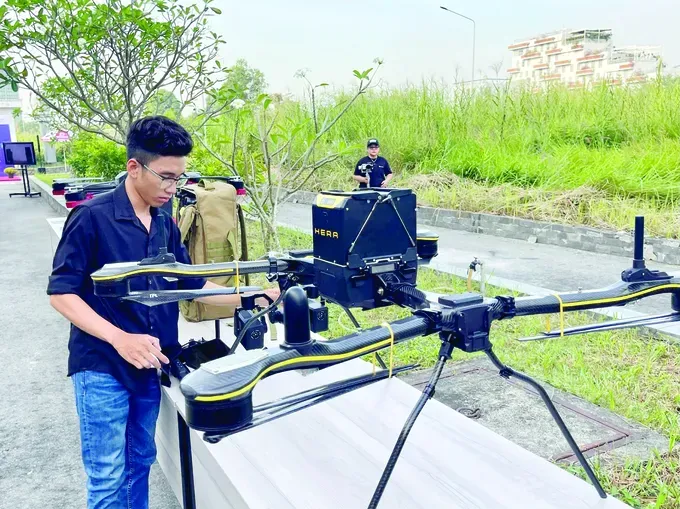
Unmanned aerial vehicles (UAVs) are generating immense value across smart agriculture, logistics, and infrastructure inspection. Soon, low-altitude air transport and urban flying vehicles are poised to evolve into an incredibly lucrative industry.
However, it is this technology itself that can simultaneously spawn monumental risks. A single small-scale UAV can force an international airport to temporarily suspend operations, divert flights, inflict colossal damages, and severely threaten aviation safety. Meanwhile, traditional radar systems aren’t engineered to effectively detect minuscule, low-flying targets.
The core issue clearly transcends simple prohibitions. The pressing dilemma is no longer whether to outright ban UAVs, but rather how to adeptly govern them to concurrently foster innovation while rigidly safeguarding safety.
Singapore’s regulatory approach serves as a remarkably vivid case study. When UAV incursions struck Changi Airport back in 2019, Singapore reportedly didn’t just opt for the simplistic route of merely fortifying its anti-drone arsenal. Instead, the nation meticulously constructed a multi-layered governance framework, spearheaded by a truly distinctive “whole-of-government” mindset.
Rather than allowing individual agencies to manage fragmented tasks, Singapore engineered a unified situational picture. Aviation authorities, police, defense forces, and airport operators seamlessly share data, collectively monitor scenarios, and act cohesively under a rigorously synchronized protocol.
This experience sheds light on three profound lessons:
- Authorities must establish a National UAV Registry and Remote ID framework so each drone possesses a “digital license plate”, enabling officials to swiftly identify the specific UAV, its owner, location, and operational legality.
- It’s crucial to develop a Low-Altitude Airspace Management Platform that integrates UAV identification data, digital geofencing, anti-drone systems, and digital mapping to forge a comprehensive Real-time Airspace Picture.
- A cross-sectoral coordination mechanism must be instituted with crystal-clear protocols dictating exactly who detects, verifies, decides, neutralizes, and investigates suspected items.
Vietnam desperately needs to architect a smart airspace governance system for its national airport network. Existing hubs like Noi Bai, Tan Son Nhat, Da Nang, and Cam Ranh should be incrementally upgraded and connected onto a unified platform. Simultaneously, Long Thanh International Airport must be designed from scratch as a next-generation airport.
This intricate system integrates airport operation centers, air traffic control, UAV defense mechanisms, and AI to conjure a real-time “situational picture” covering all critical airspace. If executed successfully, Vietnam won’t just possess modernized airports, but will also cultivate a world-class smart airspace governance model. This, in turn, ensures security while laying the groundwork for the robust expansion of the UAV economy.
It appears this lesson extends beyond aviation. The pivotal question for any nation will no longer revolve around its sheer capacity for a specific technology, but rather whether that country possesses sufficient governance prowess to exploit it globally. Strategically prioritizing governance remains the ultimate secret for Vietnam to rapidly forge ahead.
Vietnam doesn’t have to invent every new technology, but can emerge as a pioneering nation in governance models across the AI era. To pull that off, authorities must shift from isolating individual sectors to governing integrated systems, and from reacting post-incident to forecasting operations.
Ultimately, Vietnam won’t just accelerate through the AI revolution, but could transform into a trailblazing governance pioneer contributing to fresh developmental benchmarks worldwide.
Boosting public awareness, deterrent penalties
The fact that Tan Son Nhat International Airport was reportedly forced to temporarily suspend operations twice due to illicit UAV appearances on August 11 serves as a stark alarm bell regarding flight safety. In aviation, as a rule of thumb, absolute safety remains the supreme principle.
A single rogue drone encroaching upon critical flight corridors forces air traffic controllers to instantly deploy preemptive measures, ranging from holding patterns to completely halting flights. Therefore, UAVs don’t just threaten mid-air collisions; they trigger cascading operational disruptions across an entire airport.
While strict regulations on no-fly zones exist, current sanctions lack sufficient deterrent power if enforcement remains constrained. Consequently, there's an urgent imperative to intercept threats from afar and implement proactive control. Public awareness campaigns must directly target residential communities surrounding airports so citizens comprehend that seemingly trivial flights unleash catastrophic consequences.
Equally important is the fact that authorities must severely penalize violators to forge a robust deterrent effect. Strict compliance is non-negotiable. Aviation safety simply can’t tolerate the complacent mentality of “just flying for a bit,” “just playing with a flycam,” or “I didn’t think it would affect planes,”. In the end, safeguarding national airspace demands uncompromising legal accountability.
By Pham Duong