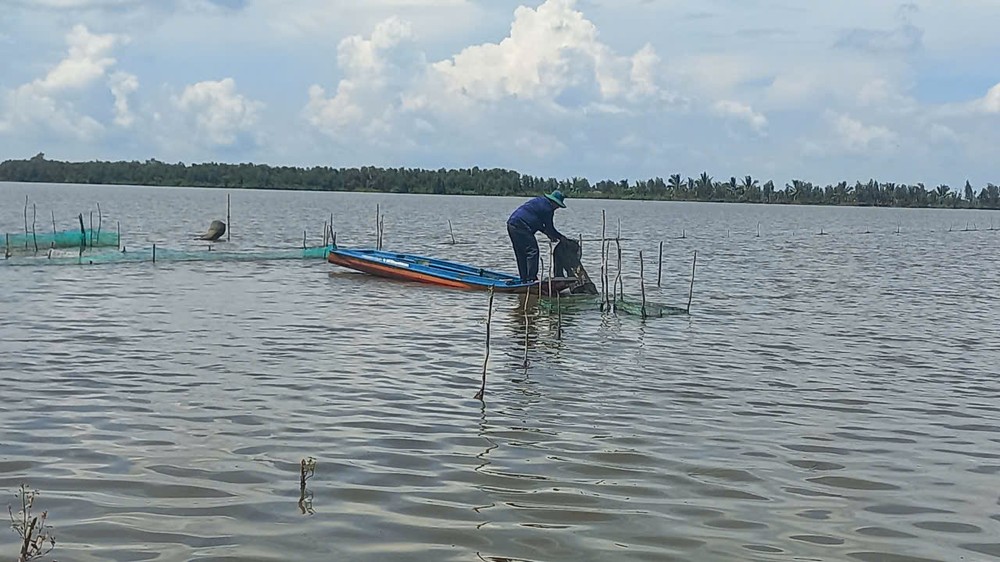
In Vinh Thanh Commune, more than 9,000 hectares are scheduled for sowing in the 2025–2026 winter–spring rice crop. However, with floodwaters draining sluggishly and fields not drying in time, farmers have been unable to prepare the soil as planned.
A similar situation is unfolding in Khanh Hung Commune, where 11,800 hectares are slated for sowing. While farmers in some higher-elevation areas have begun cleaning fields in preparation, most low-lying zones remain submerged 30–50 centimeters and cannot yet be cultivated.
Local agricultural authorities warn that delayed sowing could not only reduce winter–spring rice yields—since flowering may miss favorable weather conditions—but also jeopardize the 2026 summer–autumn rice crop amid the potential onset of drought and salinity.
To address the situation, local governments have been reviewing semi-dike systems, deploying pumps to drain deeply flooded zones, and advising farmers to clean fields, incorporate rice straw into the soil, and manage pests whenever conditions allow. They are also preparing technical support measures to ensure concentrated sowing aligned with the unified production schedule and limit scattered planting.
Under the seasonal calendar, Tay Ninh will begin its third sowing phase for the winter–spring crop from December 5 to 20. Localities hope that water levels continue to fall in the coming days, allowing farmers to begin planting on schedule.