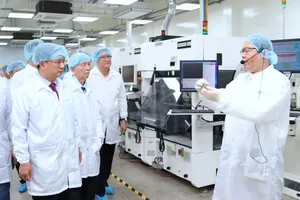
FPT Group has announced a partnership with Mishima Kosan, a leading manufacturing enterprise in Japan, to co-develop a next-generation AI application manufacturing platform and promote innovation through digital technology in production.
The combination of FPT’s AI infrastructure with the MK Solution Cloud platform, operating in a cloud environment, is expected to create a large-scale digital manufacturing platform. This aims to streamline the development process, eliminate the complexity of on-premises systems, and enhance global competitiveness.
“The Japanese manufacturing industry is entering a phase of AI-driven innovation to improve productivity and long-term competitiveness. This cooperation will combine the power of AI, cloud computing, and technical capabilities with extensive manufacturing experience, helping businesses modernize faster, operate smarter, and move towards a new generation of sustainable manufacturing models,” shared CEO Do Van Khac of FPT Japan (under FPT Group).
Viettel AI and Linker Vision, a Taiwan-based company specializing in computer vision and smart city surveillance analytics, have also just signed a cooperation agreement to develop AI solutions for smart cities.
This partnership aims to create urban management solutions capable of visual perception, situational analysis, and instant decision-making, such as traffic safety monitoring, order management, and early risk warning. This is a crucial foundation helping cities gradually shift from a reactive management model to a proactive, data-driven, and AI-based model.
The two sides are also promoting deep cooperation in several key directions, ranging from co-developing AI technologies like computer vision, multi-modal AI, and predictive analytics; assessing the feasibility of localizing Linker Vision's solutions and optimizing algorithms according to domestic technical standards; to strengthening professional exchange and training programs to enhance AI development capabilities for both parties.
“This is a significant opportunity for Viettel AI to expand its capacity to develop AI solutions for smart cities, contributing to solving urgent problems of major cities. This is also a strategic step helping Viettel AI expand its ecosystem and contribute to accelerating the national digital transformation process,” emphasized Director of Viettel AI Nguyen Manh Quy.
Recently, “AI-ization” – the integration of AI into all processes, products, and services to improve efficiency – has become increasingly evident. The progress of AI adoption, which has accelerated and broadened in scope over the last 2-3 years, is driven by several factors.
AI models are becoming more perfect with higher practical applicability; open sources make models readily available, facilitating easy access for many users. Concurrently, hardware power is ceaselessly increasing, capable of processing complex systems; the data explosion helps AI models be trained increasingly better. Furthermore, the extensive digital transformation process within enterprises and organizations has created conditions for AI to deeply penetrate operational activities.
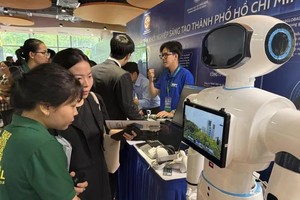
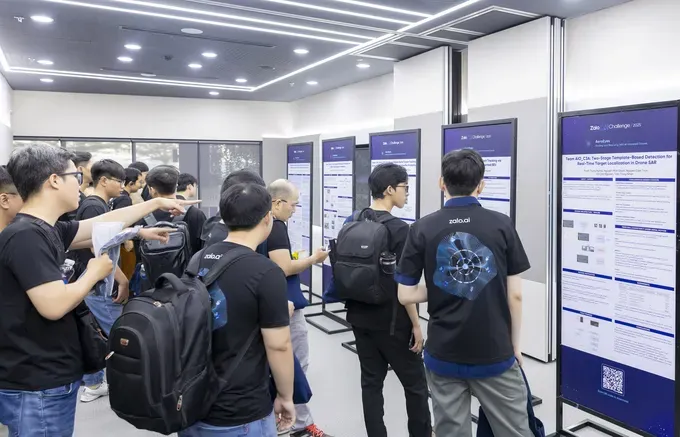
At the Zalo AI Summit 2025 recently held in HCMC, Dr Tran Minh Quan (Nvidia) noted that many major challenges are arising. In the context of increasingly severe personnel shortages, harsh working conditions, and high potential risks, replacing humans in dangerous positions with robots becomes the optimal choice.
Additionally, the trend of shifting factories and production lines to high-labor-cost areas demands a balance in operating costs. Businesses also increasingly desire robots capable of thinking, learning, and adapting without hardware changes.
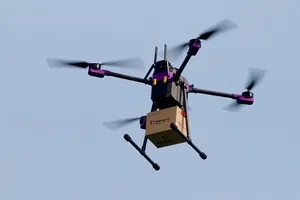
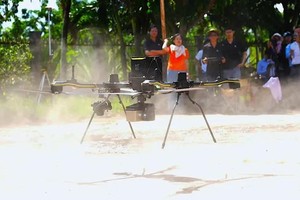
Physical AI is expected to meet these requirements. This new technology can be understood as an AI layer capable of listening, understanding commands, and creating outputs that directly impact the physical world through robots, machines, and automated systems.
Dr Tran Minh Quan predicted that the Physical AI wave will become a trend in the near future. Within the next 5 years, the world may witness a moment akin to “ChatGPT for robotics,” opening a new wave for the manufacturing industry.
According to John Roese, Global CTO and Chief AI Officer at Dell Technologies, AI is accelerating; it will not only change individual processes but also restructure the entire way businesses operate, shifting strongly from testing to practical deployment at scale. To narrow the gap in AI capacity and human resources, a collaborative ecosystem connecting technology, talent, and partners is a prerequisite for enhancing the region's AI competitiveness.