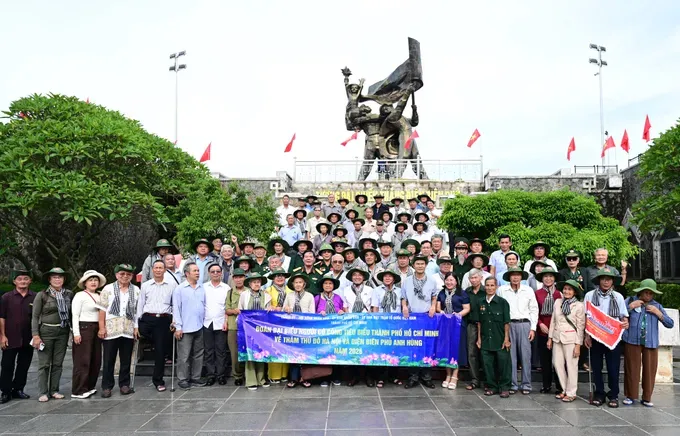
From August 20 to 24, the Ho Chi Minh City Party Committee, People’s Council, People’s Committee and Vietnam Fatherland Front Committee organized a program to revisit historical sites in the Northern region for the city’s outstanding people with meritorious services to the nation in 2026.
The program aimed to honor heroes and martyrs who sacrificed their lives for national independence and freedom, while reminding participants of their responsibility to live in a way worthy of those who fell for the country.
The delegation was led by Pham Van Tuyen, Deputy Director of the Ho Chi Minh City Department of Home Affairs.
The journey took the delegation to the A1 National Martyrs’ Cemetery, Dien Bien Phu Victory Museum, De Castries’ command bunker and the Son La Prison Historical Site.
More than a sightseeing trip, the journey gave former soldiers, wounded soldiers and sick soldiers an opportunity to revisit places associated with the victories and sacrifices of previous generations.
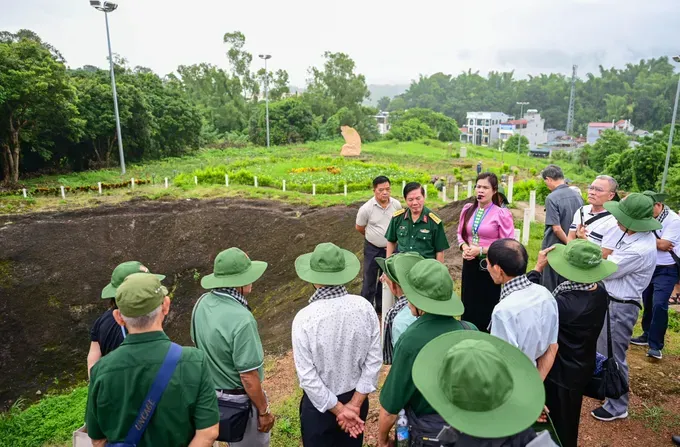
Standing before the crater on A1 Hill, a reminder of the battle on May 6, 1954, when Vietnamese forces dug an underground tunnel and planted a 960-kilogram explosive charge to destroy the enemy stronghold, Pham Hong Te, a wounded soldier from Phu Loi Ward, Ho Chi Minh City, was deeply moved as he visited Dien Bien Phu for the first time.
For the first time, he has visited Dien Bien Phu and learned about the glorious victories of previous generations at the very sites where they took place. He is filled with emotion and pride, fully aware that independence and freedom were achieved through enormous sacrifices. He vowed to live worthy of those who laid down their lives for the Fatherland.
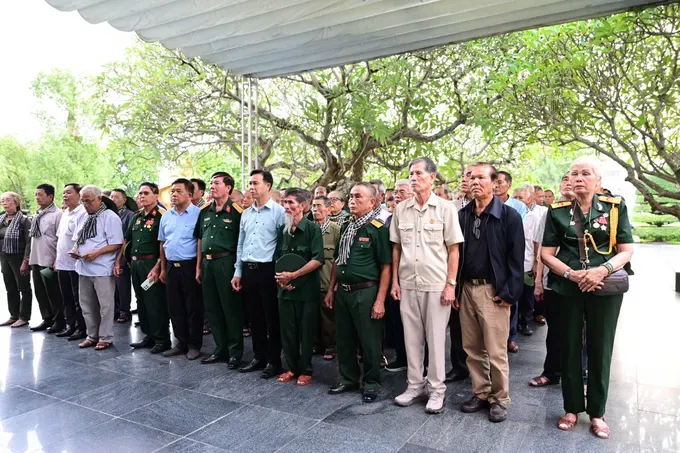
At the A1 National Martyrs’ Cemetery, Nguyen Thi Hong, a wounded soldier from Dong Hoa Ward, Ho Chi Minh City, became emotional while offering incense to the martyrs. She said that although she did not directly fight on the battlefield, her revolutionary activities in areas controlled by the enemy involved numerous hardships and dangers. She was arrested and tortured twice but remained steadfast and refused to provide information.
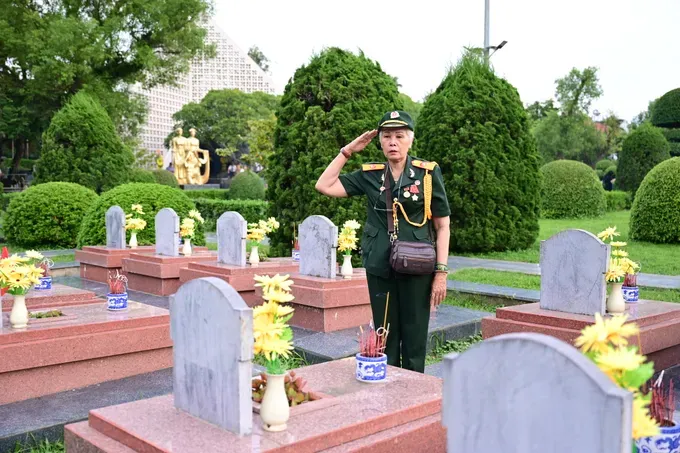
Returning to the former battlefield in Dien Bien and visiting the cemetery to offer incense to the martyrs, she was deeply moved to see so many graves whose identities remain unknown.
For Tran Hung Dung, a Class 2/3 wounded soldier from Binh My Commune, Ho Chi Minh City, the trip brought back memories of comrades who never returned from the battlefield. He said he felt fortunate to be alive and able to take part in the journey.
According to Pham Van Tuyen, Deputy Director of the Ho Chi Minh City Department of Home Affairs, the city currently manages 385,000 records of people with meritorious services and their relatives.
Ho Chi Minh City provides care and support to all living Vietnamese Heroic Mothers, while communes, wards and special administrative zones across the city effectively implement policies for wounded soldiers, martyrs and their families.
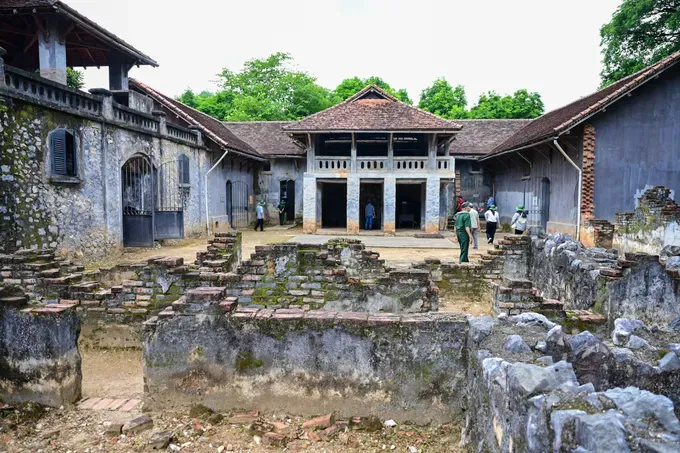
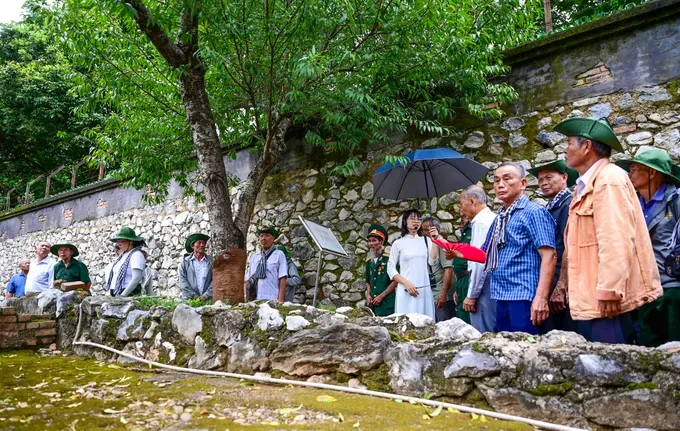
The “Gratitude” movement has been strengthened through a range of initiatives, including the Gratitude Fund, houses of gratitude and savings books for beneficiaries, along with support for families of martyrs facing difficulties and care for Vietnamese Heroic Mothers. These efforts reflect the Party, State and people’s profound appreciation for those who devoted their lives and made the ultimate sacrifice for the Fatherland.

On the afternoon of August 23, at the headquarters of the Ministry of Home Affairs, Deputy Minister of Home Affairs Nguyen Thi Ha met with the delegation of Ho Chi Minh City’s outstanding people with meritorious services and praised the city’s policies supporting this group.
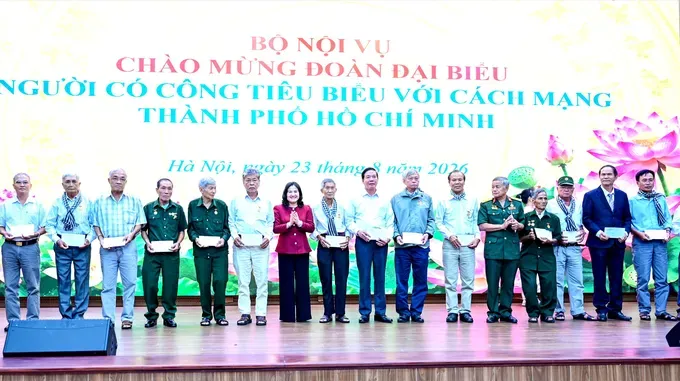
According to the Deputy Minister, in addition to fully implementing central government policies, Ho Chi Minh City has introduced various forms of support for disadvantaged people with meritorious services and their relatives, seriously wounded soldiers and outstanding people with meritorious services taking part in commemorative, convalescence and homecoming programs.
Deputy Minister Nguyen Thi Ha noted that following the merger of three localities, Ho Chi Minh City had quickly harmonized its policies for people with meritorious services, helping ensure fairness in the implementation of these policies.