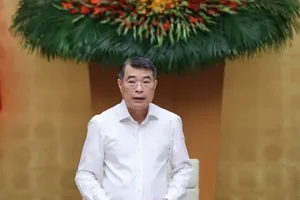
Prime Minister Le Minh Hung on October 3 called on ministries, sectors and localities to more effectively tap available growth potential, remove bottlenecks and maximize growth drivers in the final months of 2026, with the aim of achieving the year’s socio-economic development targets and creating momentum for 2027.
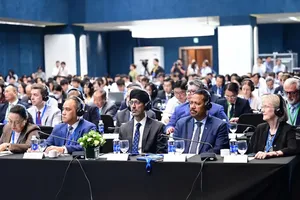
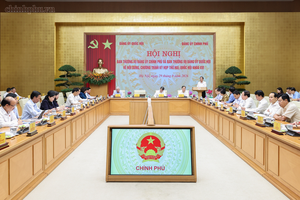
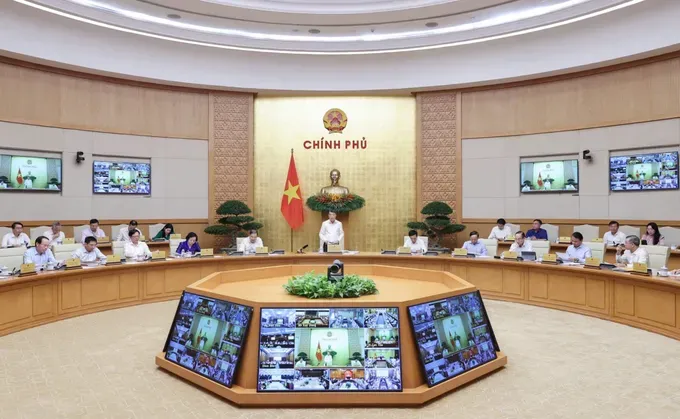
The PM made the request while chairing the September regular Government meeting and an online conference between the Government and localities, held in person at the Government headquarters and connected via videoconference with ministries, sectors and 34 provinces and cities nationwide.
As the final months of 2026 will be decisive to achieving the year's socio-economic development targets, he asked ministers, heads of sectors, Party committee secretaries, and chairpersons of provincial-level People's Committees to continue closely following and more resolutely and effectively implementing programs and action plans to achieve the 2026 targets, creating momentum for a breakthrough in 2027 with a spirit of acceleration, decisive action and clear results.
He noted that to achieve double-digit growth, GDP growth in the fourth quarter must exceed 12.5 percent, putting enormous pressure on ministries, sectors and localities and requiring the highest level of determination and effort
Regarding common tasks for ministries, sectors and localities, the PM requested continued improvements to institutions and laws, with the highest quality ensured for draft laws submitted to the National Assembly and all guiding regulations issued fully and on schedule.
Efforts should be made to disburse 100 percent of the public investment plan, complete key projects according to the 2026 schedule and remove obstacles to long-delayed projects, he said, asking localities to actively propose groups of tasks and solutions to develop special economic zones in line with the Law on Urban Development.
The Government leader stressed the need to strongly develop the domestic market, stimulate demand and effectively tap the year-end consumption and tourism seasons while controlling and stabilizing prices; boost exports and reduce the trade deficit; promote new growth drivers; encourage private investment and attract foreign investment; and require corporations and groups to complete their investment, production and business plans.
He called for strict price controls and efforts to achieve the 2026 inflation target approved by the National Assembly, ensuring adequate supplies of essential goods such as fuel, electricity, food, construction materials and medicines. Inspections should be strengthened and strict action taken against hoarding, speculation and smuggling.
At the same time, the PM called for stronger development of science and technology, innovation and digital transformation, along with effective disbursement of allocated funds; completion of the “100-day campaign” to address bottlenecks in digital transformation; and implementation of tasks to develop strategic technology products based on the strengths of different sectors and localities.
He also stressed the importance of cultural and social development and improving people's living standards; developing social housing and rental housing; resolutely implementing the 500-day-and-night campaign to accelerate the search for, collection and identification of the remains of fallen soldiers; carrying out key tasks in education, healthcare and social welfare; and strengthening national defense, security, social order and safety, as well as cybersecurity.
For provincial-level People's Committees, the PM instructed them to closely monitor developments in their localities; urgently review and update growth scenarios after nine months; conduct specific assessments of each sector, field and target; clearly identify any shortfalls against the set scenarios; and, on that basis, adopt appropriate tasks and solutions for the fourth quarter, striving to achieve the highest possible 2026 growth target.
They must also comprehensively review and identify all remaining growth drivers and potential reserves that can be tapped, particularly sectors, fields and projects capable of generating added value. Bottlenecks and difficulties hindering growth, especially those related to investment, land, site clearance and project implementation procedures, must be clearly identified and resolutely addressed, with issues beyond their authority promptly reported to competent agencies.
Major economic centers and growth poles such as Ho Chi Minh City, Hanoi, Hai Phong, Quang Ninh, Dong Nai and Bac Ninh must set higher targets and more fully tap their growth potential through measures that can be implemented immediately, while strengthening their leading and spillover roles and making greater contributions to national growth.
For localities whose growth remains below the set targets, particularly those projected to fall short of their full-year targets, the PM requested thorough assessments of available growth potential and the immediate implementation of strong, decisive, specific and effective measures to achieve the highest possible results.
For ministries and sectors, he asked the Ministry of Finance to continue closely monitoring domestic and international developments, regularly tracking, analyzing, assessing and updating growth scenarios, and promptly advising the Government and the PM on difficulties and obstacles, particularly factors affecting growth. The ministry should propose appropriate, effective and feasible tasks and solutions to boost production and business activities and mobilize and effectively use resources for development. It was also asked to urgently submit to the Government a decree providing a 30 percent reduction in corporate income tax for enterprises and business households with annual revenue of no more than VND10 billion (US$384,830), and focus on simplifying tax administration and procedures related to public investment.
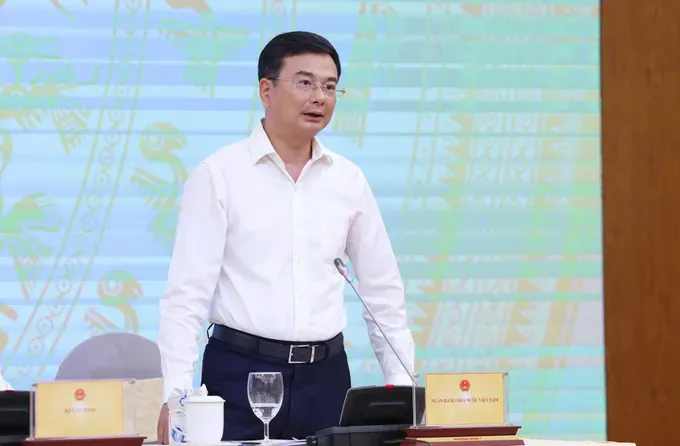
He asked the State Bank of Vietnam to focus on monetary policy management and ensure liquidity for the economy; implement measures to stabilize interest rates and the foreign exchange market; closely monitor monthly developments in the balance of international payments and proactively forecast, update and develop scenarios for timely and appropriate policy management. It should also strengthen inspection, supervision and control of credit institutions to promptly address violations, while proactively proposing solutions to expand credit and interest-rate mechanisms for social housing, rental housing, major and key projects and priority sectors.
Meanwhile, the Ministry of Industry and Trade was urged to prepare a plan to implement the Reciprocal Trade Agreement immediately after its signing; focus on measures to boost exports, control the trade deficit and develop balanced and sustainable trade; support businesses in responding to international trade fluctuations; make effective use of next-generation free trade agreements; step up trade promotion, diversify export markets and stimulate domestic demand.
The ministry, together with businesses, must ensure adequate supplies of fuel and electricity; soon submit and implement the revised Power Development Plan VIII; restructure Vietnam Electricity (EVN); urgently finalize and submit the decree on fuel trading; and increase coal and oil and gas production.
The Ministry of Construction was tasked with ensuring progress on key transport projects; coordinating with the Ministry of Industry and Trade to manage supplies of construction materials for important and nationally significant projects; and accelerating social and rental housing projects.
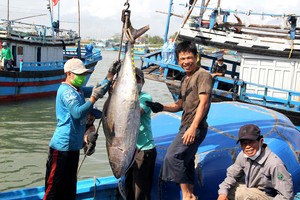
The Ministry of Agriculture and Environment must continue measures to improve the quality of agricultural products and meet the plant quarantine, food safety and traceability requirements of import markets; and work to have the European Commission’s “yellow card” warning on illegal, unreported and unregulated (IUU) fishing lifted.
The PM instructed the Ministry of Justice to closely coordinate with ministries, Government agencies and National Assembly bodies to finalize draft laws and resolutions for submission to the National Assembly. It should focus on appraising regulations guiding the implementation of laws after their adoption to ensure progress and quality.
The Ministry of Science and Technology was tasked with leading and guiding the implementation of the National Digital Architecture Framework and the digital architecture frameworks of agencies and organizations; reviewing and removing bottlenecks in the commercialization of research results; proposing improvements to regulations on science and technology exchanges; and coordinating with the Ministry of Finance to address financial and disbursement bottlenecks related to science and technology, innovation and digital transformation.
The Ministry of Education and Training was asked to lead the completion of a program and develop a specific roadmap for completing a new set of textbooks for unified nationwide use and providing free textbooks from the 2028-2029 academic year. It should reform the compilation, publication, distribution and supply of textbooks; coordinate with ministries, sectors and localities to complete and ensure the effective operation of existing inter-level boarding schools while continuing to build such schools in disadvantaged communes; work with localities to ensure adequate teaching staff; and review planning, budget allocations and land funds for new schools to ensure sufficient classrooms and schools.
The Ministry of Health was requested to proactively coordinate with relevant agencies and National Assembly bodies to revise and finalize the draft law amending and supplementing several laws in the healthcare sector. It should continue efforts to ensure that by the end of 2026, all people receive regular health check-ups or free screening and have electronic health records. The ministry should also coordinate with other ministries and agencies to develop medical centers and combined military-civilian medical stations in communes along the land border, while improving the quality of grassroots healthcare.
Meanwhile, the PM asked the Ministry of Culture, Sports and Tourism to focus on developing, reviewing and finalizing the Vietnam Tourism Development Strategy for submission to the PM; step up tourism promotion in target markets; effectively tap nearby and large-scale markets; actively stimulate domestic tourism demand; and make practical and effective use of the year-end tourism season.
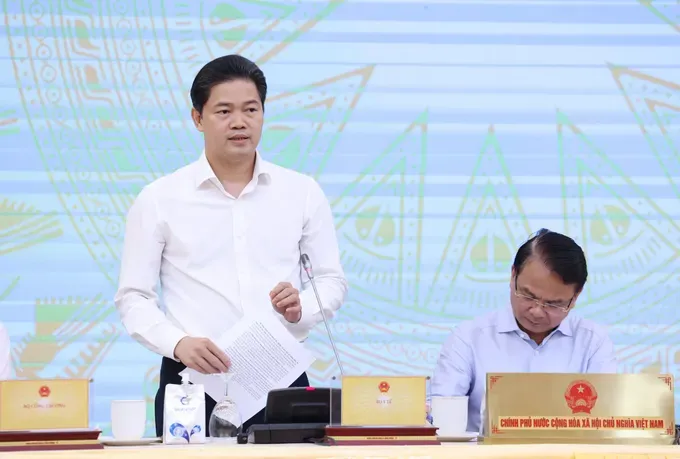
The Ministry of Home Affairs was tasked with reviewing and completing regulations on organizational structures at the grassroots level; coordinating with ministries, sectors, agencies and localities to finalize proposals on staffing levels for the political system for submission to competent authorities, as well as mechanisms concerning salaries, allowances, decentralization and delegation of authority.
For the Ministry of National Defense, the Ministry of Public Security and the Ministry of Foreign Affairs, the PM requested continued close monitoring of developments and proactive advice on groups of tasks; strengthening national defense, ensuring national security and maintaining social order and safety; promoting the combination of defense and security with economic development; building a self-reliant, autonomous, dual-use and modern defense and security industry; and stepping up external relations and international integration.
The PM stressed that ministers and heads of sectors must proactively and thoroughly prepare contents for the fourth plenum of the Party Central Committee and the second session of the 16th National Assembly, while taking a more proactive approach and strengthening coordination with press agencies in policy dissemination.
According to reports delivered at the regular Government meeting, Vietnam’s GDP growth reached 9.95 percent in the third quarter and 9.01 percent in the first nine months, the highest level since 2011. The Index of Industrial Production (IIP) rose by 12.1-12.2 percent in the nine-month period, the highest growth recorded in many years. The services sector continued to post positive growth, while agricultural, forestry and fishery production remained broadly stable.
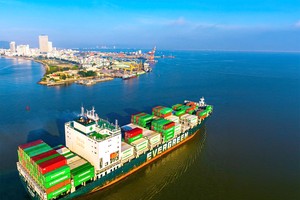
Total export and import turnover in the first nine months reached US$888 billion, up 30.4 perent. In September, Vietnam recorded a trade surplus of US$1.27 billion, reversing the trade deficit recorded in previous months.
The country welcomed approximately 17.7 million international visitors in the first nine months, up 14.5 percent. Registered foreign direct investment (FDI) reached an estimated US$50.4 billion, up 76.4 percent, while disbursed FDI was estimated at more than US$21 billion, up 12.1 percent.
Nearly 224,000 businesses entered or re-entered the market during the nine-month period, exceeding the roughly 172,000 businesses exiting.
Public investment disbursement reached nearly VND643 trillion, equivalent to 63 percent of the annual plan, up more than VND202 trillion, or 12.9 percent, from the same period in 2025. Private investment in the third quarter reached VND671 trillion, up nearly 15 percent, while total social investment amounted to VND1.3 quadrillion, an increase of 16.7 percent year-on-year.