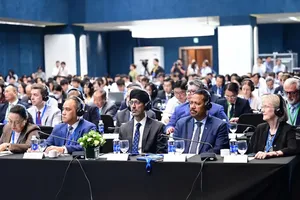
On October 4, Standing Deputy Prime Minister Pham Gia Tuc, alongside a government delegation, conducted an on-site inspection of the Long Thanh International Airport Project, the Ho Chi Minh City – Long Thanh – Dau Giay Expressway Expansion Project, and the Hiep Phuoc LNG Power Plant Project.
At the Long Thanh International Airport construction site, the Airports Corporation of Vietnam (ACV) reported that the total executed output value for Component Project 3 has reached over VND73.8 trillion (US$2.8 billion) to date, equivalent to 85.55 percent of the contract value, with disbursements exceeding VND47 trillion (US$1.8 billion), reaching 54.49 percent.
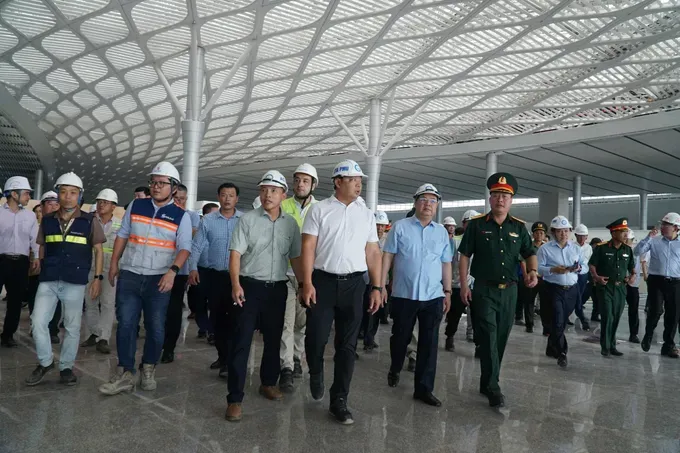
Out of 16 main construction packages, 12 generally meet the schedule to support the goal of putting the airport into operational trial by December 2026. Under the plan, Long Thanh Airport will undergo trial operations in three phases between September and December 2026 to assess the readiness of infrastructure, systems, and personnel. From December 2026 to March 2027, the airport is projected to operate its western area and central passenger terminal area, handling approximately 20 to 30 flights daily. From October 2027, the airport is scheduled to operate at 100 percent of its designed capacity.
During the inspection, Standing Deputy Prime Minister Pham Gia Tuc emphasized that Long Thanh Airport plays a vital role in socio-economic development and is a key project for the national aviation industry. To date, overall project progress has exceeded 80 percent of the total volume, with several contract packages largely completed. He directed ministries, central agencies, local authorities, and the project investor to accelerate work around the clock (24/7), maintaining strict progress control on a daily, weekly, task-by-task, and package-by-package basis.
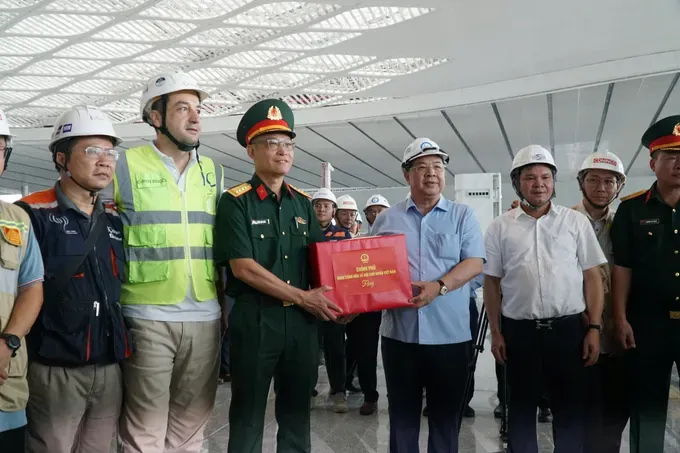
Before October 7, ACV must submit a comprehensive report detailing project execution, operational plans for each phase, and the conditions necessary to ensure safe, efficient operations. The report must include specific solutions for every issue, clearly defining responsibilities for each agency and unit, along with handling deadlines, ensuring every task has an assigned responsible party and a fixed completion timeline.
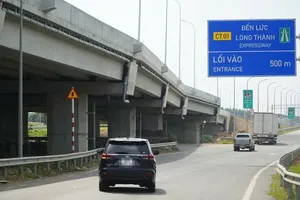
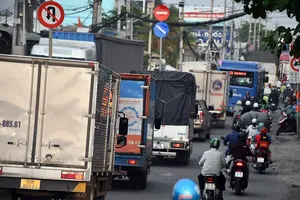
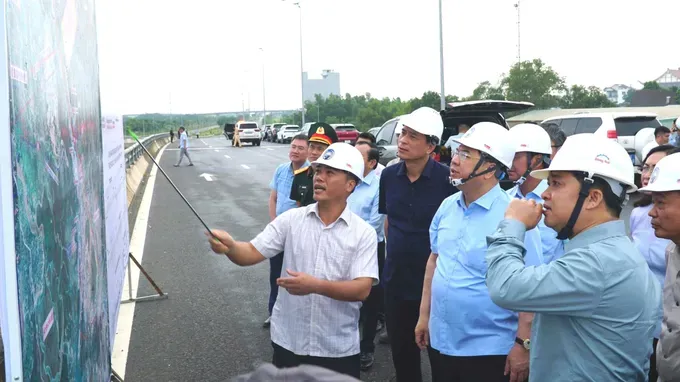
Inspecting the Ho Chi Minh City – Long Thanh – Dau Giay Expressway Expansion Project, Permanent Deputy Prime Minister Pham Gia Tuc instructed the investor and contractors to concentrate manpower and machinery, organize scientific construction practices, accelerate progress, and guarantee project quality and safety.
According to the Vietnam Expressway Corporation (VEC), the expansion project for the Ho Chi Minh City – Long Thanh segment spans nearly 22 kilometers, extending from the Ring Road 2 interchange in Long Truong Ward, Ho Chi Minh City, to the Bien Hoa – Vung Tau Expressway interchange in Long Thanh Ward, Dong Nai. The project carries a total investment of approximately VND16.3 trillion and broke ground in August 2025 to widen the route from four lanes to 8–10 lanes. The elevated bridge and road sections are scheduled for basic completion by late 2026, while Long Thanh Bridge is expected to be completed in February 2027.
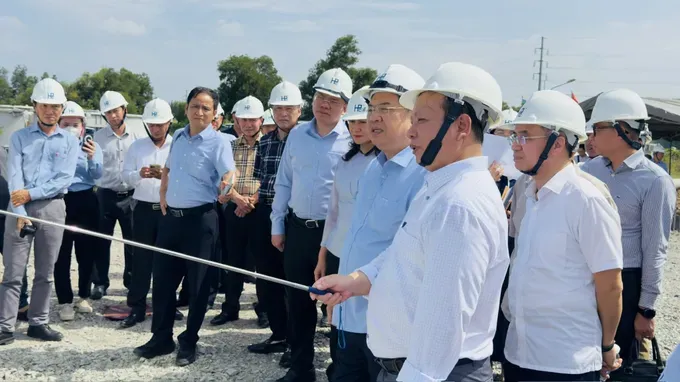
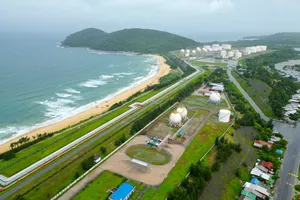
At the Hiep Phuoc LNG Power Plant Project, Permanent Deputy Prime Minister Pham Gia Tuc spoke highly of the project's scale, location, and role in ensuring energy security for the southern region, affirming that the Government will support and create favorable conditions for the plant to enter operation at an early date. To ensure grid capacity integration once operational, Ho Chi Minh City needs to coordinate with the Ministry of Industry and Trade and Vietnam Electricity (EVN) to review and update relevant transmission grid items in power development planning, prioritizing early investment.
According to Hiep Phuoc Power Company Limited, the project's investor, Phase 1 of the plant has a capacity of 1,200 MW and a total investment of approximately US$900 million. Construction progress currently stands at around 60 percent, with equipment installation reaching 20 percent; the power generation units are scheduled to begin commercial operations sequentially in October, November, and December 2028. Phase 2, with a capacity of 1,500 MW, is expected to be implemented between 2025 and 2030.