Accordingly, by 2030, the national urbanization rate is expected to exceed 50 percent, with approximately 1,000 to 1,200 urban areas.
At the same time, several national- and regional-level urban centers will be developed, meeting healthcare, education, training and cultural standards comparable to the average levels of cities in the top four ASEAN countries.
By 2045, Vietnam’s urbanization rate is expected to rank in the upper-middle group in ASEAN and Asia, with a target of building at least five cities of international stature.
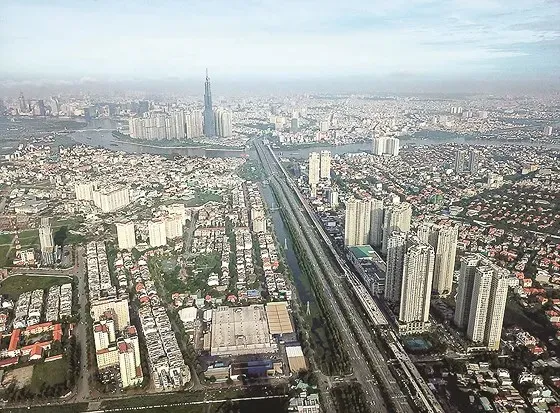
The Ministry of Construction has assigned specialized agencies to study and pilot a megacity model based on integrated, multi-center planning linked with regional infrastructure and satellite cities. It also aims to develop Hanoi and Ho Chi Minh City into modern global cities.
The plan also outlines key tasks, including developing high-quality human resources for urban development, improving the capacity of urban authorities at all levels, and establishing professional standards for urban management officials.