Deputy Director Dang Thanh Mai of the Meteorological and Hydrological Administration confirmed that the 2026-2027 El Nino iteration has officially materialized. Both Vietnamese and international forecasting models indicate this phenomenon will steadily intensify and likely persist into early 2027.
Currently, it’s reported that predictive models demonstrate a 60 to 65 percent probability of a strong El Nino occurring. If this grim scenario unfolds, Vietnam is essentially looking at one of the most devastating El Nino events recorded since 1950.
Regarding its impacts, the baseline temperature across the entire nation will naturally trend higher than the multi-year average. Precipitation in numerous regions will face a severe deficit. It appears the Central region, the Central Highlands, and the South harbor the highest risk of experiencing the most pronounced impacts. They’ll be battling crippling droughts, widespread water shortages, and relentless saltwater intrusion during the final months of 2026 and early 2027.
Given that these regions demand immense water resources for agricultural production and daily livelihoods, the major peril of catastrophic droughts and saltwater encroachment will inevitably skyrocket.

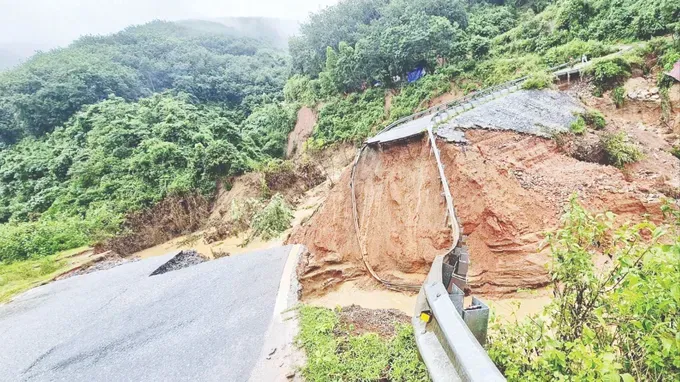
It’s undeniably true that during El Nino years, the sheer volume of typhoons and tropical depressions churning in the East Sea typically drops below the multi-year average. However, that doesn’t mean the threat of natural disasters simply vanishes. Stark reality dictates that even under El Nino conditions, ferocious storms or extreme rainfall events can still suddenly materialize and inflict catastrophic damage. Therefore, the country can’t afford to be complacent.
Take a look at the historic deluge in Quang Ninh Province in July 2015 as a reported example. It violently occurred while an El Nino was actively operating. Prior to that, the massive, unprecedented flooding in Da Nang City and Quang Ngai Province in late September 2009, trailing the devastating typhoon Ketsana, also unfolded strictly under El Nino conditions.
These volatile developments clearly demonstrate that El Nino doesn’t just drastically escalate the risk of scorching heatwaves, droughts, and saltwater intrusion. As a rule of thumb, it can still mercilessly spawn torrential downpours, flash floods, landslides, or highly destructive typhoons.
The disaster prevention and control efforts must, then, be synchronously prepared to tackle both risk categories. It’s advisable to proactively respond to blistering heat and droughts, while simultaneously standing ready to face extreme weather phenomena that might abruptly strike.

Director Mai Van Khiem of the National Center for Hydro-Meteorological Forecasting pinpointed the specific sectors in Vietnam that will undeniably endure the most glaring impacts if this looming El Nino relentlessly drags on.
Years of careful observation alongside current forecasting results reveal that when El Nino rears its head, the general trend dictates that precipitation across most regions will noticeably dwindle. Consequently, the sector destined to suffer the earliest and most pronounced impacts will undoubtedly be agricultural production, particularly in vulnerable areas heavily reliant on entirely natural water sources.
For the North Central and Mid-Central regions, this year’s rainy season might deliver considerably less rainfall than usual. This inherently means that right from the summer-autumn crop, local authorities must thoroughly recalculate their production plans, seasonal structures, and water demands to adapt to the looming possibility of severe rainfall deficits. If they’re well prepared to get the ball rolling from the very start, they’ll substantially mitigate the crippling damages that could otherwise ravage the production process.
Down in the Central Highlands and the South, it’s widely forecast that the peril of crippling droughts, water scarcity, and saltwater intrusion will severely escalate. Particularly for the Central Highlands, the rainy season will likely wrap up much earlier than normal, thereby relentlessly prolonging the arduous dry season. This grim reality will directly inflict heavy blows on lucrative industrial crops like coffee and numerous other perennial plants.
Therefore, starting right now, local authorities must review the actual water storage capacities across all reservoirs to draft a rational water usage plan. In the end, they shouldn’t foolishly wait until a severe drought strikes before scrambling to implement vital countermeasures.
Regarding the Mekong Delta, it’s advisable to pay attention to the towering threat of droughts and aggressive saltwater intrusion during the twilight months of 2026 and early 2027. Vietnam possesses invaluable lessons documented from the 2019-2020 El Nino event where early warnings helped agricultural sectors slash severe damages significantly by advancing crops.
Several nations have already begun rolling out contingency plans on this matter, including Thailand’s strategy to stockpile water along the Mekong River. The National Center for Hydro-Meteorological Forecasting is currently evaluating these complex transboundary impacts to advise appropriate response strategies.
Deputy Minister of Agriculture and Environment Le Cong Thanh informed that after El Nino was officially confirmed, specialized units in Vietnam scrambled to update operational scenarios, deploying robust response strategies tailored to each sector.
Regarding crucial irrigation efforts, the ministry is currently directing highly vigilant monitoring of water developments on a nationwide scale. They’re flexibly regulating massive reservoirs and preparing contingency scenarios strictly calibrated to escalating levels of drought and saltwater intrusion. Furthermore, the authorities are reviewing localized production plans, strictly prohibiting agricultural production that recklessly exceeds localized capacity.
The ministry requested localities tweak crop schedules and expand land devoted to highly drought resistant seeds. Ultimately, the primary goal is minimizing catastrophic future damages.