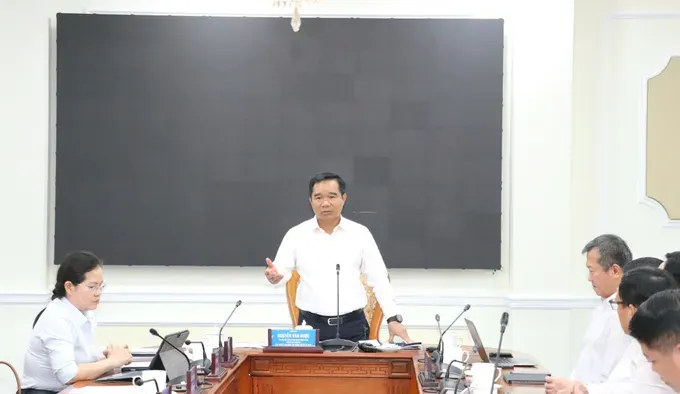
Under the plan, the Ho Chi Minh City People’s Committee is expected to submit around 40 draft resolutions on implementing the Urban Development Law at the Ho Chi Minh City People’s Council’s session scheduled for late September. Many of the proposed policies are directly related to businesses.
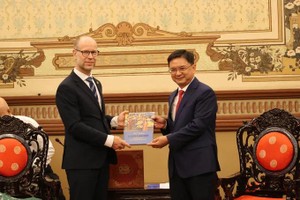
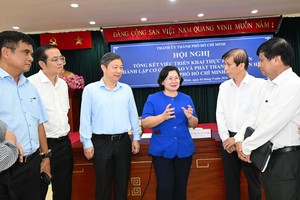
Speaking at the meeting, Vice Chairman of the Ho Chi Minh City People’s Committee Nguyen Manh Cuong said the Urban Development Law empowers the city to introduce policies aimed at resolving difficulties and obstacles facing businesses, covering areas ranging from housing and taxation to urban development mechanisms.
He called on businesses to provide feedback and additional information to help the city formulate policies that are appropriate and closely aligned with practical needs, particularly mechanisms involving capital mobilization, transit-oriented development (TOD), metro systems, and underground spaces.
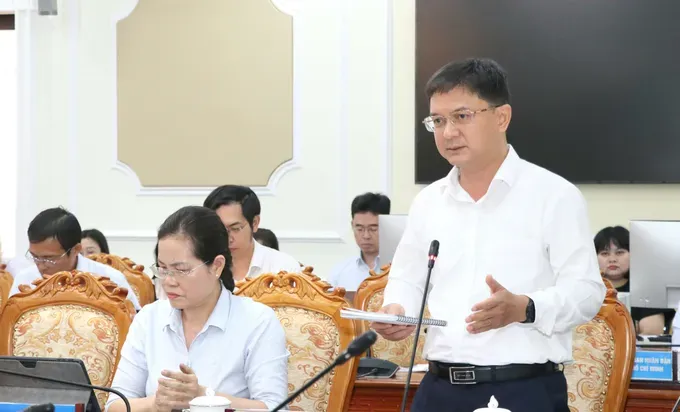
Offering feedback on the issue, Le Nhu Thach, Vice Chairman of the Ho Chi Minh City Business Federation and Chairman of Beons Group, said underground spaces have not yet been effectively utilized. He proposed that the city introduce mechanisms and policies to encourage the development of underground spaces beyond their traditional use as parking facilities, allowing for shopping malls, services, and nighttime entertainment venues to attract tourists.
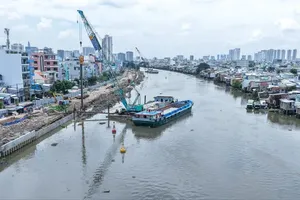
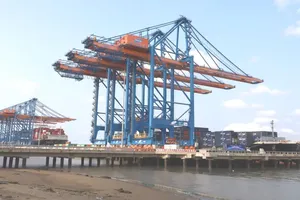
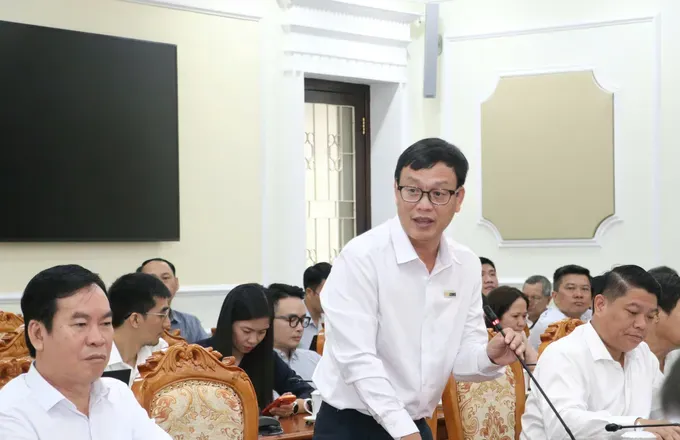
Other participants also proposed mechanisms allowing businesses to lease land for the development of parks, marinas, and inland waterway ports, as well as policies encouraging investment in agricultural and forestry product centers to create additional value-added services.
To achieve double-digit economic growth, the city faces enormous investment needs. Participants therefore called for greater use of the Vietnam International Financial Center in Ho Chi Minh City to attract capital, stronger mobilization of capital from investment funds and financial investment companies, and mechanisms enabling the private sector to participate in major projects.
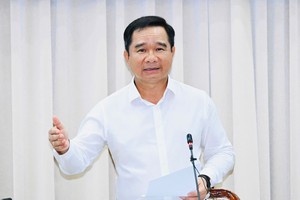
Concluding the meeting, Chairman of the Ho Chi Minh City People’s Committee Nguyen Van Duoc acknowledged the businesses’ contributions, saying their recommendations were practical, well-focused, and suited to the city’s socio-economic conditions.
The city People’s Committee will continue refining draft legal documents to implement the Urban Development Law. He asked the Ho Chi Minh City Business Federation to consolidate the recommendations into a single document and submit it to the Department of Justice for compilation, appraisal, and submission to the city People’s Committee.
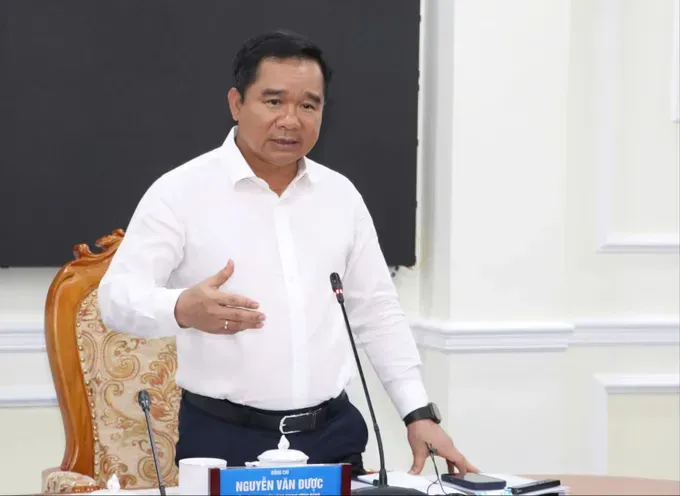
Chairman Nguyen Van Duoc called on businesses to provide feedback on each specific draft, with clearly quantified proposals. For example, regarding the development of underground spaces, businesses should provide direct input on regulations concerning land, taxation, finance, investment mechanisms, incentive periods, and project life cycles in order to address practical bottlenecks.
He also called for regulations ensuring connectivity and integration among facilities and projects within the urban space, particularly in central areas. This would strengthen connectivity and circulation while creating a more integrated and coherent urban system.
The Ho Chi Minh City People’s Committee chairman instructed departments and agencies to continue reviewing all draft legal documents within their respective sectors and areas of responsibility.

The Department of Justice is tasked with conducting appraisals in accordance with regulations and ensuring the required schedule so that the drafts can be submitted to the Standing Committee of the municipal Party Committee for consideration before being presented to the Ho Chi Minh City People’s Council at its session in late September.
The goal is to ensure that once the Urban Development Law takes effect, Ho Chi Minh City’s system of implementing regulations will be comprehensive and feasible, preventing policies and mechanisms from continuing to wait for guiding documents.