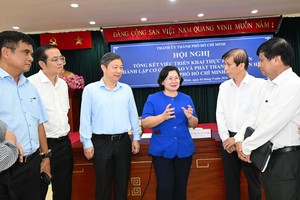
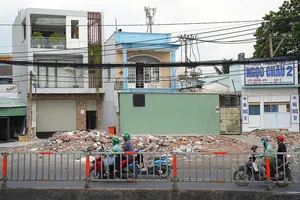
This allows each ward to leverage its unique advantages, serving as a vital link in Ho Chi Minh City’s broader development network.
Elevating governance standards
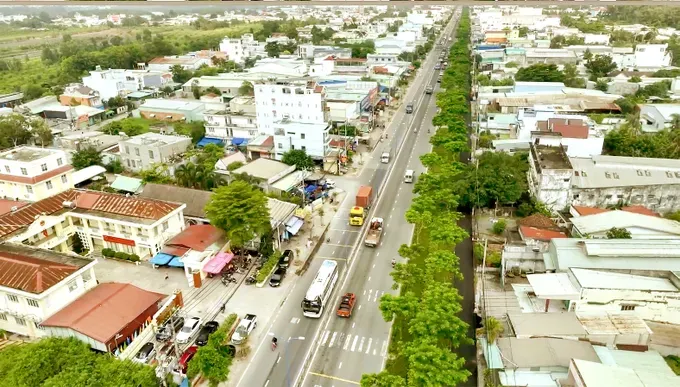
Crucially, both communes and wards stand as commune-level administrative units with fundamentally equivalent state authority. Transitioning to ward status does not automatically expand jurisdiction or financial resources. Simply changing titles or restructuring administrative machinery—without overhaul of governance and urban planning—will yield negligible progress.
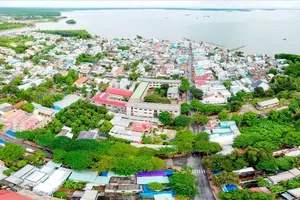
Yet, maintaining a rural commune framework in rapidly urbanized areas creates a sharp disconnect between reality and administrative practice, hampering strategic integration into a megacity framework. Upgrading to ward status establishes a clearer functional positioning for these localities—whether driving urban manufacturing, port logistics, tourism, or eco-services. Ultimately, this alignment raises the bar for infrastructure, spatial planning, and public services to match the pace of urbanization.
Ultimately, the core value of transitioning to ward status lies in aligning the area’s existing urban realities with its administrative model. Ward authorities must navigate a landscape of high population density, concentrated assets, and intense economic activity, bringing far greater complexity in urban planning, architecture, construction, housing, traffic management, environmental protection, and technical infrastructure.
Upgrading to a ward does not invent entirely new duties; rather, it demands that existing ones meet a higher benchmark. Local governments must shift from merely managing territory to actively governing the process of urbanization—moving from ad-hoc problem-solving to forecasting and structured development, and from an isolated, boundary-driven mindset to integrated collaboration within a unified urban network.
This shift necessitates upgrading civil service capacity in key areas, including urban planning, land administration, construction, environmental oversight, project management, and data analytics. Crucially, decentralization must be matched with adequate staffing, funding, technology, and clear accountability—avoiding the pitfall of assigning expanded duties without providing the means to fulfill them.
Addressing bottlenecks across border zones
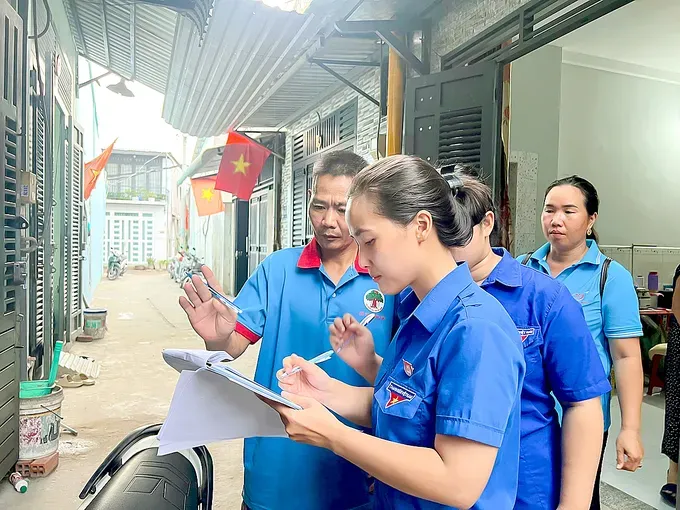
The upgrading of 29 qualifying communes into wards comes as the newly expanded Ho Chi Minh City takes shape, created through the merger of Ho Chi Minh City, Binh Duong, and Ba Ria - Vung Tau. This expansive new economic footprint converges the financial, commercial, service, and tech prowess of the urban core; Binh Duong’s industrial and supporting-industry capacity; and Ba Ria-Vung Tau’s deep-water ports, logistics, energy, and maritime tourism. With strategic role allocation and seamless connectivity, these complementary advantages will form an end-to-end value chain—stretching from research and production to global market access.
Within this framework, newly established wards must resist a one-size-fits-all blueprint. Localities along the industrial belt should assume urban-industrial functions, prioritizing high-tech manufacturing, supporting industries, technical services, and worker housing.
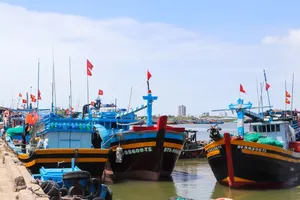
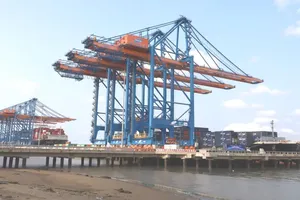
Wards tied to seaports, ring roads, expressways, and transport hubs are well-positioned to evolve into maritime logistics hubs—prioritizing smart warehousing, distribution centers, post-port processing, and trade services. Coastal wards can lean into resort tourism and nighttime economy, while areas anchored by rivers, forests, and green spaces should focus on eco-services and high-tech agriculture, serving as vital ecological buffers for the southern metropolis.
Strategic role assignment allows each locality to capitalize on its core strengths and complement its neighbors, curbing duplicate development, resource competition, and fragmented investment. Yet true integration requires more than a title change; it demands unified master planning, interconnected infrastructure, and efficient coordination mechanisms. The city must shift from planning around legacy administrative boundaries to planning around functions and value chains, re-evaluating urban zoning, land use, industrial development, ports, logistics, tourism, and housing within a single cohesive framework.
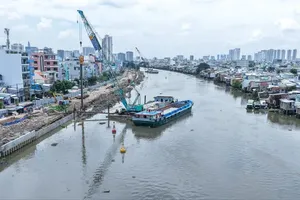
Transport infrastructure must serve as the primary spine for spatial development. Ring roads, expressways, railways, and waterways must seamlessly link industrial zones, seaports, airports, and commercial centers. Crucially, authorities must resolve bottlenecks at jurisdictional borderlines, as a single weak link can compromise the efficiency of an entire economic corridor.
Hand in hand with physical transport is digital infrastructure. Data on land, demographics, urban planning, investment, traffic, and the environment must be standardized, continuously updated, and shared across departments. Budget allocation mechanisms must also shift—prioritizing high-impact projects that span multiple areas and catalyze private investment, rather than spreading public resources thinly based on administrative boundaries.
As communes transition into wards, local authorities must gain a clearer strategic positioning and govern development against elevated standards. Only when each ward fully embraces its distinct role, linked through shared infrastructure and unified coordination, can individual advantages translate into collective momentum for Ho Chi Minh City as a whole.
Ultimately, the true gauge of this administrative transition is the quality of life and economic opportunities delivered to residents. Every newly designated ward requires a targeted urban transformation roadmap spanning transportation, drainage, schools, healthcare, housing, green space, and public areas calibrated for future population growth. Concurrently, local governments must drive vocational training, livelihood transitions, and job placement programs, empowering citizens to actively participate in the city's emerging economic sectors.