Industrial development, tourism, services, and the maritime economy are rapidly redefining the landscape across many of Ho Chi Minh City's rural areas. In the 29 communes that have met all criteria to be upgraded to urban wards under a newly approved Resolution by the Municipal People’s Council, these dynamic shifts are already taking shape through thriving production, expanding job opportunities, and rising living standards.
Rural communes take on the form of urban wards
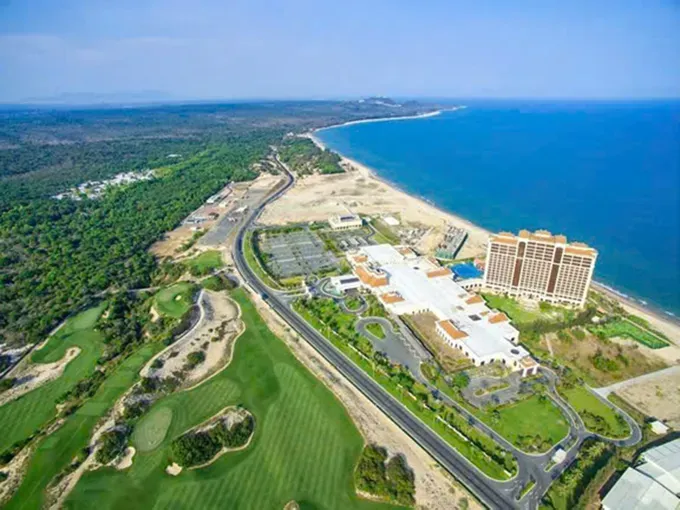
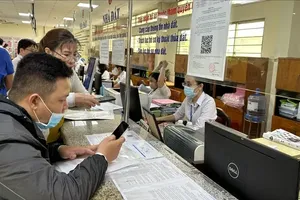
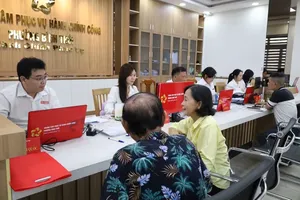
On a recent morning at the Bau Bang Commune Public Administrative Service Center, a steady stream of residents and business representatives filled the waiting hall. A major portion of the daily workload involves processing applications for land use, business registration, construction permits, civil status, and financial obligations.
In just the first nine months of 2026, the center handled and coordinated the processing of 23,526 applications, averaging more than 120 files per day. In land management alone, the center coordinates around 1,770 cases monthly, alongside roughly 224 tax-related submissions every month.
These numbers highlight a dramatic shift from Bau Bang’s agricultural past. The commune is now home to the Bau Bang Industrial Park, its expanded zone, and the Cay Truong Industrial Park. Around 802 enterprises currently operate here, employing nearly 31,800 workers across a wide range of sectors, including textiles and dyeing, mechanical manufacturing, precision engineering, woodworking, garments, animal feed production, and supporting industries.
Parallel to the rise of manufacturing, the local population has expanded at a breakneck pace. According to Chairman of the Bau Bang Commune People’s Committee Nguyen Huu Luan, the population has grown by an average of more than 5,000 residents annually in recent years, driven primarily by migrant workers. This rapid influx has exerted mounting pressure on housing, education, healthcare, transportation, water infrastructure, environmental management, and public administration services.
According to Mr. Nguyen Huu Luan, the commune's administrative scale has vastly outgrown that of a typical rural authority. The area faces a highly fluid population, surging demand for construction and land use, a dense concentration of business activities, and increasingly complex demands surrounding urban order, environmental control, traffic management, and fire safety.
"Upgrading to an urban ward will provide an administrative framework better suited to our emerging urban reality," Mr. Luan said. "It will also position Bau Bang to develop into a key industrial, service, and logistics hub in northern Ho Chi Minh City."
The local authorities have identified both immediate and long-term priorities: refining master planning, prioritizing key investment projects, mobilizing resources within legal frameworks, streamlining administrative procedures, and upskilling public officials so that existing advantages translate into tangible results, he added.
Upgrading status unlocks growth potential
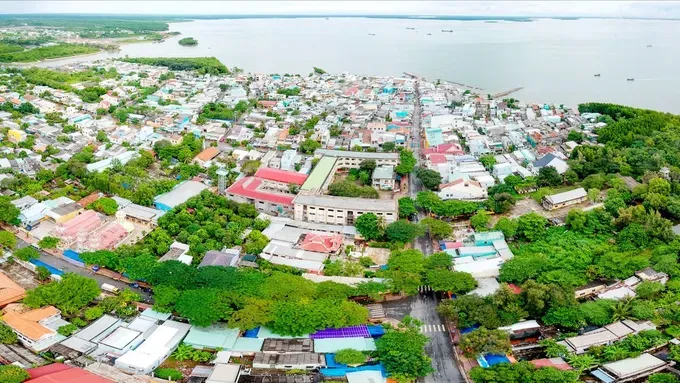
In Ho Tram Commune, an area once defined by agriculture, fishing, seafood processing, and small-scale trade, the local economy is undergoing a powerful pivot toward tourism.
Between January and August 2026, Ho Tram welcomed an estimated 655,813 visitors, including over 150,000 international tourists and more than 505,000 domestic travelers, generating nearly VND1.4 trillion (US$53.6 million) in revenue. The commune is now home to 14 major resorts, hotels, and tourism complexes, alongside 56 smaller guesthouses and lodging facilities. Beyond beach relaxation, the region is diversifying into entertainment, wellness services, meetings, incentives, conferences, exhibitions, and culinary tourism.
This economic transformation is reshaping everyday livelihoods. Ms. Nguyen Thi Hoa, a resident of Lang Sim Hamlet, used to rely on seasonal farmwork for income. As tourism took off, she secured a position as a housekeeper at a local resort, gaining a stable wage while continuing to work close to home.
Meanwhile, Mr. Tran Van Cuong, living in Ho Tram Hamlet, noted that the surge in tourists has boosted his family’s seafood and dining business, along with those of many neighboring households.
Mr. Nguyen Huu Loc, Chairman of the Ho Tram Commune People’s Committee, noted that the area’s primary competitive advantage lies in its unique fusion of coastal landscapes, lush forests, and high-end ecological resorts—coupled with seamless connectivity to Ho Chi Minh City and the Long Thanh International Airport. However, the commune faces a significant bottleneck, such as local public infrastructure that has failed to keep pace with rapid resort development. There remains a marked shortage of public beach access, parking facilities, rest stops, and commercial offerings outside the private resort compounds.
Should it achieve urban ward status, Ho Tram aims to position itself as a premier destination for luxury beach resorts, ecotourism, wellness, and entertainment—serving as a key complement to Vung Tau Ward and Can Gio Commune within Ho Chi Minh City’s broader coastal tourism corridor.
Meanwhile, Can Gio Commune boasts a strategic maritime gateway location, vast land area, a vibrant mangrove ecosystem, and untapped potential for ecotourism, maritime services, logistics, and ocean-based urban economics.
According to Chairman of the Can Gio Commune People’s Committee, Mai Trung Hung, transitioning to an urban ward will enable the local administration to progressively strengthen its urban governance capacity as population, investment, and socioeconomic activities surge, particularly in master planning, land management, construction, infrastructure, environmental protection, and the provision of public services.
The locality will also have an organizational structure and resources better suited to its development needs, enabling it to take a more proactive approach to building a contingent of cadres and civil servants capable of meeting the demands of urban governance, strengthening management infrastructure, improving the quality of public services, and better responding to the development requirements of a future coastal urban area.
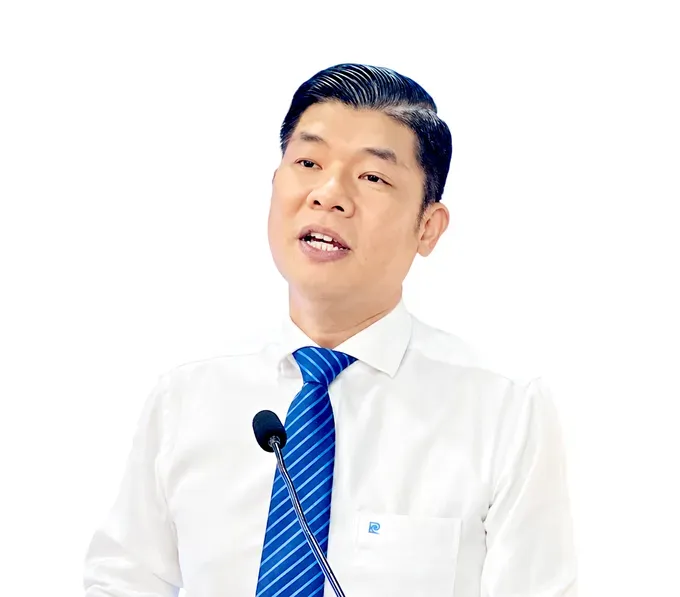
According to Mr. Pham Kieu Hung, Chairman of the Cu Chi Commune People’s Committee, Cu Chi has significant advantages in terms of its land reserves, geographical location, and gradually improving transport network, which is strengthening connectivity with localities across the southeastern region. As key transport projects are developed and completed, interregional connectivity will become increasingly convenient, creating favorable conditions for Cu Chi to develop trade, services, logistics, high-quality industries, and other high-value-added economic activities.
The locality aims to capitalize on these advantages by attracting projects with high technological content and environmentally friendly technologies. However, urban development must first and foremost be people-centered. Once upgraded to ward status, the local authorities expect that, alongside transport infrastructure, social facilities, healthcare and education infrastructure, public spaces, drainage systems, and environmental infrastructure will receive more synchronized investment, thereby improving residents’ quality of life.
Upgrading to ward status is also a process of transforming management thinking, operational methods, and the quality of public services. The locality is focusing on developing a professional, responsible, and people-oriented contingent of officials who proactively address issues at the grassroots level. At the same time, we are standardizing databases and accelerating the application of digital technologies so that residents can access public services more conveniently, quickly, and transparently, he said.

Ms. Le Thi Kim Minh, a resident of Hamlet 4, Nha Be Commune, Ho Chi Minh City, said she hopes that once the locality becomes an urban area, greater attention will be paid to upgrading its physical facilities and infrastructure, including roads, schools, and healthcare stations, in a more modern and coordinated manner.
What people are most concerned about at present is administrative information. They hope the authorities will have measures in place to help residents quickly and conveniently update and replace relevant documents without disrupting their work and daily lives.
The people are ready to accompany and support the common policies. They only hope that when the commune is upgraded to ward status, every resident can truly benefit from the positive outcomes of the urbanization process.