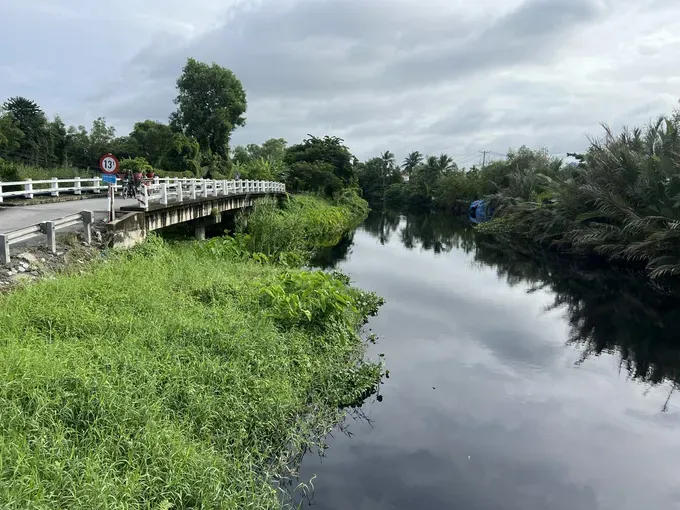
Vice Chairman of the Ho Chi Minh City People’s Committee, Hoang Nguyen Dinh, signed Decision No. 5766/QD-UBND on September 8 to officially launch the initiative.
The 7.3-kilometer project spans Binh Dong Ward and Binh Hung Commune, running from the Doi Canal at its head to the Ba Lao Canal at its terminus. It covers roughly 46.93 hectares, comprising 13.61 hectares of land and 33.32 hectares of water surface.
Categorized as a Group A major development project, the primary work involves Grade II water resources infrastructure designed for a 50-year lifespan. The Ho Chi Minh City Urban Infrastructure Construction Investment Project Management Board has been appointed as the project sponsor and administrator.
Under the blueprint, workers will dredge the entire 7.3-kilometer waterway, deepening the riverbed to between -3 and -4 meters and expanding its width to between 11 and 90 meters. Embankments stretching approximately 9.68 kilometers will be constructed along both banks, integrated with sidewalks, green spaces, public lighting, drainage networks, and access docks.
A key highlight of the development includes a new 725-meter road connecting Pham The Hien and Ta Quang Buu streets. The two-lane connection will consist of the 577-meter D1 Road and a 148-meter frontage road along the right bank of Ta Quang Buu Street.
The project will also construct the new Ba Lon 2 Bridge across National Route 50. The bridge will measure 79.3 meters long and 40 meters wide, featuring six traffic lanes and a 3-meter vertical clearance for navigation.
Once completed, the project will manage drainage for a 920-hectare basin, boosting flow capacity, reducing bank erosion, rehabilitating water quality, and driving urban renewal. It will also enhance local land and waterway transport while integrating into the region’s broader transport framework.
Compensation, site clearance, and resettlement account for the largest share of the budget at over VND6.35 trillion, followed by construction costs exceeding VND2.291 trillion. The remainder will fund project management, consultancy services, contingencies, and other expenditures.
City leadership has instructed the project management board to maintain strict oversight of costs, construction quality, and project timelines to prevent waste or financial loss. The board is also required to implement Building Information Modeling (BIM) during the detailed engineering design phase.










)