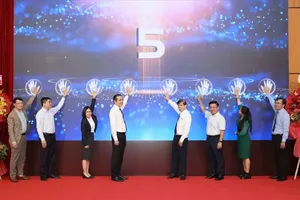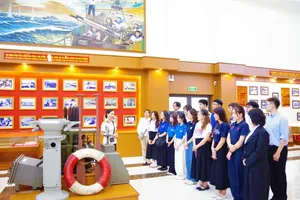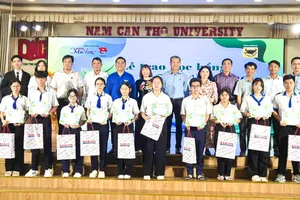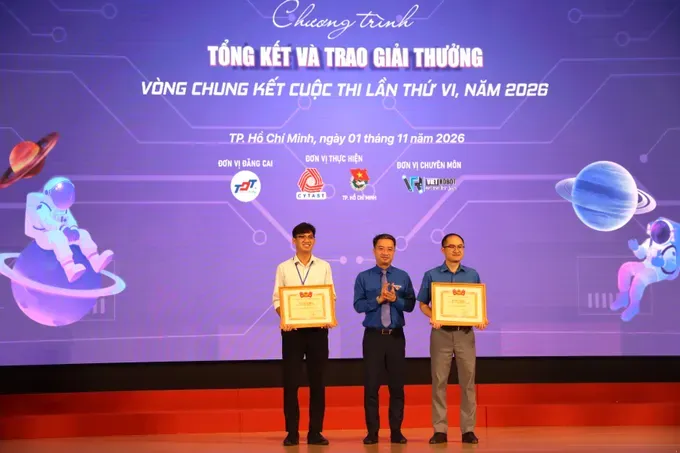
Attendees included Secretary of the Ho Chi Minh Communist Youth Union (HCYU) Central Committee, Nguyen Tuong Lam, and Bui Thanh Nhan, Head of the Ho Chi Minh City Party Committee's Commission for Information and Education.
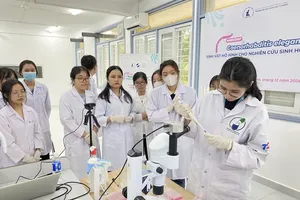
The national competition's final round was held in Ho Chi Minh City, attracting 276 teams with 517 contestants from 19 provinces and cities.
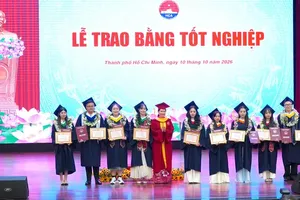
In the overall team rankings, the Lam Dong Provincial Ho Chi Minh Communist Youth Union secured first place, followed by the Ho Chi Minh Communist Youth Union of Dong Nai City in second place and the Ho Chi Minh Communist Youth Union of Nghe An Province in third place.
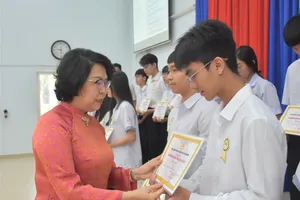
The Central Committee also presented certificates of merit to organizations with outstanding achievements.
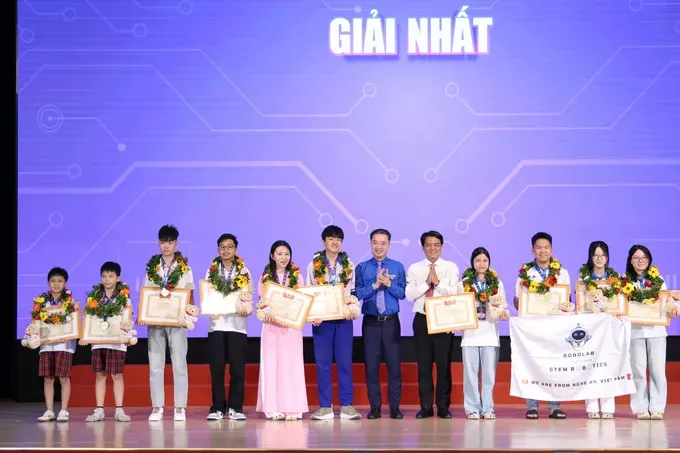
In the individual team categories, first-place awards went to the following contestants:
-Category R1: Pham Anh Tu and Tu Thien Bao from Dong Nai City.
-Category R2: Nguyen Ngoc Manh Quan and Pham Trong Hien Minh from Lam Dong Province
-Category R3: Nguyen Huu Hoai Nghia and Vo Hai Yen from Lam Dong Province
- Category R4: Bui Le Ha An, Pham Tran Diep Chi, Le Xuan Quy, and Van Thi Dieu Linh from Nghe An Province
Speaking at the ceremony, Secretary of the Ho Chi Minh Communist Youth Union (HCYU) Central Committee Nguyen Tuong Lam affirmed that after six editions, the National Robotics Innovation Competition had steadily established its significance and appeal among young people. He also highlighted the Youth Union's role in connecting schools, families, experts, and social resources to create an environment in which the younger generation can develop their science and technology capabilities.
He emphasized the need to continue innovating the competition's content and organizational methods, with a focus on improving quality, creativity, and practical applications. The competition should serve not only as a platform for contestants to compete but also as an environment for learning, hands-on experience, and nurturing a passion for innovation.
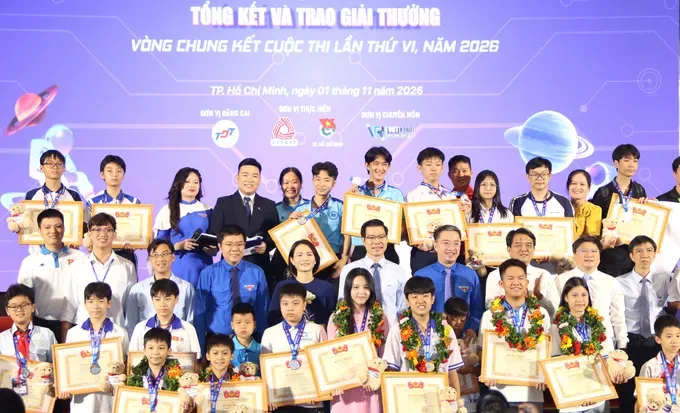
Youth Union organizations at all levels were urged to proactively coordinate with the education sector, training institutions, technology businesses, and relevant organizations to expand STEM and robotics activities in schools, clubs, and facilities for young people.
These efforts aim to create an enabling environment for young people to develop their science and technology skills while gradually providing more students with opportunities to explore science and unleash their creative potential.