To build domestic capacity to master core technologies, the Ministry of Education and Training and higher education institutions nationwide are increasing doctoral enrollment quotas, raising training standards and introducing a range of attractive incentives for doctoral candidates. These efforts have begun to attract more doctoral researchers to several strategic technology fields.
A range of policy incentives
According to Professor Nguyen Tien Thao, Director of the Department of Higher Education under the Ministry of Education and Training, faculty members holding doctoral degrees or higher are a key resource and a source of strength that enables universities to compete in research and innovation. Alongside attracting external expertise, improving the quality of domestic human resources and expanding training capacity must be top priorities. Accordingly, the ministry has worked with other ministries and agencies to develop policies to promote domestic doctoral training and international training partnerships.
In 2025, the nationwide enrollment quota for doctoral programs stood at 7,068, but only 4,077 candidates were admitted, representing 57.68 percent of the quota. In 2026, the quota rose sharply to 9,083, with 5,687 candidates admitted, equivalent to 62.61 percent. Notably, enrollment increased significantly in mathematics and statistics, computer science and information technology, engineering technology, engineering, and manufacturing and processing.
To achieve its targets of developing 10 strategic technology products, mastering 15 core technologies, and establishing 20 strong research groups, Vietnam National University - Ho Chi Minh City (VNU-HCMC) is implementing a postgraduate training support program for 2026–2030. The program links postgraduate education with scientific research and innovation, with a focus on attracting highly qualified personnel, particularly doctoral candidates.
Under the program, each participating doctoral candidate is eligible for financial support of up to VND560 million (US$21,711). The funding can be disbursed monthly or according to agreements with the research group and host institution. The program has attracted considerable interest, with 421 doctoral candidates admitted as of September 2026, a substantial increase from 213 in 2025.
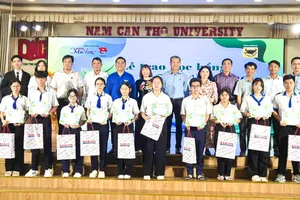
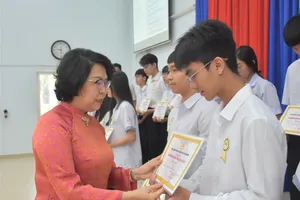
In early October 2026, Ton Duc Thang University in Ho Chi Minh City awarded scholarships to newly admitted PhD candidates and postgraduate students under its 2026 admissions rounds. At the doctoral level, two scholarships cover 100 percent of tuition fees for the entire program as well as living expenses; nine provide full tuition coverage, while another five cover 50 percent of tuition fees for the entire program. These forms of support help ease the financial burden that students would otherwise have to shoulder during their studies.
Making support policies transparent from the admissions stage

According to Dr. Nguyen Ho Khanh Van, Deputy Head of the Office of Graduate Studies at Ton Duc Thang University, under the university’s doctoral scholarship policy for the 2026 intake, doctoral candidates may apply for scholarships within one year of the date on which the decision recognizing their doctoral candidacy, research supervisor, and dissertation topic is issued. Full-program tuition support is tied to scientific publication requirements, with specific criteria varying by academic discipline.
Associate Professor Dr. Dinh Duc Anh Vu, Vice President of the International University under VNU-HCM, said applicants seeking doctoral scholarships from VNU-HCMC must meet requirements regarding study progress, academic performance, and foreign language proficiency. They must also devote at least 24 hours per week, in addition to classroom time, to studying and conducting research at their institution.
The program also specifies categories of applicants who are ineligible, including those who have received another scholarship in 2026. The research time requirement demonstrates that financial support comes with a corresponding commitment to academic activities. For doctoral candidates, spending time in laboratories, consulting with supervisors, participating in discussions, and processing research data is essential to the development of their dissertations.
According to Assoc. Prof. Dr. Dinh Duc Anh Vu, to build a sustainable recruitment pipeline, universities should identify talented undergraduate and master’s students early and involve them in research projects. In addition, institutions need to expand partnerships with research institutes and enterprises to develop research topics aligned with practical market needs and career opportunities.
He noted that the effectiveness of doctoral recruitment should be evaluated through dissertation quality, independent research capacity, and post-graduation contributions. Efforts to attract PhD candidates must be measured by their ability to help learners mature in their research endeavors.
While scholarships serve as an initial entry point, he emphasized that the quality of academic supervision, working conditions, and long-term career growth opportunities remain the decisive factors in determining the enduring appeal of a doctoral program.
Meanwhile, Associate Professor Dr. Nguyen Tan Dung, Dean of the Faculty of Chemistry and Life Sciences at Ho Chi Minh City University of Technology and Engineering, said that attracting talented candidates to doctoral programs requires addressing the issue of opportunity costs. Doctoral candidates not only pay tuition fees but also commit several years to research, potentially having to reduce their workload and income. Scholarships should therefore be designed as relatively stable support packages covering tuition fees, living expenses, and dissertation research costs.
Universities can combine scholarships with research or teaching assistant positions, enabling doctoral candidates to participate in research projects while earning an appropriate income. Such work should be relevant to their expertise and have clearly defined workloads, ensuring that candidates have sufficient time to focus on their dissertations.
Support policies should be made transparent from the admissions stage, particularly regarding the amount of funding, payment schedule, eligibility requirements for continued support, and the responsibilities of all parties. Assessments should be based on research progress, quality, disciplinary characteristics, and academic integrity.
According to Professor Dr. Nguyen Tien Thao, to implement the 2025 Law on Higher Education, the Ministry of Education and Training has issued a range of circulars and regulations to strengthen university autonomy, enabling higher education institutions to recruit and develop doctoral-level academic staff in line with the needs of their training disciplines. The ministry is continuing to implement Decision No. 89/QD-TTg, dated January 18, 2019, issued by the Prime Minister, approving the project on enhancing the capacity of lecturers and management personnel at higher education institutions to meet the requirements of fundamental and comprehensive reform in education and training for 2019–2030 (known as Project 89).
Project 89 sets a specific target of providing doctoral training to approximately 10 percent of university lecturers, equivalent to around 7,300 PhD holders, including 7 percent of lecturers receiving full-time training overseas. The Ministry of Education and Training is also seeking feedback on a draft decree introducing preferential policies for talented individuals sent abroad for training and research. The proposal includes doubling monthly living allowances for master's and doctoral students, with the highest rate set at US$1,300 per person, applicable to students in four countries: the United States, Canada, the United Kingdom, and Japan.
Associate Professor Dr. Huynh Kha Tu, Head of the Training Department at Vietnam National University-Ho Chi Minh City, said that Politburo Resolution No. 57-NQ/TW on breakthroughs in the development of science and technology, innovation, and national digital transformation, and Resolution No. 71-NQ/TW on breakthroughs in education and training development both place highly qualified human resources and talent at the center of the country's technological self-reliance. Within a short period, a policy framework has taken shape at an unprecedented pace and has already generated positive impacts.
However, postgraduate education in general, and doctoral training in particular, still faces a number of bottlenecks. These include a mismatch between funding cycles and students' study timelines, as well as stringent graduation requirements that increase operating costs and make training institutions hesitant to implement such programs.
Current regulations determine enrollment quotas based on training capacity but do not account for industry professionals and international experts with in-depth experience who could contribute to teaching and supervision. Yet these are precisely the human resources most lacking in such fields as semiconductor technology, quantum technology, and aerospace. In addition, investment in basic science is a long-term commitment essential to sustainable development, while current funding mechanisms lack continuity.
Against this backdrop, the Ministry of Education and Training should take the lead, in coordination with the Ministry of Science and Technology and the Ministry of Finance, in developing and issuing a circular establishing special mechanisms for training talent in basic sciences and cutting-edge technologies, with stringent outcome standards. These mechanisms should be piloted at Vietnam National Universities and other key universities. In parallel, a pilot funding mechanism should be introduced for training and research clusters and groups linked to the national key program for full-time doctoral training.