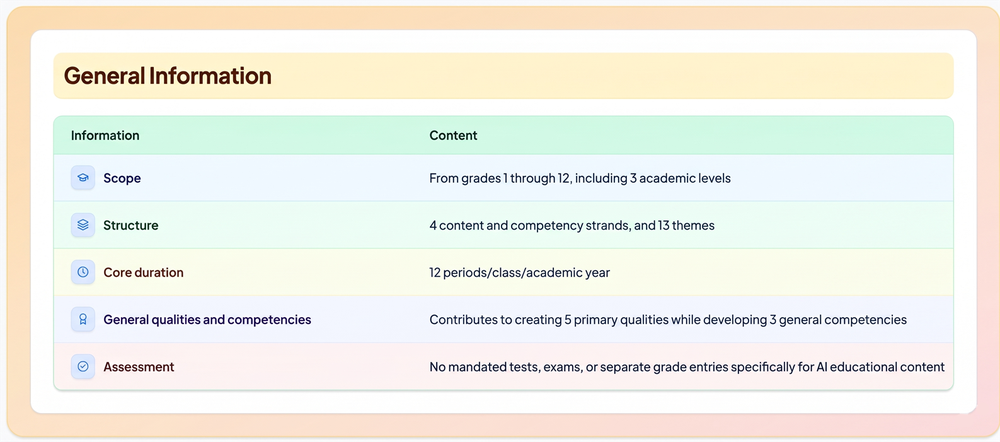
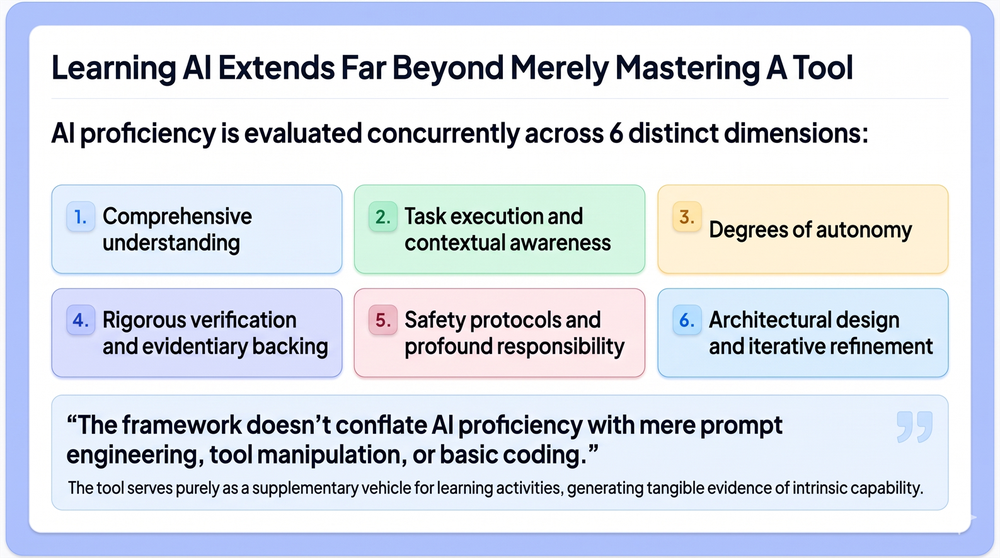
Elevating artificial intelligence (AI) proficiencies for children starting from the general education level remains a strategic objective within the Politburo’s Resolution 71-NQ/TW regarding breakthroughs in educational and training development. The Ministry of Education and Training issued Decision 2422/QD-BGDDT concerning the AI Education Content Framework for general education students, officially applicable from the 2026-2027 academic year.
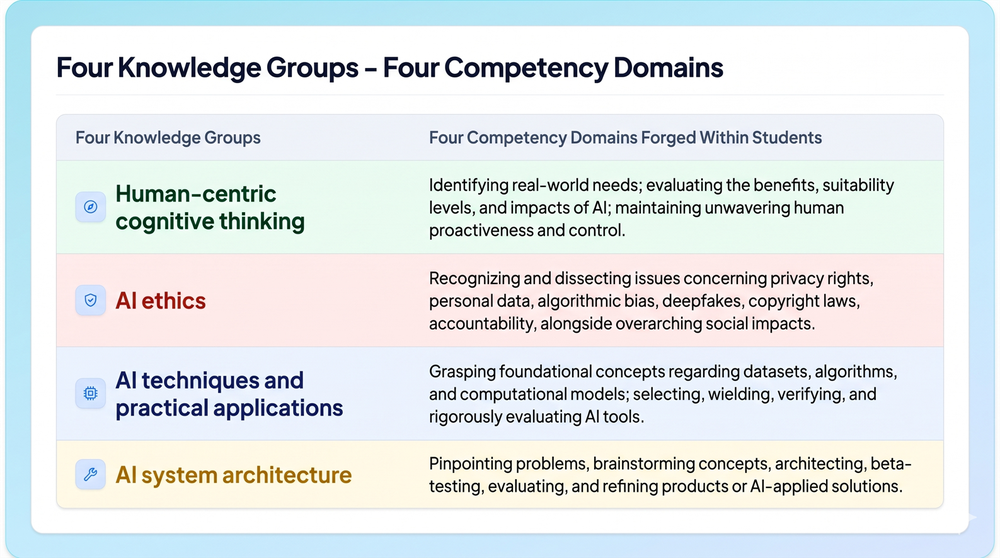
In reality, introducing AI into schools brings novel learning opportunities, but it also exposes children to a barrage of risks, ranging from misinformation that creates “hallucinations” of truth and compromised personal data to the emergence of age-inappropriate content, machine dependency, and the threat of academic fraud.
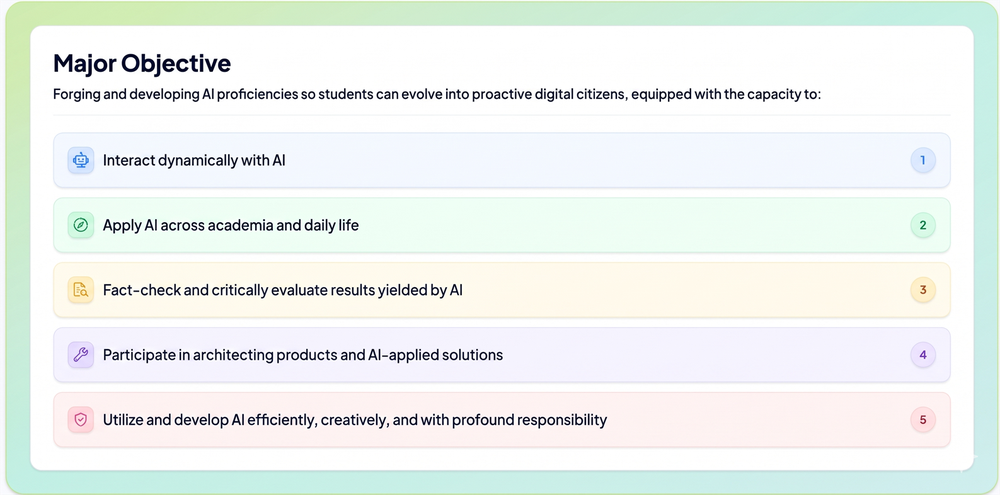
It’s impossible to shut the classroom door on AI, but opening it without strict safety barriers is even less viable. Teaching AI must simultaneously endow students with utilization capabilities and foster their self-protection instincts.

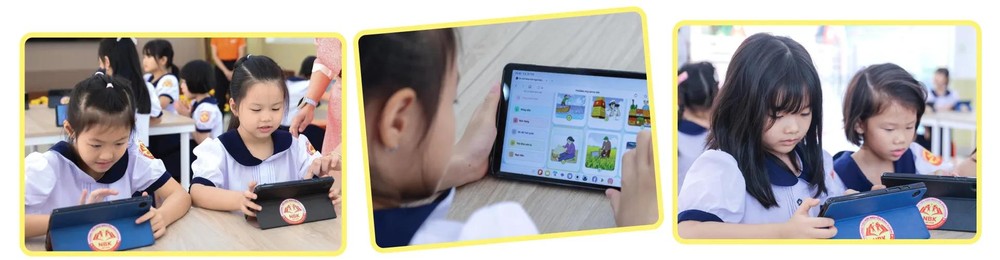
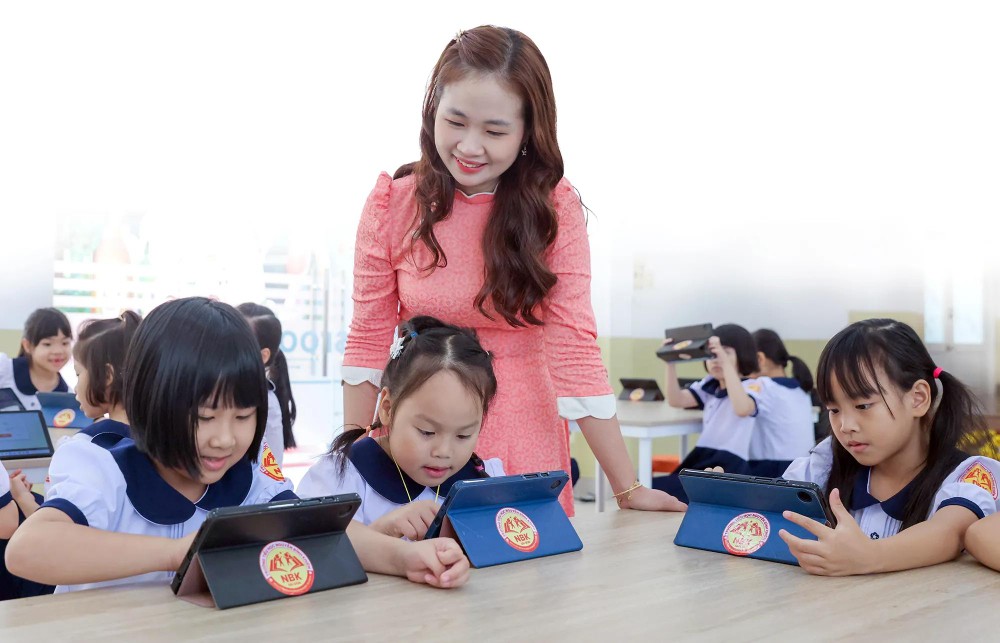
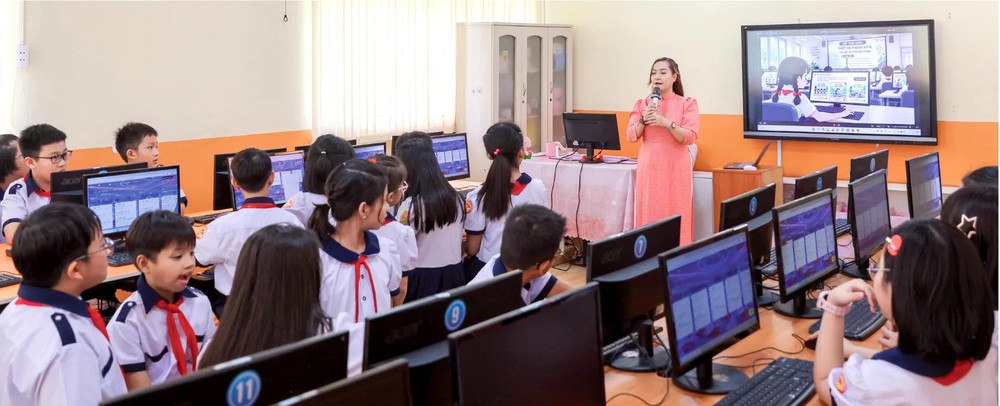
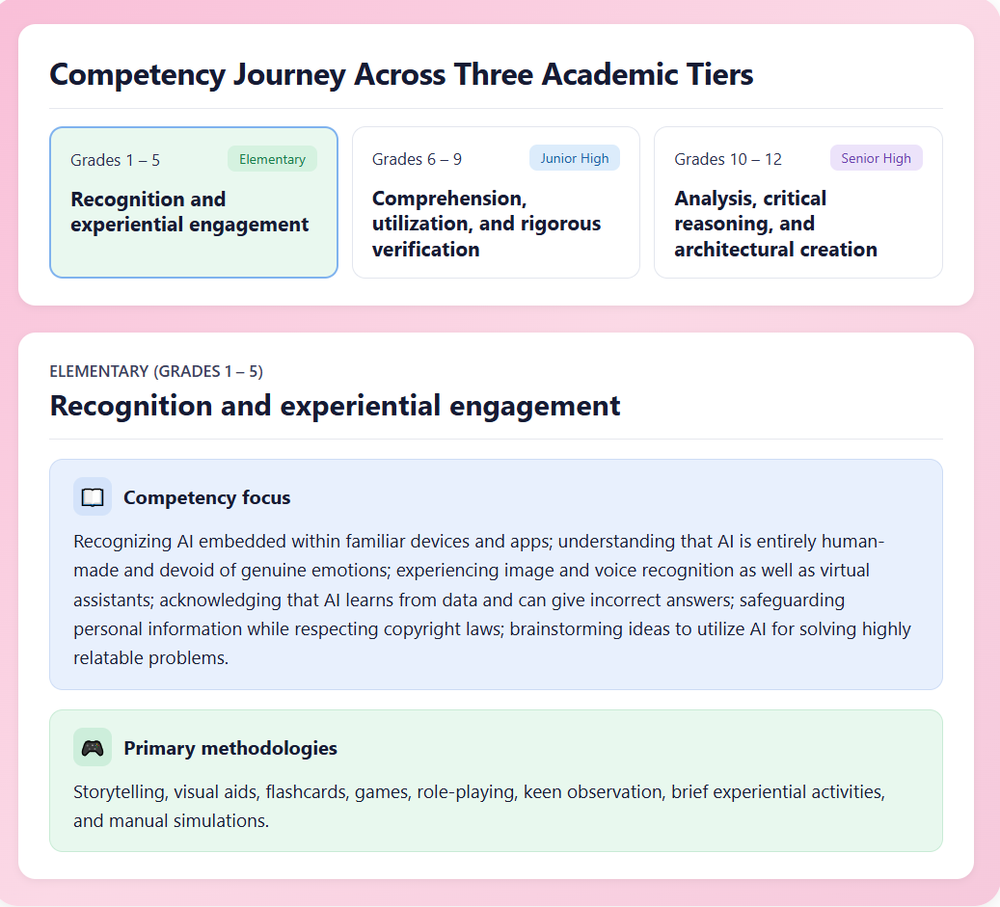
A Natural and Social Science class for class 2/1 at Nguyen Binh Khiem Primary School in HCMC, themed “family,” kicked off with 3D animated characters, QR codes, and an interactive game dubbed “I’m great at recognizing professions.” The classroom atmosphere quickly grew vibrant. Under the guidance of homeroom teacher Nguyen Thi Hai Ha, students dragged and dropped on smart devices, connecting keywords like navy soldiers, conical hat weavers, garment workers, farmers, and salespeople with their corresponding visuals.
A 3D “virtual student” suddenly popped up, drawing the children into hands-on activities deeply integrated with AI. Sparked by a screen-based robot’s questions alongside a video clip showcasing agricultural harvesting robots, students began realizing that technology is heavily present across numerous surrounding professions.
Ms. Ha continued to prompt the discussion, asking, “If AI helps us, do humans still need to work?” and “Does AI know whether each student is happy or sad today?” The stark image of a robot staring blankly at human emotions was juxtaposed against a teacher affectionately caring for her students. Such intuitive comparisons profoundly help children grasp that while AI can assist humans in working faster, it simply can’t replace emotions, love, and the ultimate power of decision-making.
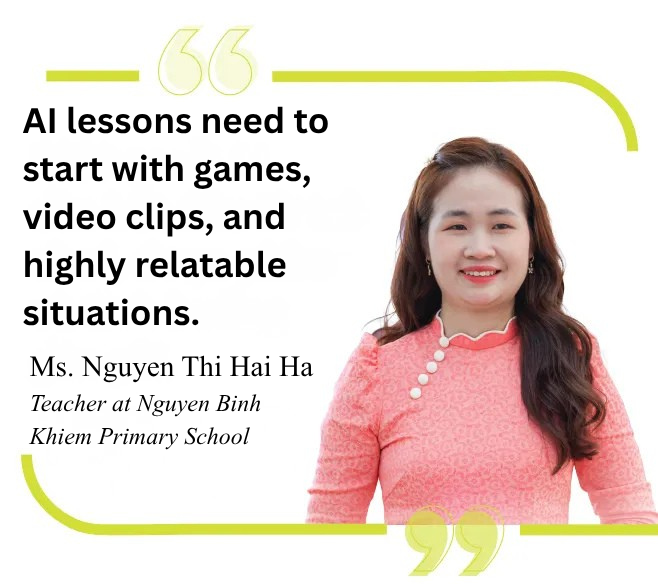
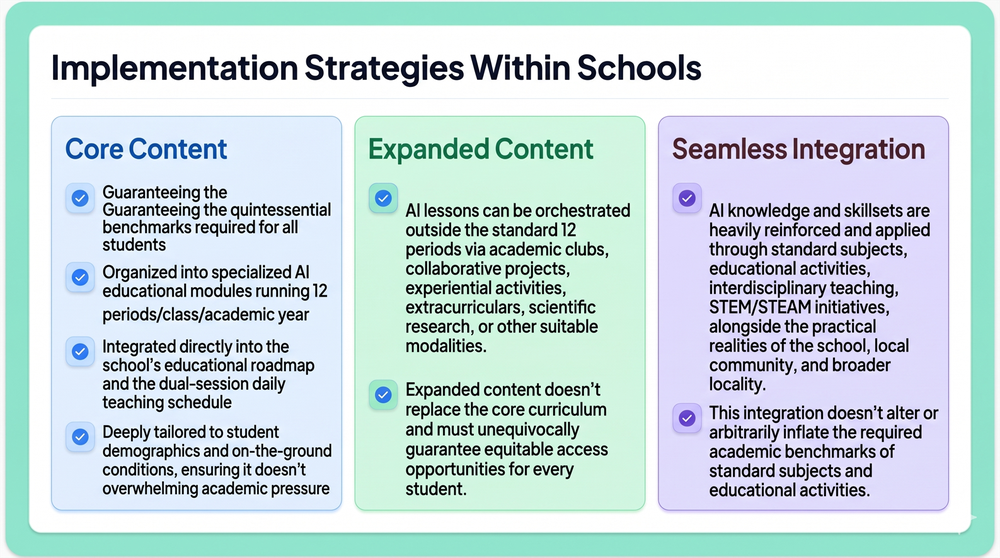
According to Ms. Ha, AI content can be seamlessly integrated into academic subjects, festival activities, or the school’s tailored plans, provided it guarantees the requisite academic benchmarks. For younger students, lessons should spring from games, short films, and highly relatable situations rather than dry, rigid definitions.
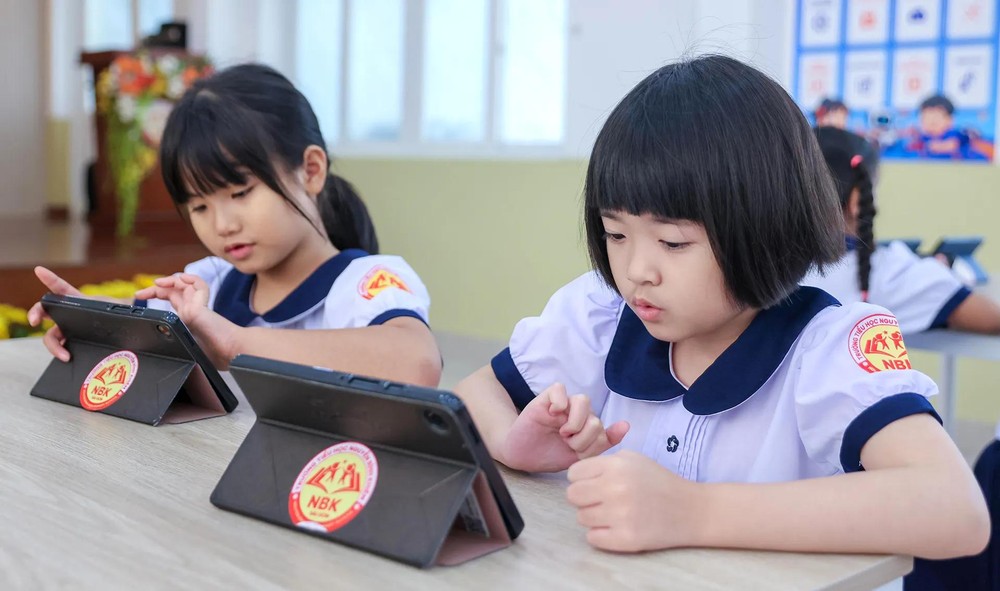

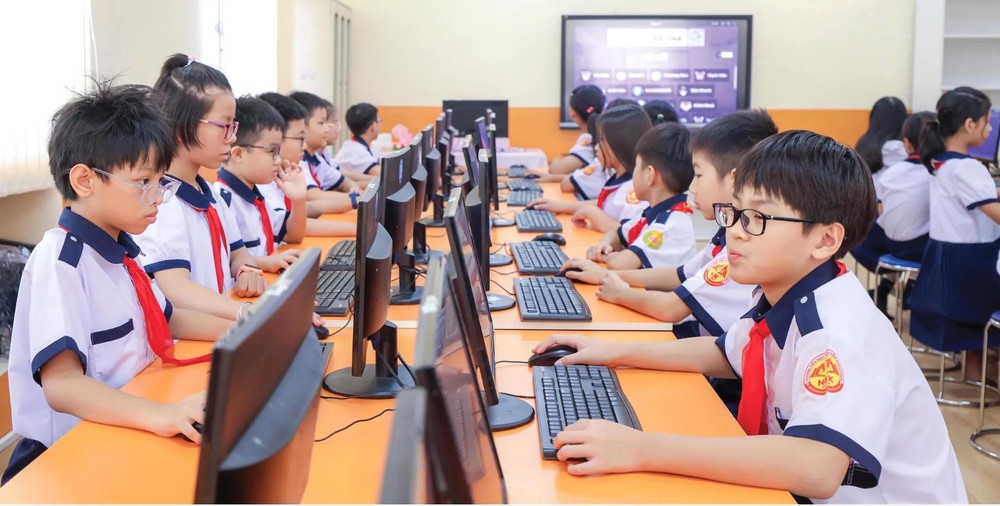
In a 5th-grade IT class at Nguyen Binh Khiem Primary School, students were meticulously guided on how to make decisions when facing AI. The teacher requested the children to generate traffic posters. After inputting prompts, the students proceeded to identify and analyze the AI-generated imagery. The core question posed to them isn’t about how many pictures the machine could spit out, but rather who gets to decide which image is the most appropriate.
For Vu Nguyen Hai Long, a 5/7 class student, the takeaway was clear: one must remain sharp-witted when utilizing AI. If the tool spits out an anomalous answer, he’ll halt operations and ask his parents or teachers for guidance to jointly troubleshoot the error.
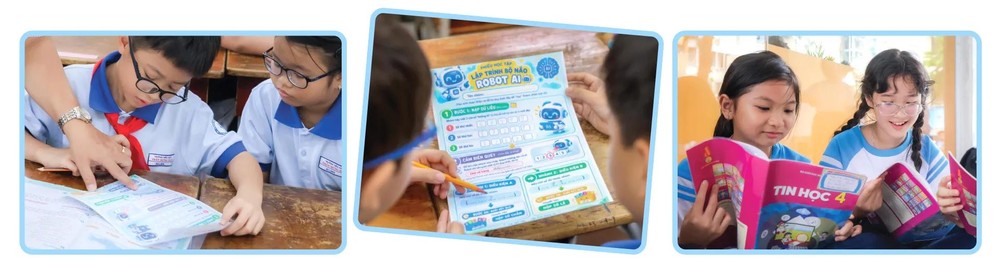
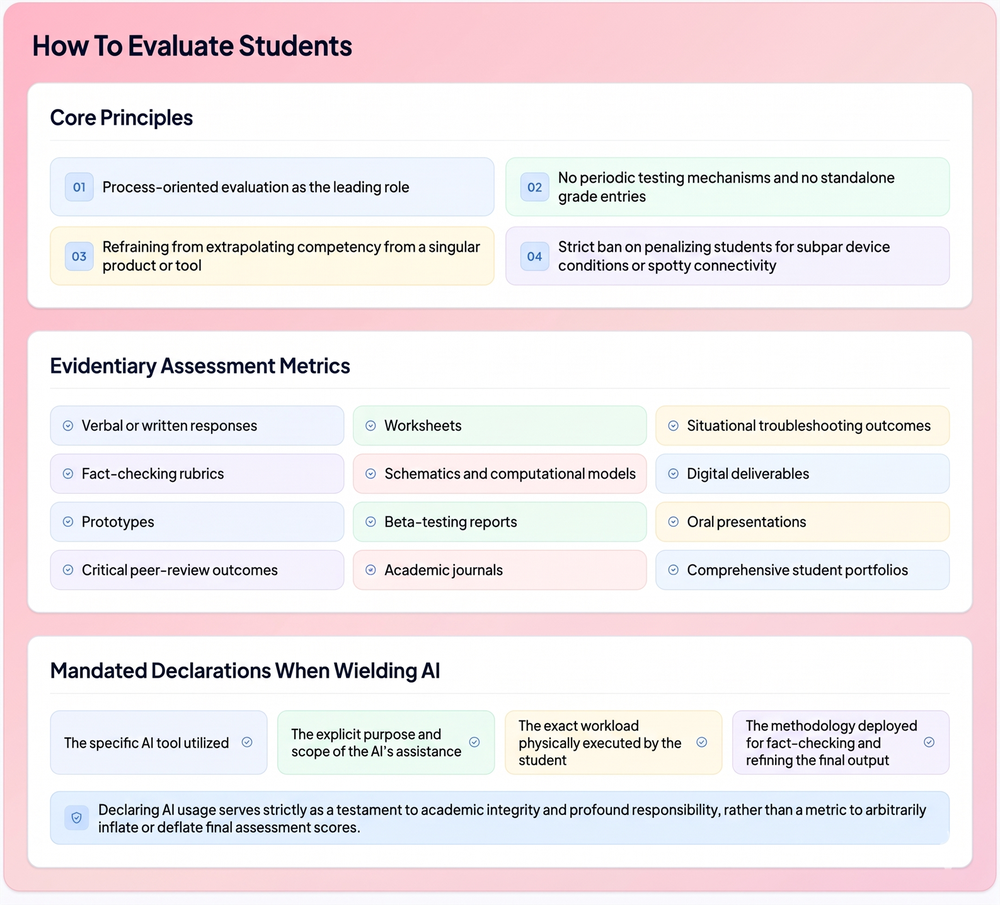
When it comes to AI, knowing how to use it isn’t enough; rather, people need to know how to fact-check it.
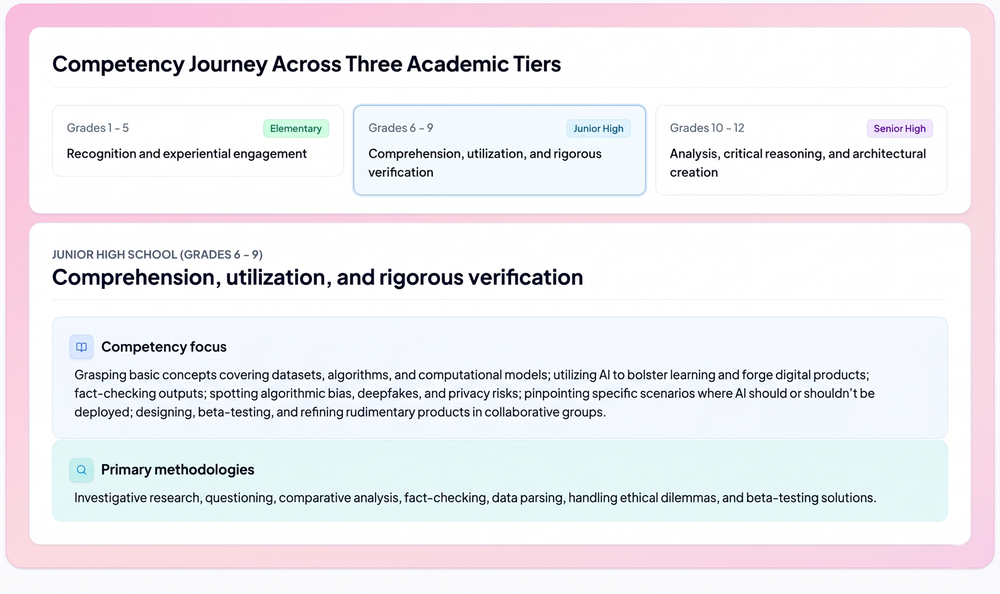
At Tran Hung Dao Primary School in HCMC, a 4th-grade math period threw students into a challenge utilizing AI to distinguish between even and odd numbers. Mr. Tran Quoc Long Xuyen, Head of the 4th-grade block, broke down the process into two distinct steps. First, students must comprehend and provide precise mathematical rules for recognizing even and odd numbers. Subsequently, AI utilizes those exact rules to assist in troubleshooting the problem. Consequently, AI is placed strictly in its rightful role as an assistant, rather than “learning on behalf” of users.
The teacher explicitly reminded the kids that whether AI is smart, swift, or highly capable, it’s entirely man-made. Humans remain the most crucial subjective agents.
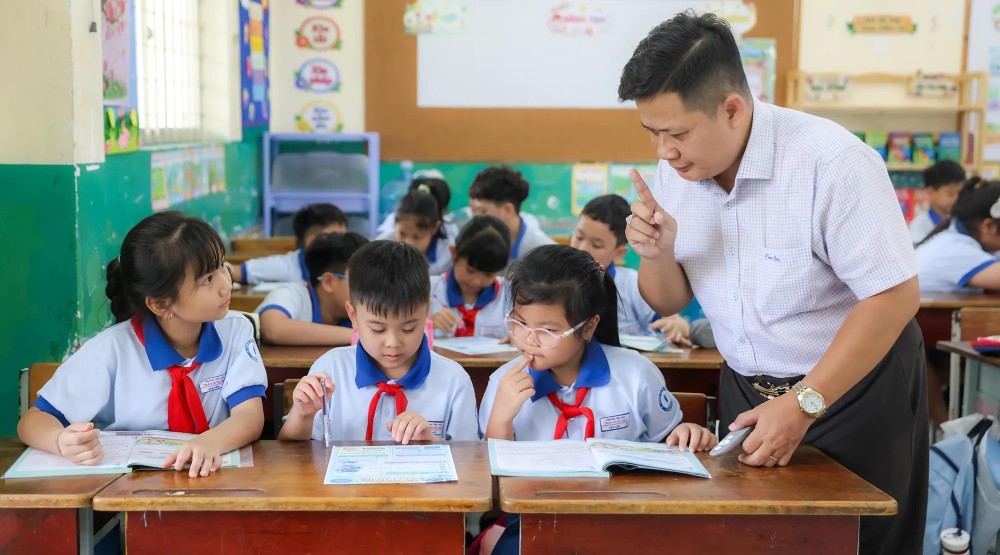
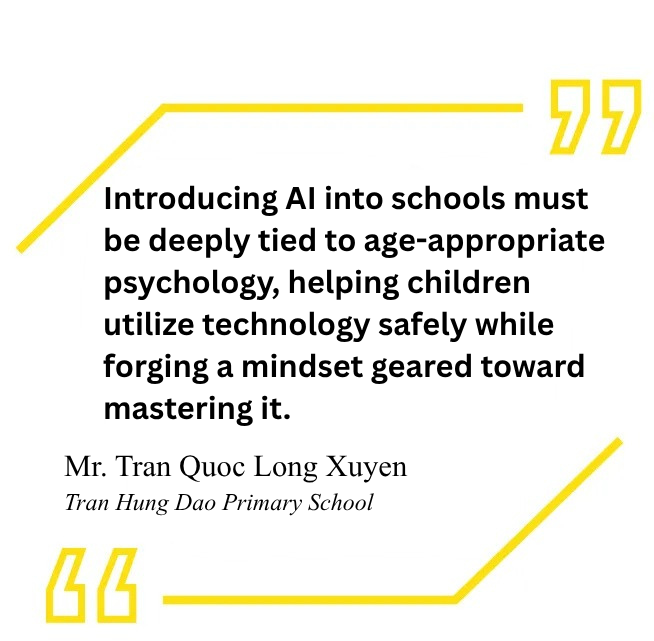
Mr. Xuyen analytically pointed out that students remain exposed to technology in their daily lives, regardless of whether the school teaches AI or not. Lacking a teacher’s solid orientation, they can easily adopt the wrong approach. Therefore, ushering AI into the academic sphere must be executed cautiously, closely aligned with age-specific psychology.
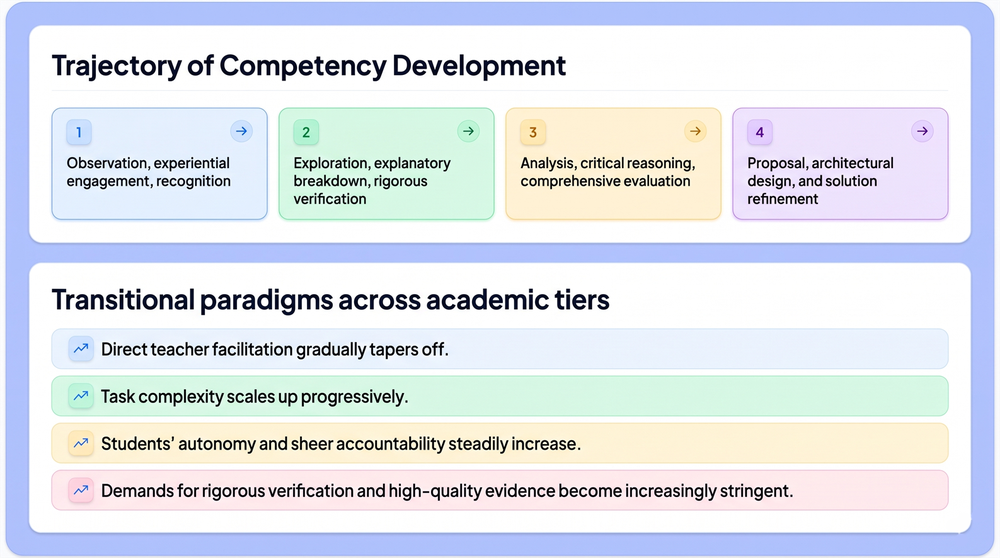
Educators shoulder the hefty responsibility of guiding students to wield AI tools efficiently, safely, and transparently, ensuring they stay on the right track. Every single teacher must reinvent themselves daily to keep pace with AI’s rapid update speeds so that, no matter how far this tool evolves, it always remains firmly within their grasp.

Within the deployment guidelines for the Ministry of Education and Training’s Decision 2422, schools are required to proactively mobilize resources without letting collaborative activities replace the educational institution’s specialized role or forge an unhealthy dependency on vendors.
It’s strictly forbidden to strong-arm students and parents into buying accounts, hardware, or services just to participate in AI educational activities. Learning materials and digital tools must be rigorously vetted for scientific validity, pedagogical soundness, copyright compliance, accessibility, and robust data policies; furthermore, areas plagued by infrastructural limitations must be provided with offline or printable versions.
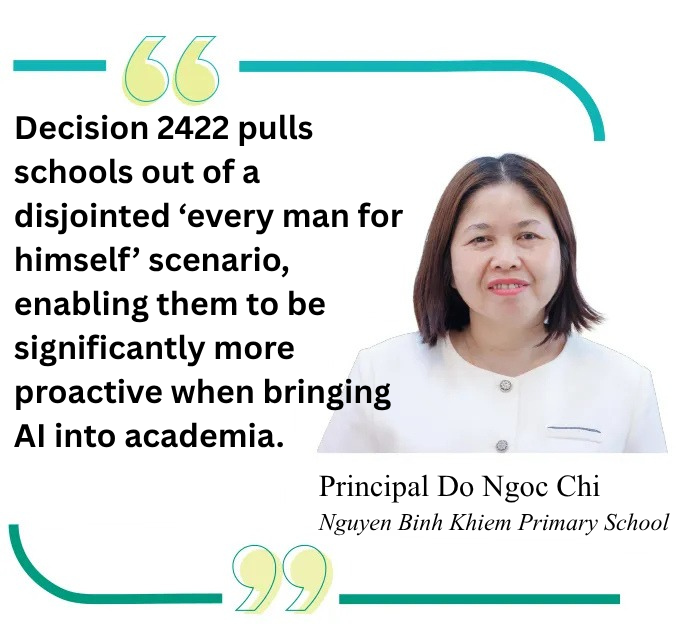
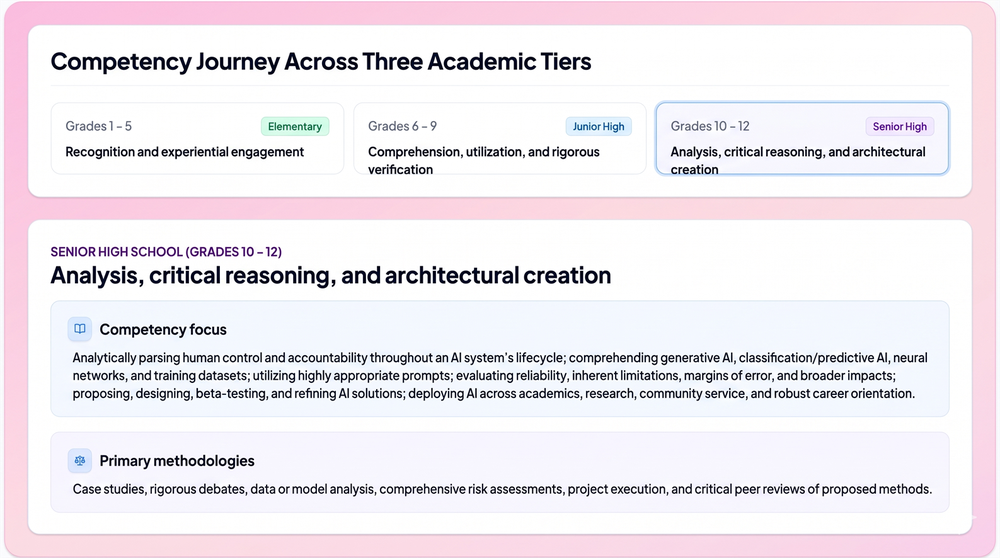
For Principal Do Ngoc Chi of Nguyen Binh Khiem Primary School, the Ministry of Education and Training’s Content Framework effectively steers schools clear of an anarchic “every man for himself” predicament. The focal point lies in helping educators and students comprehend operational principles, utilize tech safely, and nip the risks of abuse in the bud.
Initial roadblocks still largely reside within the psychological apprehensions of teachers and parents alike. Schools need to explicitly clarify how AI injects vibrancy into lectures, how it actively engages students, and exactly why technology won’t replace the fundamental roles of the instructor or the learner.
Given the baseline framework of 12 periods per academic year, Ms. Chi argued that educational facilities can apply it flexibly depending on on-the-ground conditions. One pragmatic approach is tapping into readily available smart devices, such as the smartphones of teachers within the grade block, coupled with the active coordination of parents. Thanks to this, AI lessons can still unfold smoothly and economically while guaranteeing high levels of interactivity.
Content: staff writers
Design: Huu Vi
Translation: Thanh Tam