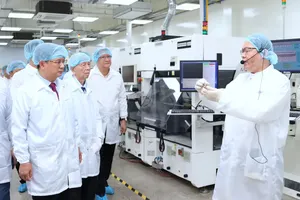
With a total investment of approximately US$8.3 million, the Smart Factory project is expected to help 30 businesses improve their production processes, train 150 personnel, and establish a center for smart factory technology demonstration and verification.
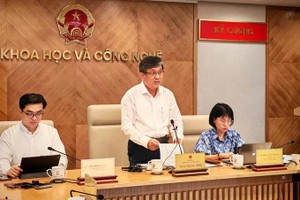
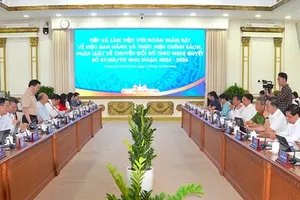
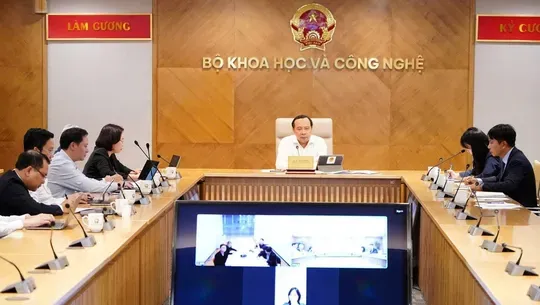
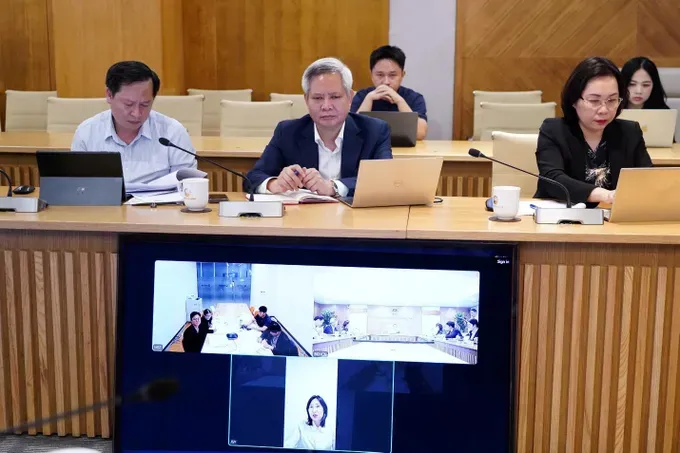
According to the Ministry of Science and Technology, Minister Vu Hai Quan recently held an online meeting with the Republic of Korea’s Ministry of SMEs and Startups (MSS) to discuss the Smart Factory Official Development Assistance (ODA) project.
Representatives of South Korea’s Ministry of SMEs and Startups (MSS) said the project aims to support digital transformation at manufacturing facilities in Vietnam through four main components, including establishing a demonstration and verification center; helping 30 businesses improve their production processes; training approximately 150 personnel in digital transformation; and developing roadmaps to guide local businesses towards smart manufacturing.
The project will be financed through non-refundable ODA, with a total budget of KRW11.45 billion, equivalent to approximately US$8.3 million. Around US$3 million will be allocated to support the 30 participating businesses. The project is expected to run for four years, from 2026 to 2029.
South Korea will support the design and equipping of the demonstration and verification center with machinery, equipment and software, as well as train personnel to operate it. It will also transfer technologies to support the development of smart factories.
Vietnam will coordinate in providing the site and infrastructure, assigning personnel to operate the center, carrying out administrative procedures related to tax exemptions and refunds, and selecting participating businesses.
At the meeting, Minister Vu Hai Quan called for five key areas to be clarified to ensure effective project implementation, including the objectives and scope of the smart factory model; criteria for selecting participating businesses; technologies to be applied; the capacity to invest in and sustain results after the project ends; and the scale of funding and its effective utilization.
He stressed that technology selection should be tailored to each stage of the production process to deliver tangible benefits to businesses. Measures should also be put in place to help participating companies continue investing after the project concludes. The project should go beyond surveys, consultancy and training to establish smart factory models that can operate in practice, be put to use and replicated.
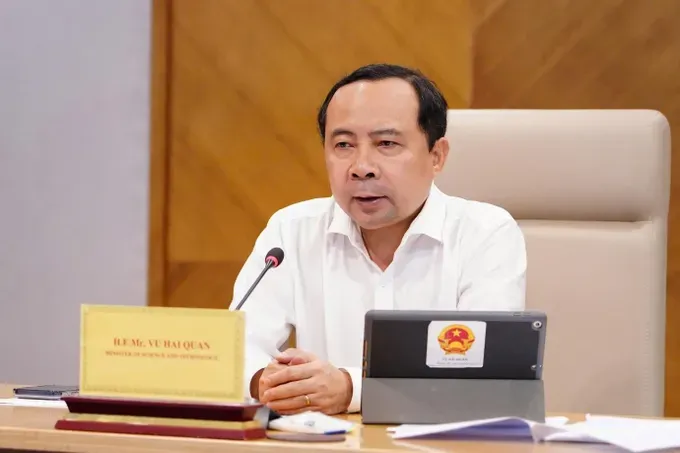
To accelerate implementation, Minister Vu Hai Quan proposed establishing a joint working group and preparing all necessary documents for an in-person meeting scheduled for mid-November. He expressed his hope that South Korea would continue working closely with the Ministry of Science and Technology to advance the project towards substantive implementation and deliver practical benefits to Vietnamese businesses.
With financial, technological and expertise support from South Korea, the project is expected to provide fresh momentum for digital transformation in Vietnam’s manufacturing sector.
Establishing smart factory models tailored to practical needs will help Vietnamese businesses increase productivity, optimize production processes, gradually strengthen their competitiveness and participate more deeply in global value chains.