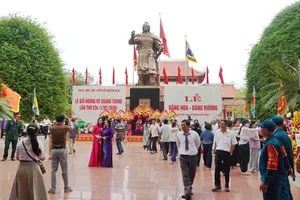
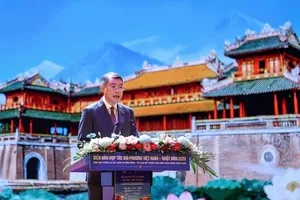
On the morning of April 29, the People’s Committee of Khanh Hoa Province held a groundbreaking ceremony for the Truong Sa Museum in Cam Lam Commune.
The event marked the 51st anniversary of the Liberation of the Truong Sa (Spratly) Islands (April 29, 1975 – April 29, 2026), as well as the anniversaries of Khanh Hoa’s liberation and the National Reunification.
Among the attendees were Mr. Nguyen Khac Dinh, Member of the Party Central Committee and Vice Chairman of the National Assembly; Mr. Tran Phong, Secretary of the Khanh Hoa Provincial Party Committee; and Mr. Ho Xuan Truong, Standing Deputy Secretary of the provincial Party Committee, along with representatives of local agencies and Vingroup.
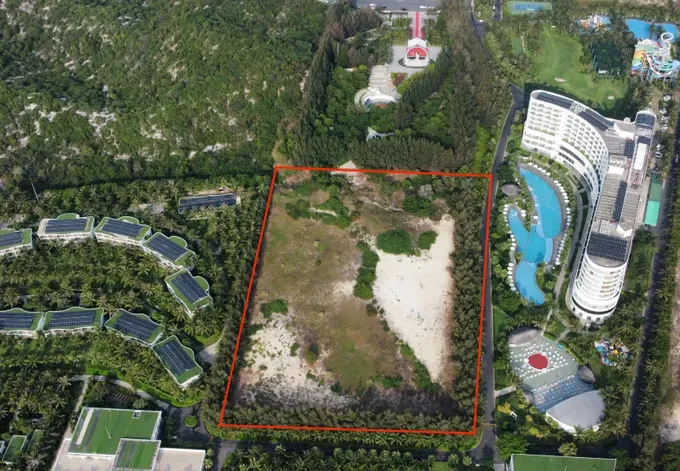
The museum will be built on a site of more than 1.7 hectares in Cam Lam Commune, with a total investment of nearly VND300 billion (US$11.4 million) funded by Vinhomes. The project is expected to be completed in the first quarter of 2028 before being handed over to the provincial authorities for management and operation.
The museum is designed to resemble three branches extending from the mainland toward the Truong Sa (Spratly) Archipelago and the East Sea. Its central building will cover approximately 3,873 square meters, featuring three above-ground floors and one basement level. Once operational, the museum will be linked with the Gac Ma Soldiers Memorial Site, which has been in use since 2017, forming a comprehensive cultural and historical complex dedicated to Truong Sa in Khanh Hoa.
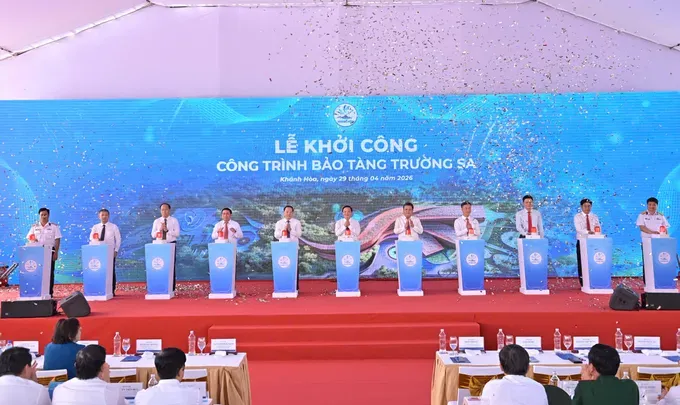
Speaking at the ceremony, Mr. Nguyen Viet Hung, Chairman of the Khanh Hoa Provincial People’s Committee, emphasized that the project carries profound significance in honoring generations who sacrificed for the nation’s maritime sovereignty. It also aims to promote patriotism and strengthen national unity.
The Truong Sa Museum is envisioned as a “red address” preserving and showcasing documents and artifacts related to the Spratly Islands. It will serve as a modern, multifunctional cultural and educational institution, contributing to the promotion of historical and cultural values while meeting the needs of visitors and researchers.