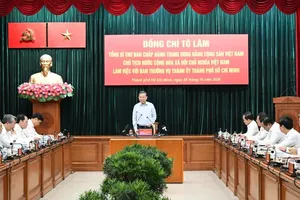
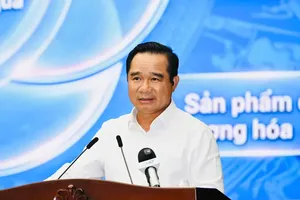
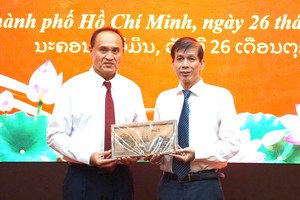
At a working session led by Party General Secretary and State President To Lam with the Standing Committee of the Ho Chi Minh City Party Committee on the afternoon of October 28, Politburo member, Secretary of the Party Central Committee and Head of the Party Central Committee’s Organization Commission, Nguyen Duy Ngoc, emphasized Party building efforts and cadre evaluation in Ho Chi Minh City.
Salary policy should reflect job positions, competence, and performance
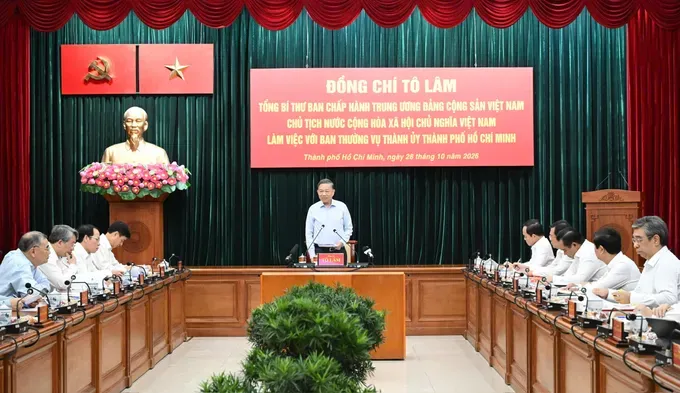
Secretary of the Party Central Committee and Head of the Party Central Committee’s Organization Commission Nguyen Duy Ngoc said Ho Chi Minh City had seriously, cautiously, and effectively implemented the Politburo’s conclusions on the two-tier political and local government model. The city had also taken a relatively coordinated approach to implementing Regulation No. 208-QD/TW of the Party Central Committee on the enforcement of the Party Charter.
Regarding Politburo Conclusion No. 107-KL/TW on completing the job-position system across the political system in connection with building the workforce and managing staffing levels, the city had reviewed existing arrangements and provided implementation guidance. Many localities in Ho Chi Minh City had made good progress in developing job descriptions as a basis for staffing allocation.
The city had also improved the quality of grassroots officials and ensured that communes and wards were staffed with the necessary professional personnel. Several key sectors had introduced initiatives to address grassroots-level work requirements in line with practical needs.
He stressed that restructuring the political system and the two-tier local government model must be closely linked to grassroots Party organizations and the definition of job positions. If responsibilities have not been fully delegated to commune and ward levels, developing job descriptions will be difficult.
He said decentralization must be implemented to the fullest extent. When tasks and administrative procedures are delegated to grassroots authorities, residents and businesses must be able to access the services, and civil servants must be equipped to handle the work.
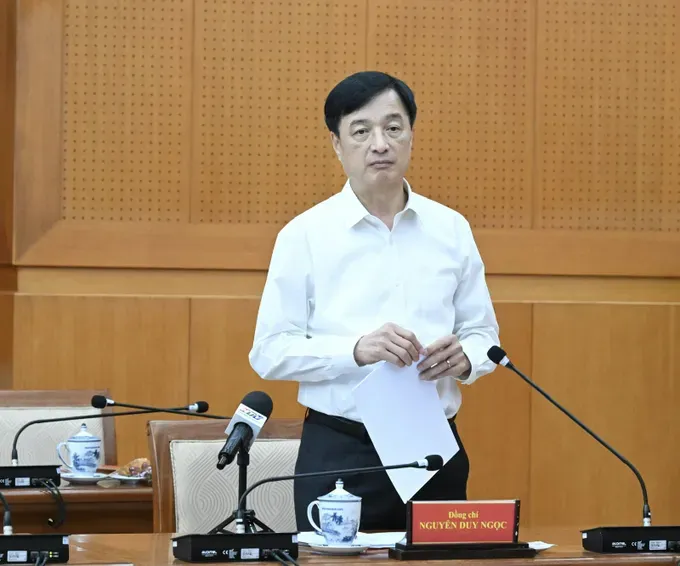
The head of the Central Organization Commission called on the city to carefully determine implementation timelines and assess the degree of similarity among groups of duties as a basis for allocating staffing levels to individual positions. The aim is to ensure a close alignment between assigned responsibilities and the resources available to carry them out.
On personnel evaluation, he said Politburo Regulation No. 227-QD/TW on reviewing performance and assessing and classifying the quality of collectives and individuals across the political system and the Party would take effect on January 1, 2027, replacing Regulation No. 366-QD/TW. Under the new regulation, data would be used to determine the extent to which objectives and targets had been achieved.
He explained that data-based evaluations would make it possible to compare actual performance with assigned ratings, helping identify cases in which work results fell short of requirements but the assessments failed to reflect actual performance accurately.
He emphasized that tasks relating to job positions, organizational structures, staffing levels, and personnel evaluation must be implemented as part of a unified framework. Comprehensive job-position data must be available in December.
Ho Chi Minh City therefore needs to complete its assigned tasks according to schedule. Once this work is finished, the overall organizational model will be better positioned to operate stably. Internal structures at each level and within each sector can then be refined based on job-position groups and corresponding staffing allocations.
This will also provide a basis for calculating salary policies linked to job positions, professional competence, and work performance.
Transforming clogged resources into drivers of economic growth
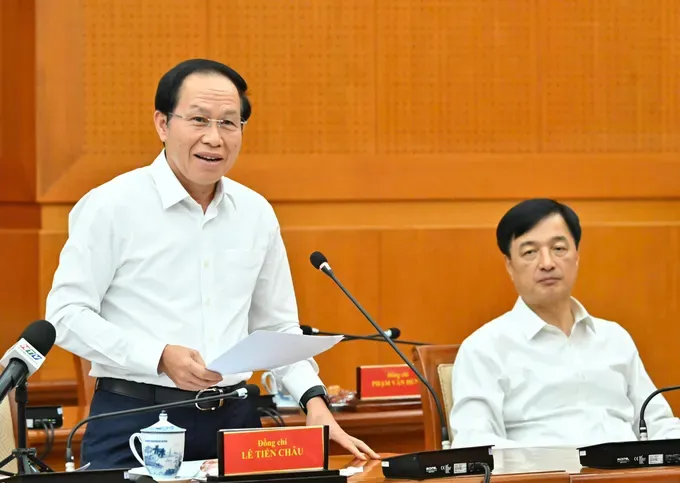
Also speaking at the working session, Deputy Prime Minister Le Tien Chau evaluated that Ho Chi Minh City has achieved numerous positive results across all fronts, particularly in economic growth, institutional improvement, and the resolution of long-standing backlog issues, contributing to the fulfillment of growth targets.
Regarding upcoming tasks, he urged Ho Chi Minh City to focus heavily on resolving bottlenecks and accelerating project implementation. In particular, the city should complete the execution of inspection conclusions to swiftly transform clogged resources into drivers of economic growth. Priority should be given to finalizing legal documents within its authority to implement specific mechanisms for municipal development, focusing on mechanisms that directly unblock investment bottlenecks, mobilize resources, and govern execution.
Deputy Prime Minister Le Tien Chau requested that the city address the shortage of schools and classrooms, especially in industrial zones, new urban areas, and localities experiencing significant mechanical population growth. He emphasized mobilizing social resources to invest in school infrastructure to ensure educational access for children, particularly those of factory workers and laborers.
Ho Chi Minh City targets 13.2 percent growth in Q4
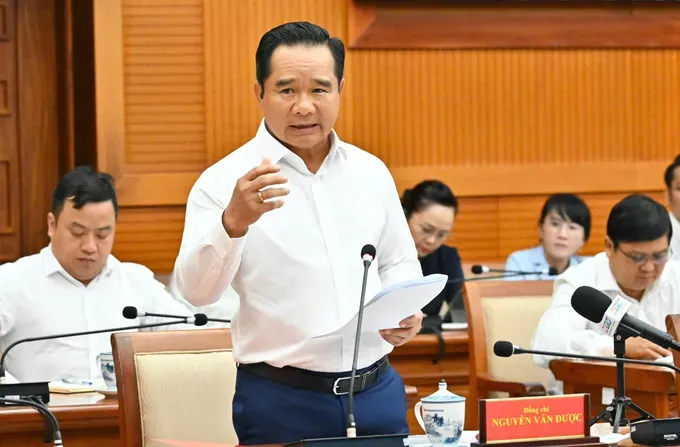
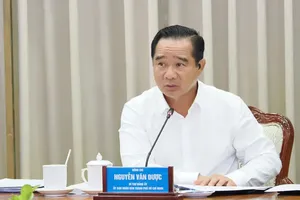
Reporting on socio-economic development measures, Chairman of the Ho Chi Minh City People’s Committee Nguyen Van Duoc said the city must achieve 13.2 percent economic growth in the fourth quarter of 2026 to meet its full-year target of double-digit growth.
In the first nine months of 2026, the city disbursed 75.5 percent of its allocated public investment capital, reaching this level for the first time. He described the result as a breakthrough in the city’s leadership and direction of public investment disbursement.
However, private investment disbursement remained slow, an issue the city needs to address.
In the final months of the year, Ho Chi Minh City will focus on implementing a “five-in-one” demand stimulus program combining e-commerce, digital payments, tourism, entertainment, and shopping to boost consumption and drive economic growth.
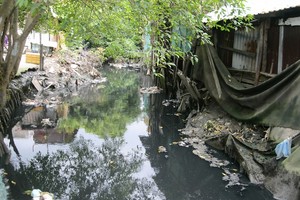
The city will also step up industrial production, maximize revenue collection, and prevent tax revenue losses, while resolving obstacles and bringing long-stalled projects to a definitive conclusion. It will also prioritize four key challenges: flooding, traffic congestion, environmental pollution, and achieving its goal of becoming a drug-free city.