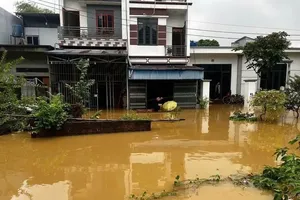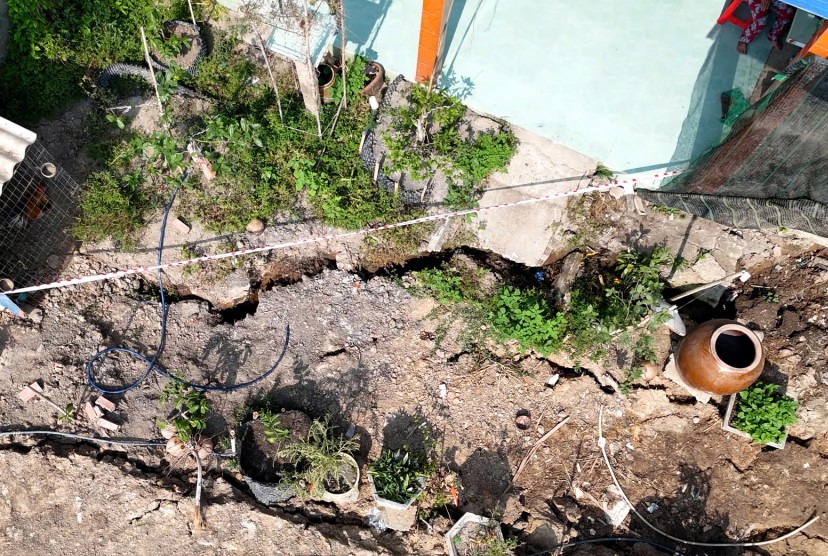
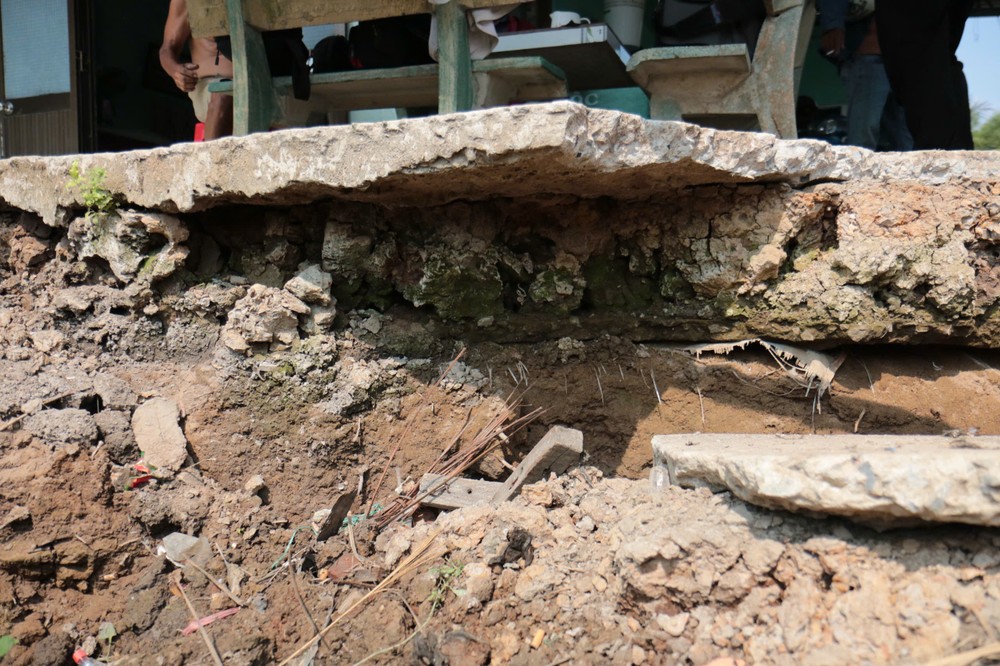
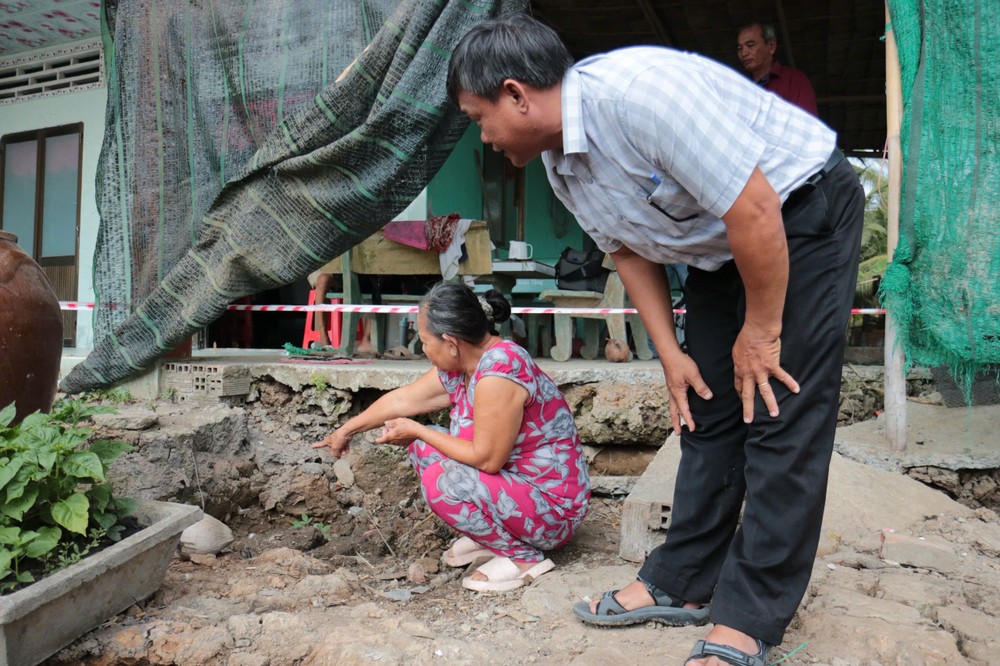
The eroded section stretches about 50 meters in length, with a depth of 1 meter and a width of 4 meters. Undercutting has created hollow cavities beneath the surface, weakening the soil structure. While no casualties were reported, the incident damaged a yard, caused subsidence at one house, and affected crops belonging to two households, with total losses estimated at around VND100 million.
Authorities attributed the erosion to the area’s location along a concave river bend, where strong currents directly impact the bank. In addition, heavy traffic of boats and high-tonnage barges has intensified erosion. Weak geological conditions, combined with low tide, have further hollowed out the riverbank from below, leading to increasingly severe ground collapse.
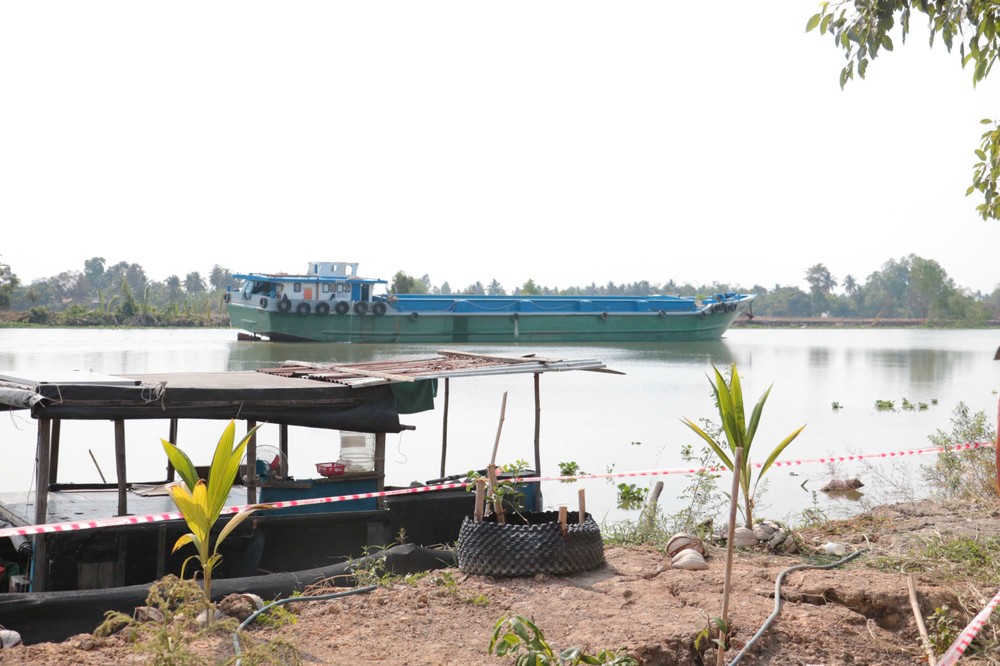
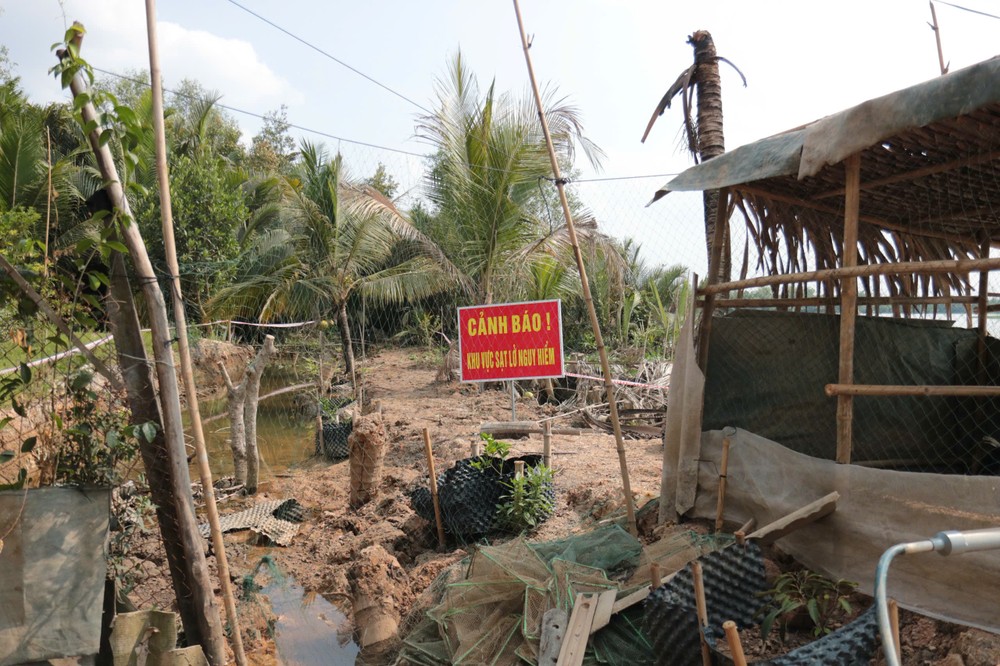
In reality, erosion in this area has persisted for years. Over the past three to four years alone, approximately seven high-risk erosion sites have emerged along a 3-kilometer stretch of the river passing through the commune. Although local authorities have implemented temporary mitigation measures such as installing coconut and cajuput piles and reinforcing the bank with soil, these solutions have proven unsustainable, with erosion continuing and showing signs of escalation.
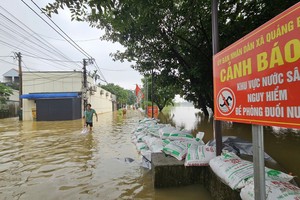
In the short term, the commune has instructed relevant forces to install warning signs and cordon off hazardous areas. Residents have been advised to relocate their belongings and limit movement near the affected site. Monitoring and inspections are being conducted regularly to respond promptly to any further developments.
For the longer term, local authorities acknowledged that the current erosion hotspots have exceeded their capacity to address. They have therefore proposed that the provincial People’s Committee and the Department of Agriculture and Environment conduct surveys and invest in permanent embankment systems to ensure public safety and stabilize the riverbank.
As erosion continues to evolve unpredictably and the risk of further expansion remains high, the prompt implementation of comprehensive, long-term solutions is considered essential to minimize damage and safeguard the livelihoods of local residents.