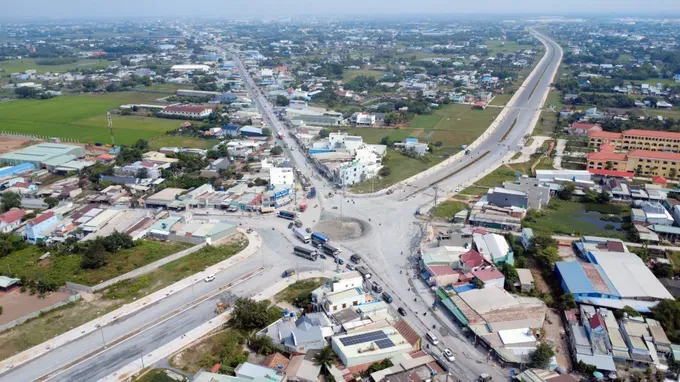
During the 2025–2030 period, Tay Ninh Province will focus on completing its network of expressways, ring roads, and key growth corridors, aiming to achieve a major breakthrough in transport infrastructure and strengthen connectivity with Ho Chi Minh City and neighboring provinces.
On February 4, the Tay Ninh Provincial People’s Committee issued a plan to implement key projects, strategic transport corridors, and works under a breakthrough program designed to mobilize all available resources for infrastructure development, particularly a modern, integrated transport system, linking key growth regions for the 2025–2030 period, with a vision extending to 2050.
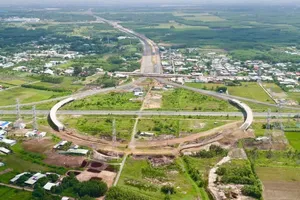
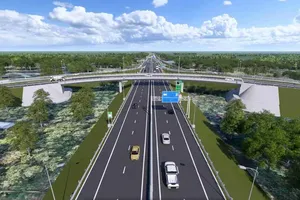
The central objective is to complete a portfolio of key projects aimed at enhancing connectivity capacity and attracting investment. Among them, the Ho Chi Minh City Ring Road 4 project, spanning approximately 74.5 kilometers through Tay Ninh Province, has been identified as a strategic transport artery.
In addition, construction will move forward on a 33-kilometer road linking the Moc Bai–Xuyen A industrial and urban corridor, designed with eight to ten lanes and to be developed under a public–private partnership (PPP) model.
The province’s transport network will be further strengthened by the DT.827E corridor, linking Ho Chi Minh City, Tay Ninh, and Dong Thap, supported by a system of major bridges spanning the Can Giuoc, Vam Co Dong, and Vam Co Tay rivers.
The Ho Chi Minh City–Moc Bai Expressway, the Go Dau–Xa Mat Expressway (Phase 1), and the Binh Chanh–Ring Road 4–My Quy Tay Border Gate corridor are expected to emerge as key economic corridors, expanding space for industrial development and logistics services.
In addition to the key growth corridors, the province aims to complete a series of breakthrough projects by 2030, including the DT.830C, DT.781D, and DT.791 routes, which connect the Xa Mat border gate with Tan Nam, as well as the Tan Tap–Long Hau Road.
The Tay Ninh Provincial People’s Committee has instructed relevant agencies to focus on preparing cleared land and accelerating compensation and resettlement efforts. Project funding will be mobilized flexibly from the state budget, socialized capital, and the effective utilization of land-based resources. The province also emphasized the need to maintain strict oversight mechanisms to ensure the quality of these key projects.