According to the steering committee, the Politburo’s Resolution No. 79-NQ/TW on the Development of State-Owned Economic Sector was issued in the context that the whole country is striving and determined to innovate and reform in many fields, aiming to become a developing country with modern industry and upper-middle income by 2030; and a developed country with high income by 2045.
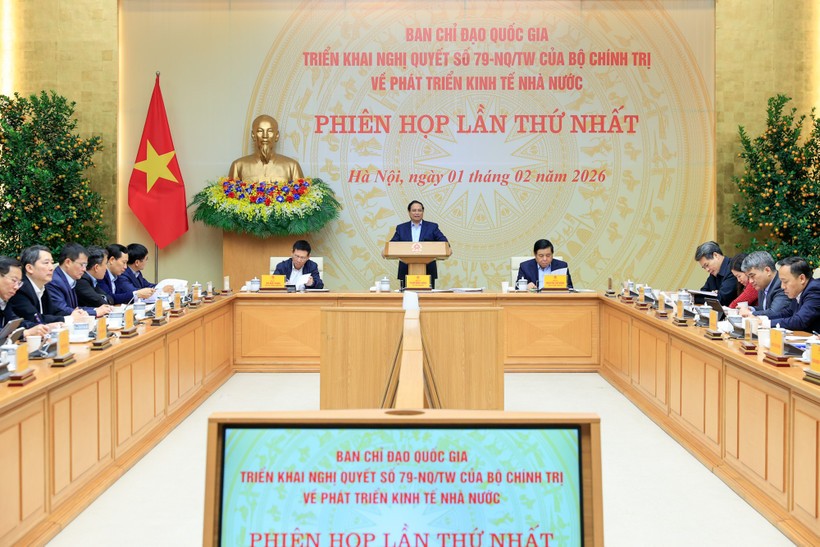
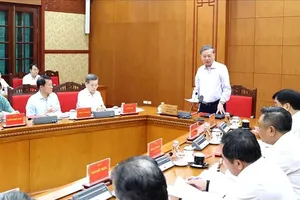
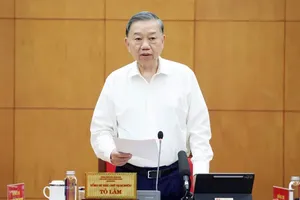
Prime Minister Pham Minh Chinh, Head of the National Steering Committee for the Implementation of the Politburo’s Resolution No. 79-NQ/TW on the Development of the State-owned Economic Sector, chaired the first meeting of the steering committee in Hanoi on February 1.
Deputy Prime Ministers and deputy heads of the steering committee Ho Duc Phoc and Nguyen Chi Dung, ministers, leaders of ministries and sectors, members of the steering committee, leaders of state-owned economic groups, experts and scientists attended the meeting.
In his opening remarks, PM Pham Minh Chinh stated that in 2025, the Government submitted to the Politburo for consideration and promulgation nine thematic resolutions related to important national issues and had just submitted to the Politburo a draft Resolution on the foreign-invested economic sector. This is an important foundation, along with the Resolution of the 14th National Party Congress, for the country to implement the 2045 vision and the 100-year vision, and to achieve the two 100-year goals, he stressed.
The Resolutions of the Politburo and the Resolution of the 14th National Party Congress have determined the policies and guidelines, identified realistic, feasible, and effective goals, tasks, and solutions for national development, with a long-term, broad-minded, deep-thinking, and grand-scale approach to thinking and vision, the government leader affirmed.
According to the PM, on January 6, 2026, the Politburo issued Resolution No. 79-NQ/TW on the Development of the State-Owned Economic Sector. To implement the Resolution, the PM established the National Steering Committee for the Implementation of the Politburo’s Resolution No. 79-NQ/TW.
At this first meeting, PM Pham Minh Chinh requested the steering committee to focus its discussions and contributions on the Government’s draft Resolution promulgating the Government's Action Plan to implement Resolution No. 79-NQ/TW; the National Assembly’s draft Resolution on some special mechanisms and policies for the development of the state-owned economic sector; and the draft Regulations on the operation of the steering committee, ensuring substantive, practical, and effective implementation, avoiding formality.
The government leader noted that the members of the steering committee should ensure that the documents reflect "high determination, great effort, decisive action, thoroughness in each task, and completion of each task; clear assignment of responsibilities, tasks, timelines, expected results, authority, and accountability," adhering closely to the Party's viewpoints, guidelines, and policies to institutionalise them, especially by removing bottlenecks and obstacles, in order to effectively exploit state resources and create a clear transformation in the efficiency of state-owned enterprises.
According to the steering committee, the Politburo’s Resolution No. 79-NQ/TW on the Development of State-Owned Economic Sector was issued in the context that the whole country is striving and determined to innovate and reform in many fields, aiming to become a developing country with modern industry and upper-middle income by 2030; and a developed country with high income by 2045.
The Resolution sets a specific goal: by 2030, 50 state-owned enterprises will be among the top 500 largest enterprises in Southeast Asia; 1-3 enterprises among the world's top 500; 100 percent of enterprises implementing modern corporate governance on a digital platform; and 100 percent of state-owned economic groups and corporations applying OECD governance principles.
The Resolution also aims to build a number of strong, large-scale, technologically advanced state-owned economic groups and enterprises with regional and international competitiveness, playing a pioneering and leading role, especially in key strategic sectors of the economy.
Regarding state-owned credit institutions, at least three state-owned commercial banks should be among the top 100 largest banks in Asia in terms of total assets. Four state-owned commercial banks will lead the way, pioneering in technology and management capacity, and are dominant in terms of scale, market share, and market regulation capabilitie.
To develop the state-owned economic sector, the Resolution identifies general solutions for state-owned economic development such as innovating the mindset in leadership and direction; perfecting a comprehensive and transparent legal framework; clearly defining ownership functions, economic management functions, functions for carrying out political tasks and non-profit tasks from business functions; reforming administrative procedures, decentralising power, enhancing autonomy and accountability; implementing socio-economic accounting; creating a favourable, fair, and transparent environment; mechanisms to protect officials who dare to think, dare to act, and dare to take responsibility for the common good; and reforming inspection, examination, and auditing activities, among others.