Myriad infected children experience severe complications
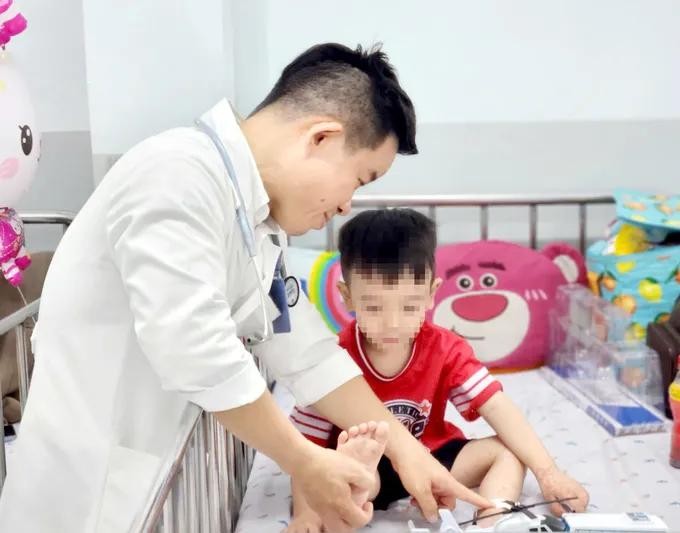
Three-year-old Duong Ngo Gia Khang, residing in Hung Long Ward of HCMC was admitted for urgent treatment at Children’s Hospital 1 following several days of high fever, persistent rashes, alongside painful blisters manifesting on his hands and mouth. For Ms. Ngo Nhu Huynh, Khang’s mother, the situation is particularly alarming, noting this is her child’s second time contracting hand-foot-mouth disease (HFMD), yet this specific episode has progressed significantly worse.
“Initially, he only developed a few spots on his hands accompanied by a sore throat; subsequently, his fever spiked above 39 degrees Celsius and numerous blisters appeared inside his mouth, making eating incredibly difficult,” she explained.
Previously, a child living nearby had caught HFMD for roughly two weeks but had recovered. “I mistakenly assumed that since the child had recovered, he was no longer contagious, so I let the kids play together; I don’t know if that’s the exact reason Khang got sick,” Ms. Huynh nervously elaborated.
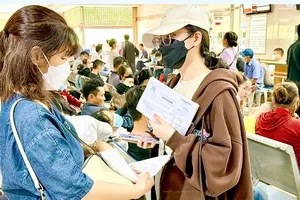
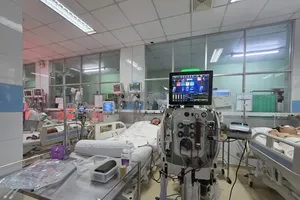
According to Du Tuan Quy, MD, Head of the Infectious Diseases and Neurology Department at Children’s Hospital 1 in HCMC, the department is currently treating over 50 HFMD cases, including 16 severe instances classified at grade 3 or higher, with 6 specific patients requiring intubation alongside mechanical ventilation. Every single day, the department receives roughly 40 additional cases transferred directly from the outpatient screening area.
“The proportion of HFMD cases progressing to severe stages is alarmingly high. Worryingly, the disease can trigger dire neurological complications, myocarditis, or even become life-threatening if it isn’t detected and treated promptly,” Head Du Tuan Quy informed.
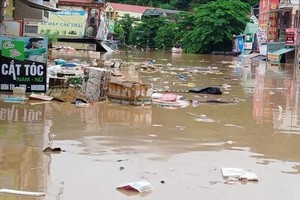
Meanwhile, the prevailing rainy season across numerous regions creates stagnant water in various receptacles, providing optimal conditions for dengue-transmitting mosquitoes to breed and multiply. Consequently, the number of dengue fever cases is also surging across multiple localities.
According to the HCMC Center for Disease Control, from the beginning of the year through last week, the city recorded 32,626 dengue cases, with the overall trajectory still trending upward. The HCMC Center for Disease Control actively warns citizens not to be too careless, urging them to avoid confusing dengue with commonplace fevers, since both can initially present with sudden fever plus profound fatigue.
Individuals who’ve previously contracted dengue can absolutely get infected again because the Dengue virus consists of 4 distinct serotypes; during subsequent infections with a different serotype, the glaring risk of severe progression can drastically increase.
Tackling disease prevention from grassroots levels
According to medical professionals, infectious disease outbreaks, particularly HFMD plus dengue, predominantly afflict young children. Notably, the HFMD epidemic spreads like wildfire across preschools via bodily secretions, saliva, blister fluid, or contaminated surfaces harboring pathogenic viruses. When kids return to school, constant close contact, shared routines, alongside collective playtime drastically amplify disease transmission risks.
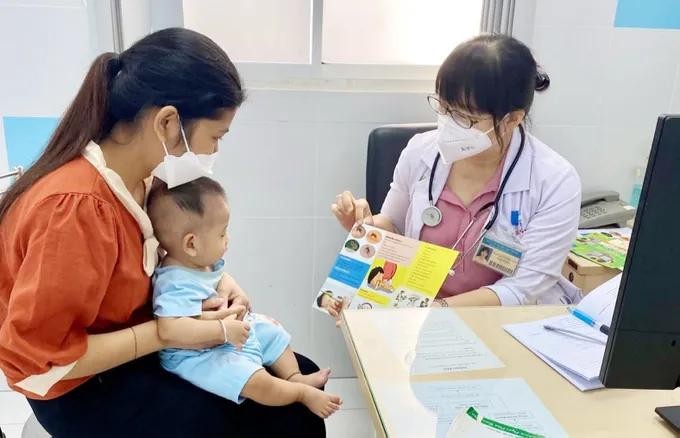
For Head Du Tuan Quy, adult hygiene remains paramount. He emphasized adults must thoroughly wash hands immediately after returning from work before touching or caring for children. For youngsters attending classes, parents need to proactively monitor prevailing disease situations within specific classrooms.
If a child experiences close contact with an HFMD patient, caretakers must closely observe for typical signs like sudden fever, rampant rashes, or blisters manifesting on palms, soles, knees, buttocks, alongside painful oral lesions. When children suffer prolonged high fever, startling jerks, trembling limbs, unusual crying fits, difficulty sleeping, or severe lethargy, it’s imperative to bring them to a medical facility promptly.
Facing the reality that infectious diseases inherently spike at the academic year’s start, the healthcare and education sectors across myriad localities have determinedly ramped up preventive measures.
Among these efforts, the HCMC Department of Education and Training formally requested People’s Committees alongside local educational institutions to firmly grasp the motto of “preventing diseases from an early stage, from afar, from the grassroots,” explicitly identifying schools as critical battlegrounds for controlling epidemic risks. Facility heads bear direct, comprehensive responsibility for all epidemic prevention protocols within their jurisdictions.
In Hanoi, Deputy Director Vu Cao Cuong of the Hanoi Department of Health noted that since early this year, the city recorded nearly 5,000 HFMD cases alongside roughly 3,000 dengue fever infections.
Hanoi’s authorities strictly mandated preschools as well as primary schools to seamlessly coordinate reviewing vaccination histories, organizing catch-up inoculations for newly enrolled students. They’re also tasked with heavily bolstering health monitoring, maintaining pristine classroom hygiene, plus detecting early cases for prompt handling.
Aiming to drastically curtail disease outbreaks spreading throughout communities, the Department of Preventive Medicine (under the Health Ministry) has officially directed localities to intensify epidemic prevention efforts, proactively pinpointing suspected cases early to swiftly isolate and treat them.
Statistics from this department reveal that from the beginning of the year to date, the entire nation logged nearly 95,000 dengue cases, including 14 tragic fatalities, marking a 9.3 percent surge compared to the same period last year. Meanwhile, the sheer volume of HFMD cases skyrocketed to over 113,000 instances, reflecting a massive spike year-over-year.
Alongside the dengue vaccine, it’s highly anticipated that by early October 2026, an HFMD vaccine will finally hit the Vietnamese market. This is expected to inject an additional prophylactic solution into the medical arsenal, significantly contributing to shielding children against crippling disease risks and severe complications.