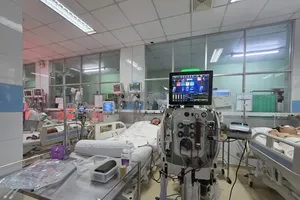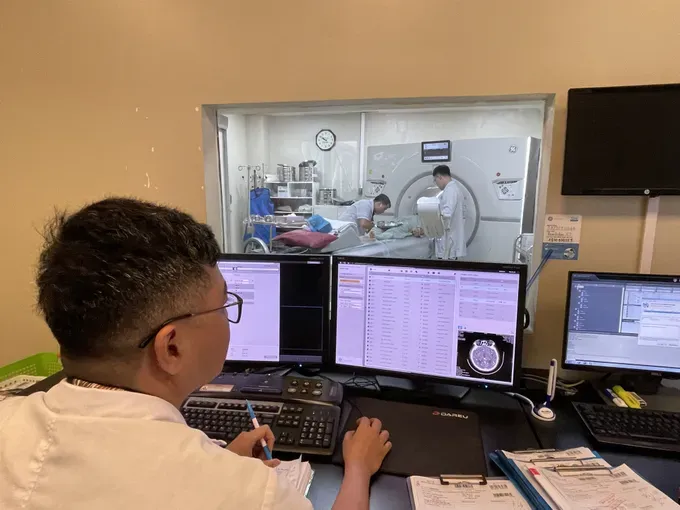
According to the Ministry of Health’s policy impact assessment report for proposed amendments to Article 113 of the Law on Medical Examination and Treatment, which is being reviewed by the Ministry of Justice, the medical device market is large, diverse and significantly dependent on imports.
As of August 2023, about 294,430 medical device products were distributed on the market, with approximately 92 percent imported. High-tech medical devices are almost entirely dependent on imports.
Medical devices vary widely in type, configuration, technology and risk level, ranging from consumables and single-use devices to diagnostic and treatment equipment, surgical robots and medical software. Many devices have long life cycles and require warranties, maintenance, calibration and after-sales technical services.
According to the Ministry of Health, medical device management should not stop at the point of granting circulation numbers or procurement, but should cover the entire product life cycle, from registration, import and distribution to use and post-market surveillance.
All online public services in the medical device sector are now available fully online. However, data on imports, distribution, prices, procurement and use at healthcare facilities has not been fully standardized and interconnected for lookup, alerts and post-market surveillance.
When a safety alert or recall occurs, quickly identifying the product, the entity that placed it on the market, the official distributor and the healthcare facilities using it remains difficult.
The draft proposes strengthening data-based management while requiring circulation-number holders to publicly disclose and update lists of distributors and authorized or designated official agents. This would support traceability, alerts, recalls, warranties, maintenance and price comparisons.
Health Ministry drafts overhaul of medical device pricing and distribution
Medical device pricing is another area the Ministry of Health has proposed changing. According to the impact assessment, differences in models, configurations, accessories, software, delivery terms, warranties and technical services make comparing prices between devices difficult.
Meanwhile, data on the number of distribution layers, costs incurred at each stage and actual transaction prices has not been fully standardized.
The draft proposes publishing list prices, maximum selling prices announced by businesses, and information on price markups or expected profit margins within specified ranges, while continuing price negotiations for appropriate groups of devices.
For supply chains, the Ministry of Health proposes encouraging manufacturers to participate directly in distributing and supplying medical devices, reducing unnecessary intermediaries while maintaining value-added distribution services.
The draft also proposes allowing direct purchases and imports from foreign manufacturers with representative offices or responsible entities in Vietnam.
According to the Ministry of Health, the new policies should be implemented according to a roadmap suited to the capacity of regulators, businesses and healthcare facilities, while strengthening human resources, funding and data infrastructure.