Speaking with SGGP Newspaper, Associate Professor Tang Chi Thuong, Director of the Ho Chi Minh City Department of Health, said that to address hospital overcrowding, the city's health sector is restructuring its network toward a multi-tiered, multi-polar, and multi-centered model, enhancing grassroots capacity, developing gateway hospitals, and expanding specialized medical capabilities closer to residents.

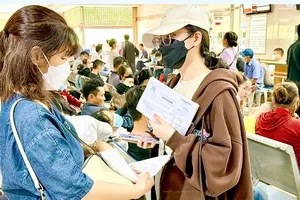
Associate Professor Tang Chi Thuong said that currently, overcrowding is concentrated mainly in several top-tier hospitals offering specialties with high treatment demand, such as internal medicine, oncology, cardiology, stroke care, traumatology, obstetrics, and pediatrics.
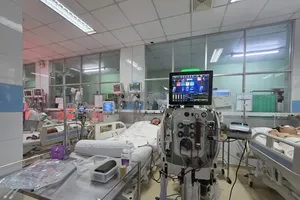
According to Associate Professor Tang Chi Thuong, Hospitals such as Nhan Dan 115, Nhan Dan Gia Dinh, Tu Du, Hung Vuong, Oncology, Traumatology and Orthopedics, Binh Dan, Children's Hospital 1, and Children's Hospital 2 regularly receive large volumes of patients, including many severe and complex cases transferred from other provinces and cities.
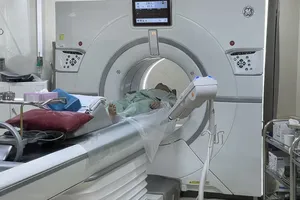
He said that the city's grassroots health system has seen significant improvements, particularly in epidemic prevention and control, vaccination, community health management, and chronic disease care. However, it must be frankly acknowledged that capacity across health stations remains uneven and has not fully met public expectations, especially regarding doctors, pharmaceuticals, testing, diagnostic imaging, initial emergency care, and service hours.
Following administrative boundary expansions, the entire city has 168 health stations and 298 health station points. The larger scale creates conditions to organize a widespread network, but it also demands higher standardization requirements.
The city must implement solutions ensuring six factors simultaneously including sufficient human resources; adequate pharmaceuticals and appropriate equipment; expansion of technical categories; direct connection with hospitals; data interoperability; and a suitable financial mechanism for health stations to operate sustainably. Once achieved, higher-tier hospitals will see fewer non-essential visits, while residents receive long-term monitoring right in their communities, providing a sustainable way to relieve overcrowding.
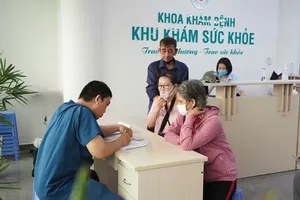
The health sector is implementing system restructuring toward a multi-tiered, multi-polar, and multi-centered model. At the primary care tier, the sector continues strengthening health stations, developing family doctors, rotating hospital doctors to grassroots facilities, increasing remote consultations, managing non-communicable diseases, and monitoring post-discharge patients.
He revealed that at the hospital tier, capacity at basic-level and gateway hospitals is being enhanced, while specialized facilities continue training and transferring technical expertise to lower levels.
The health sector is also developing a "one hospital - multiple facilities" model while perfecting pre-hospital emergency care, inter-hospital red alerts, and referral procedures. When basic-level hospitals are capable of retaining patients, specialized techniques are brought to health poles, and referral systems operate smoothly, top-tier hospitals can focus on fulfilling their proper role: treating severe, complex cases and developing advanced techniques.
Under the "one hospital - multiple facilities" model, establishing new hospitals is not strictly necessary; instead, strong hospitals can expand their capacity to other areas. Facilities share governance systems, professional procedures, human resources, training, consultations, and data, while experts rotate between locations. As a result, residents can receive examinations and treatment near their homes while still benefiting from the expertise and quality of top-tier hospitals.
Sustainable relief of congestion is not achieved by reducing the number of patients reaching tertiary hospitals, but by strengthening the capacity of the entire healthcare system, ensuring that people receive the right care, at the right level of expertise, and in the most convenient setting.
Associate Professor Tang Chi Thuong, Director of Ho Chi Minh City Department of Health
In the final months of 2026, the health sector will review the hospital network following mergers, identifying facilities eligible for development into independent hospitals or suited for the second-facility model of city hospitals.
Regarding regional health centers, capable locations will be guided toward hospital status, while ineligible sites will be evaluated for organization as second facilities, bringing the technical capacity, human resources, and management of strong hospitals directly to local areas. This embodies the meaning of "multi-polar": diffusing the capability of strong hospitals across the entire city rather than fragmenting resources.