Patients often have to arrive early and wait for hours to be examined, while shared beds remain common in treatment departments. Some patients have to wait weeks, or even one to two months, for surgery.
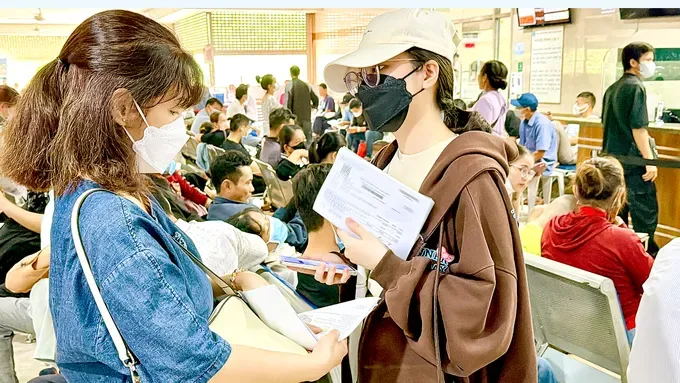
From early morning, patients from many provinces and cities arrive at major hospitals in HCMC for examinations, tests, medication and treatment. Prolonged overcrowding not only leaves patients more exhausted and costs them additional time and money, but also increases the pressure on major hospitals to admit and treat patients.
Patients wait for hours to see a doctor
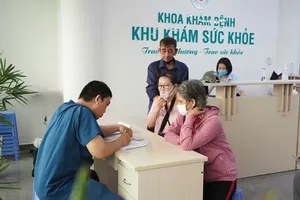
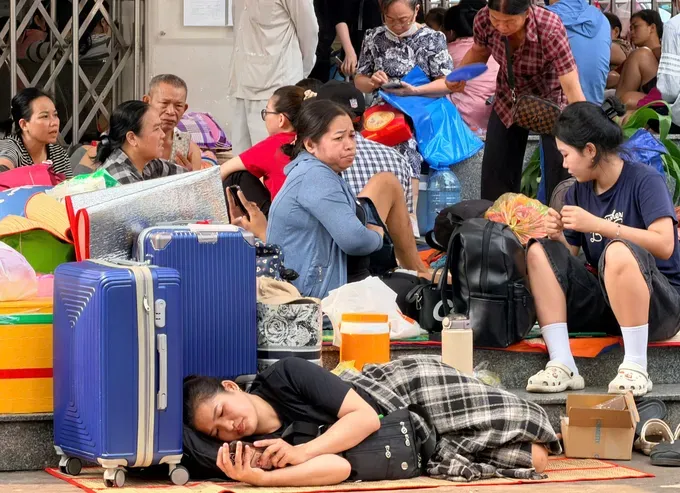
At 5:30 a.m. on September 12, the examination area of Binh Dan Hospital in Ho Chi Minh City was packed with people. Many patients took the opportunity to catch some sleep after traveling to the city on interprovincial buses while waiting for examination hours.
Nguyen Van Hai, 35, from Khanh Hoa Province, said his father has colorectal cancer and must visit Binh Dan Hospital every month for chemotherapy. Each time they have an appointment, the father and son have to leave by bus at 1 a.m. to arrive by 6 a.m. for registration, tests and chemotherapy.
“For a healthy person, waiting for a few hours may be just an inconvenience. But for cancer patients, whose bodies are already weakened and who have traveled a long distance, sitting and waiting for hours makes the fatigue many times worse,” Hai said.
At Nhan Dan 115 Hospital, overcrowding is also a daily occurrence. Patient Pham Thi Hong, 66, from Can Tho City, said that for her monthly follow-up after heart surgery, she arranged for a bus to pick her up at home at 3 a.m. and arrived at the hospital shortly after 6 a.m.
Many patients from other provinces and cities who come for examinations and treatment at HCMC Eye Hospital and HCMC Hospital for Traumatology and Orthopedics have to return home and wait for their scheduled surgery.
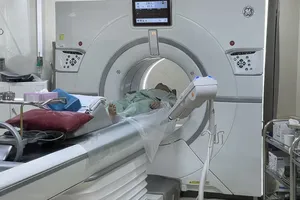
Similarly, some patients prescribed radiation therapy at HCMC Oncology Hospital have to wait for an entire month because the number of radiation therapy machines is insufficient to meet demand. Cho Ray Hospital receives more than 10,000 patient visits for examinations and treatment on some days.
HCMC Oncology Hospital, Thong Nhat Hospital and the University Medical Center HCMC also receive thousands of patient visits each day, including both outpatients and inpatients.
Doctors also feel the strain
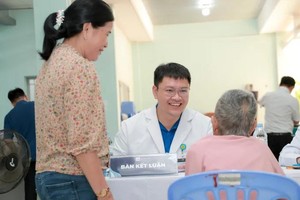
Patients are not the only ones exhausted by long waits. Prolonged overcrowding is also placing significant pressure on medical staff. At major hospitals, a doctor may have to see dozens or even hundreds of patients in a single day, including many cases requiring thorough examinations, close monitoring and consultations involving multiple specialties.
Dr. Le Trung Nhan, head of the Examination Department at Cho Ray Hospital, said the hospital has about 100 examination rooms and 150 doctors providing outpatient care, serving 8,000-10,000 patient visits for examination and treatment each day. Specialties recording high patient volumes include cardiovascular diseases, with more than 1,000 visits a day; musculoskeletal conditions, about 500; endocrinology, about 400; neurology, 200-300; and gastroenterology, 200-250.
In addition to long working hours, with doctors spending hours continuously examining patients, ordering tests, reviewing results, providing consultations and handling serious cases, they also face significant professional pressure. Even a delayed or inaccurate decision can directly affect a patient's health and life.
Dr. Diep Bao Tuan, director of HCMC Oncology Hospital, said the hospital has applied information technology to schedule surgeries and follow-up appointments to prevent large numbers of patients from arriving at the same time. It also prioritizes cases requiring urgent treatment and begins examinations at 5 a.m. to reduce patients' waiting times.
As increasing numbers of patients from other provinces and cities seek examinations and treatment in HCMC, Dr. Nguyen Anh Dung, deputy director of the HCMC Department of Health, said the city's health sector has been implementing multiple measures to reduce the burden on big hospitals.
Specifically, the sector is strengthening coordination with the health sectors of other provinces in managing patients and increasing treatment capacity at grassroots medical facilities. It has also signed cooperation agreements with health authorities in the Central Highlands, Southeast and Mekong Delta regions to support the transfer of medical techniques between major general and specialized hospitals in Ho Chi Minh City and hospitals in provinces.
In addition, the city is developing networks of specialties linking major hospitals in HCMC with provincial hospitals, ward-level hospitals and grassroots health facilities. Priority areas include obstetrics, pediatrics, neurosurgery and trauma surgery, stroke, cardiology and oncology.
Cancer patients seeking treatment increase every year, with about 80 percent coming from other provinces and cities. Patients requiring radiation therapy must wait three to four weeks, sometimes longer. The number of patients waiting for surgery is also very high. The hospital’s radiotherapy machines are operating at nearly full capacity, running three shifts a day until 9 p.m., yet still unable to meet demand.
Dr. Diep Bao Tuan, Director, Ho Chi Minh City Oncology Hospital
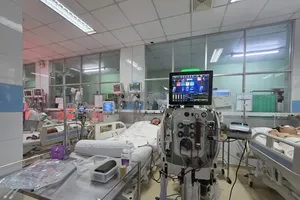
According to statistics from the HCMC Department of Health, patients from other localities account for 40 percent to 60 percent of visits at major hospitals in the city. In some highly specialized fields, the proportion can reach 80 percent. This places significant pressure on examination areas, emergency departments, inpatient beds, intensive care, surgery and advanced medical procedures.
The reasons include patients' trust in hospitals with established reputations, strong specialist teams and the ability to handle complex cases, as well as continuing disparities in professional capacity between different levels and regions. Many people are not fully aware that even when they receive care at a local health station or a hospital near home, they can still be connected with specialists and major hospitals.
Repurposing surplus public land and buildings to strengthen healthcare system
Ho Chi Minh City has assigned the third facility of Ho Chi Minh City Psychiatric Hospital to take over the Center for Disease Control (957 Ba Thang Hai Street, Minh Phung Ward); Ho Chi Minh City Ear, Nose and Throat Hospital to take over the Nhieu Loc Regional Medical Center (Xuan Hoa Ward); Ho Chi Minh City Eye Hospital to take over the Clinic of the Municipal Party Committee's Health Care and Protection Board in Xuan Hoa Ward and People's Hospital 115 to take over the Hoa Hung Regional Medical Center (Hoa Hung Ward).
In addition, plans are underway to merge Ho Chi Minh City Transport Hospital under the Ministry of Construction into the Rehabilitation and Occupational Diseases Treatment Hospital.