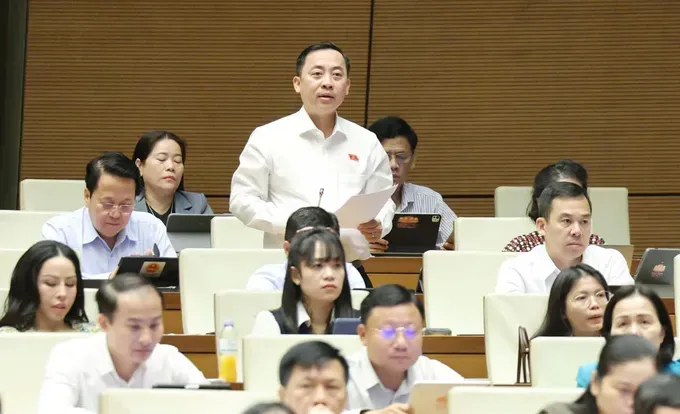
Dao Chi Nghia, full-time Deputy Head of the Can Tho City National Assembly Delegation voiced that the draft Law on Urban Development has stipulated cases for recovering land in areas adjacent to roads and local railway stations simultaneously with land recovery for investing in new construction or expanding planned traffic routes. These are highly necessary policies to build land development resources and foster urban growth directly linked to public transportation.
In the end, land recovery must be tied to comprehensive resettlement plans that secure people’s livelihoods, while featuring a reasonable allocation mechanism for the increased land value stemming from infrastructural investments and urban expansion.
Within this framework, the City People’s Council dictates revenues derived from exploiting the increased land value and other collections to develop the local railway system, ensuring a harmonious balance between the interests of the State, investors, and the citizens impacted by land reclamation.

According to Dr Vu Trung Kien from the Academy of Politics Region II, administrative integrity is paramount to foster a transparent working environment.
The draft Law on Urban Development includes provisions to encourage and protect dynamic, creative cadres who dare to think and act for the common good. Alongside this, cultivating a transparent and democratic workplace will give officials the necessary breathing room to innovate and contribute effectively.
Personnel procedures must be stringent, open, and transparent to minimize loopholes that could potentially lead to the buying and selling of positions or power. Additionally, evaluating officials should rely on practical work and specific, quantifiable results rather than vague, generalized feedback. Concurrently, there should be prompt and worthy reward policies for individuals whose initiatives and schemes substantively contribute to the city’s development.
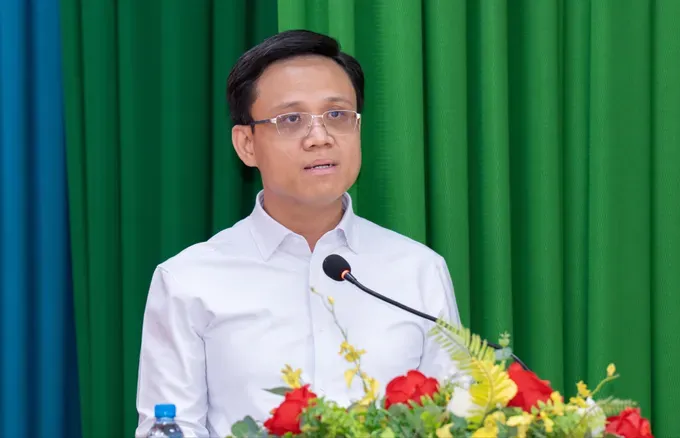
For Deputy General Director Nguyen The Duy of Becamex Industrial Development and Investment Corporation, managing state assets remains a pressing issue.
The draft Law on Urban Development lays out a mechanism for enterprises with 100 percent state-owned charter capital, yet it appears there isn’t a corresponding framework for companies where the State holds between 50 percent and under 100 percent of the charter capital. “We propose designing a mechanism for state-owned enterprises based on three distinct principles to get the ball rolling,” he explained.
- The City People’s Council is tasked with determining the enterprise portfolio, strategic direction, and principles for managing state capital within these companies.
- The City People’s Committee, acting as the owner’s representative body, is assigned to dictate investments, capital supplements, capital contributions, and share purchases, along with other ownership matters for enterprises under the city’s jurisdiction. This facilitates companies in proactively utilizing development investment funds and retained after-tax profits.
- Regarding already approved matters, the representative of the state capital chunk should be permitted to vote proactively. This isn’t about loosening the grip on state capital, but rather overhauling the management methodology entirely.
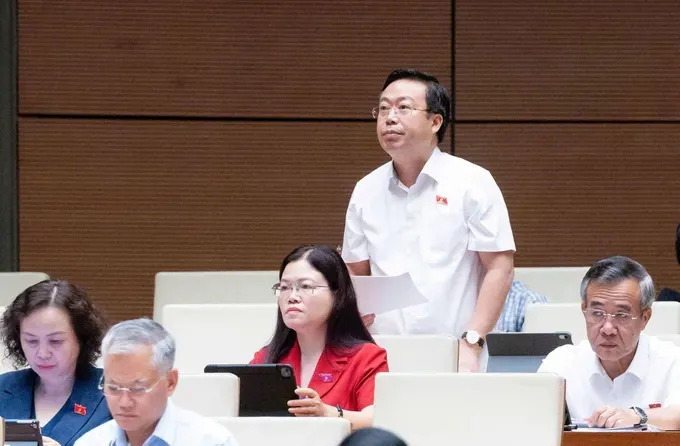
As stated by Deputy Head Nguyen Dai Thang of the National Assembly’s Committee for Deputy Affairs, structural delegation is crucial, and strong decentralization must be coupled with clear responsibilities.
One of the standout features of the draft Law on Urban Development is the robust push to decentralize power to urban authorities. The law needs to transcend the typical boundaries of an urban management statute, pivoting towards constructive development and establishing an institutional framework so that cities can unleash their potential to become genuine growth poles.
In tandem with this, there’s a strict requirement to ensure the uniformity of the legal system, to rein in power, and to uphold unwavering discipline and order. The stronger the decentralization, the clearer and more effective the control mechanisms must be.
The draft has explicitly laid out the supervisory duties of the National Assembly and People’s Councils, the monitoring and inspection responsibilities of the Government, and the overarching accountability of the city administration.
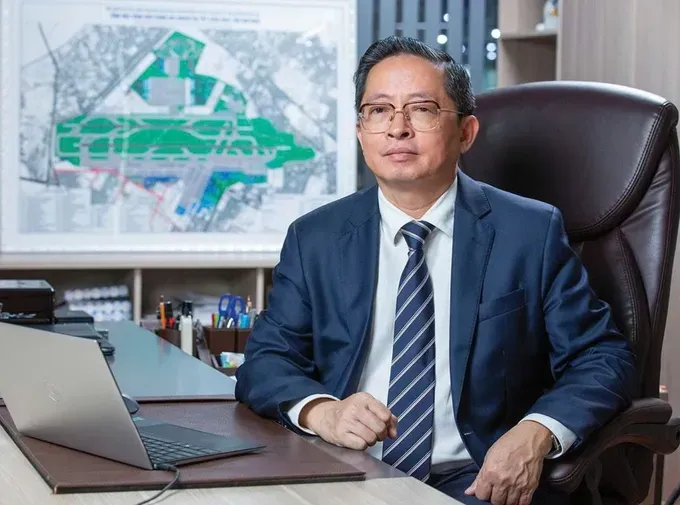
For Chairman Tran Kim Chung of the Board of Directors at CT Group, technological commercialization presents unique challenges.
Integrating provisions into the draft Law on Urban Development that allow the city to pilot new mechanisms and policies which differs from existing laws and National Assembly resolutions or addresses legally uncharted territories could forge a sufficiently flexible institutional space to test, apply, and scale multiple novel technological models.
“To shoulder a fraction of the risk alongside businesses during the testing and commercialization phases of tech products, we propose that HCMC becomes the very first client for novel items that boast practical applications but haven’t yet carved out a market,” he suggested.