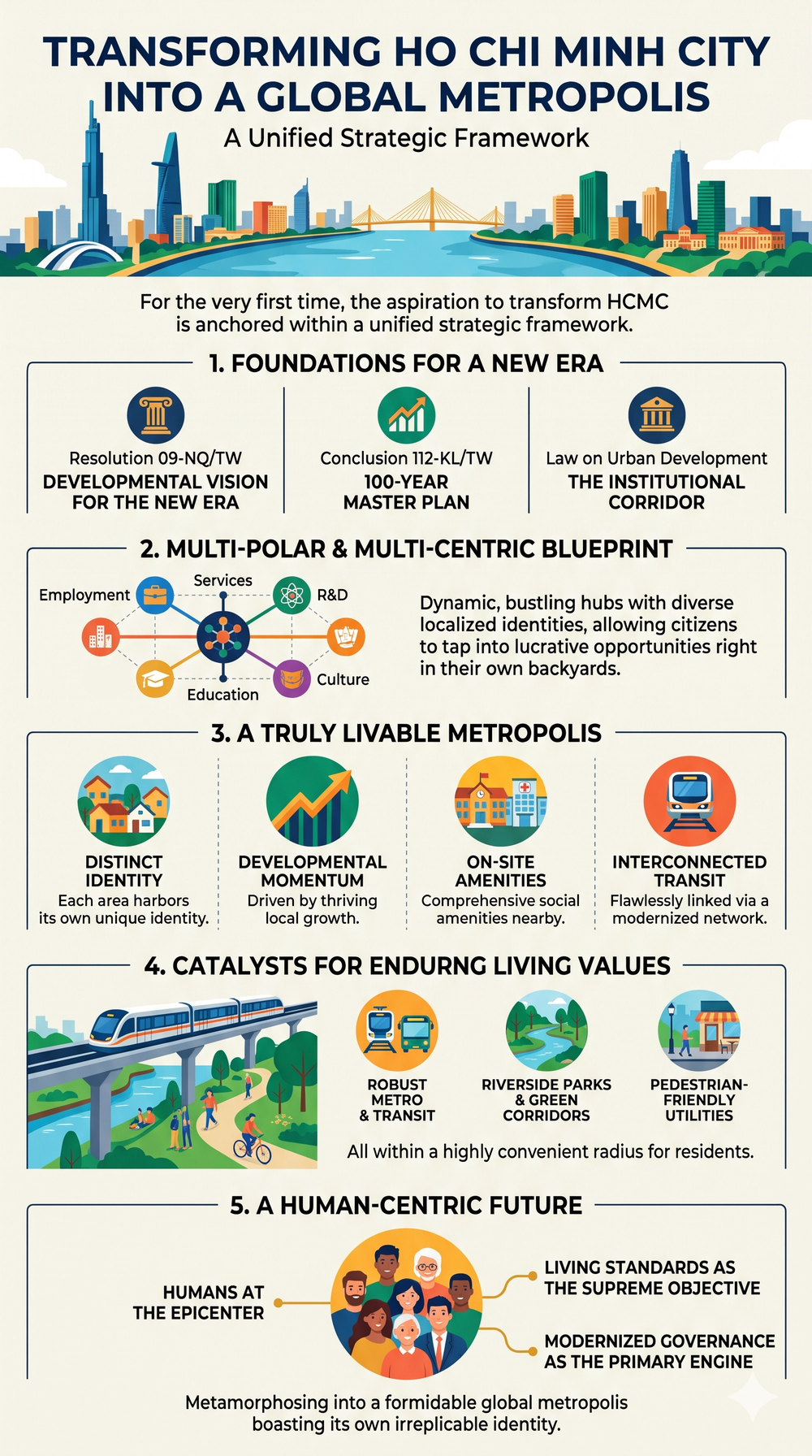
For the very first time, the aspiration to transform HCMC into a global metropolis is firmly anchored within a unified strategic framework. Resolution 09-NQ/TW definitively establishes a developmental vision for the new era, while Conclusion 112-KL/TW thoroughly materializes this via a comprehensive master plan boasting a 100-year vision. Furthermore, the Law on Urban Development successfully engineers the requisite institutional corridor to pragmatically actualize those ambitious objectives.
What’s remarkably noteworthy is that these three foundational documents don’t simply fixate on raw economic growth. Their standard shared point lies in the dual objective of drastically elevating living standards alongside robust international competitiveness. That undeniably remains the core criterion characterizing a genuinely livable global metropolis.
For several decades, numerous urban centers viewed towering skyscrapers, bustling commercial areas, or sheer economic scale as their ultimate symbols of success. However, practical international evidence indicates that the cities most frequently selected by global citizens and experts for residency aren’t typically those packed with the most high-rises. Instead, they’re locales boasting exceptional living environments, highly efficient transit systems, captivating public spaces, top-tier education, uncompromised safety, and strong developmental opportunities catering to every single demographic group.
Fiercely competitive municipalities aren’t just battling it out to attract lucrative investment capital, but they’re now equally desperate to lure in top-tier talent. The urban happiness index is, therefore, rapidly morphing into a classic factor that definitively dictates overall competitive capacity.
It’s precisely within this dynamic context that the main goal of molding HCMC into a formidable hub for profound innovation, international integration, and global competitiveness carries substantially more weight than a mere one-dimensional economic target.
Viewed purely from a strategic planning perspective, this represents a monumental model shift regarding developmental mindsets. The city isn’t viewed as a solitary administrative entity anymore; rather, it’s operating as a highly integrated urban ecosystem where the economy, society, culture, the environment, and cutting-edge technology flawlessly interact to generate tangible value.
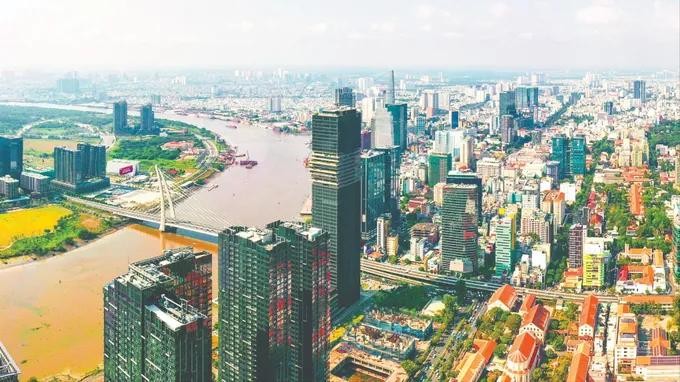
Authorities will continue to flesh out this nuanced approach by orienting a multi-layered, multi-polar spatial development framework anchored by a century-long vision. This specific trajectory flawlessly aligns with the reasonable experiences gleaned from numerous successful megacities worldwide. Previously, when virtually all municipal activities were densely clustered within a solitary centralized hub, the metropolis frequently grappled with paralyzing traffic congestion, skyrocketing living expenses, severe infrastructure strain, and a noticeable deterioration in quality of life.
Moving forward, the multi-polar and multi-centric blueprint inherently allows for the dynamic formation of numerous bustling hubs dedicated to employment, bespoke services, R&D, education, and vibrant culture. Bursting with diverse localized identities, this creates highly favorable conditions for citizens to tap into a plethora of lucrative opportunities right in their own backyards.
A genuinely livable metropolis must be a place where each distinct area harbors its own specific identity, propelled by developmental momentum alongside comprehensive on-site social amenities, all while remaining flawlessly interconnected via a highly modernized transit network.
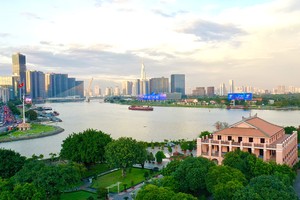
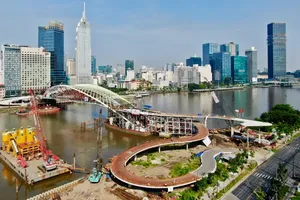
Consequently, rolling out a robust metro network, high-capacity public transit, scenic riverside parks, lush green corridors, pedestrian-friendly spaces, and localized community utilities, all nestled within a highly convenient radius for residents, acts as the catalyst forging enduring living values and a lasting urban identity.
Naturally, this sweeping vision will struggle to materialize without a highly synchronized institutional bedrock in place. Examined from that specific angle, the Law on Urban Development successfully functions as the vital bridge smoothly linking strategic planning with tangible action.
Radically supporting administrative decentralization, propelling public-private partnerships, anchoring urban expansion to mass transit nodes, and drastically elevating governance capacities will certainly serve as critical prerequisites for translating this grand vision into pragmatic reality.
The greatest value extracted from a century-long vision doesn’t merely lie in speculative forecasting regarding futuristic lifestyles. Rather, it’s deeply rooted in a deep dedication to preserving cultural heritage for the next hundred years, coupled with a sharp civic consciousness to deliberately stockpile land reserves and natural resources for the descendants.
By firmly positioning humans at the epicenter, explicitly designating living standards as the supreme objective, and leveraging modernized governance as the primary engine, the HCMC megacity can undoubtedly metamorphose into a formidable global metropolis boasting its own irreplicable identity.
And when that golden era arrives, success won’t merely be quantified by raw economic growth metrics. It’ll be profoundly measured by the sheer happiness index of its dwellers as well as the city’s magnetic allure for generations to come.