In an interview with Sai Gon Giai Phong (SGGP) Newspaper, Hoang Vu Thanh, Director of the Ho Chi Minh City Department of Finance, stressed that accelerating public investment disbursement must go hand in hand with accountability for implementation, regulatory compliance, and investment efficiency.
Ho Chi Minh City disbursed VND111.494 trillion (US$4.4 billion) in public investment capital in the first nine months of 2026, equivalent to 75.5 percent of its annual plan, the highest rate recorded in a decade.
According to Mr. Hoang Vu Thanh, this result reflects the concerted leadership, direction, and implementation of a range of measures across the entire political system.
First, the city has stepped up the delegation of authority and decentralization while assigning specific key performance indicator (KPI) targets for capital disbursement to each agency and unit. Its implementation apparatus has also been reorganized to become more professional, streamlined, and effective, following the working principle of "on-site inspection, field assessment, and decision-making at the grassroots level."
In particular, the city has adopted a flexible approach to capital allocation, firmly adhering to the principle that "capital must not be left waiting for construction works or projects."
Specifically, over the nine months, the city carried out eight rounds of capital reallocations within and among agencies and units, withdrawing more than VND45 trillion from delayed projects with no immediate capacity to disburse funds and redirecting it to projects making good progress and having measurable completed work.
As of October 15, the city had resolved obstacles affecting 726 of the 1,338 projects under review, or 54.26 percent, including 116 public investment projects.
Following reviews, a number of projects were found to no longer face difficulties or obstacles and were consequently classified as having had their issues resolved.
However, resolving procedural and implementation bottlenecks does not necessarily mean that a project can immediately proceed or disburse its allocated capital.
In practice, three major groups of obstacles remain, including investment procedures that still need to be fully completed; compensation and site handover, as well as the need to ensure synchronized construction conditions; and the time required to generate sufficient completed work volumes for payment and disbursement.
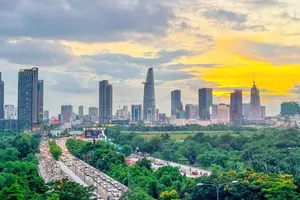
As part of its medium-term development strategy and the 2026-2030 period, with its expanded, multi-centered urban landscape and based on the approved master plan, the city has identified strategic infrastructure sectors as priority destinations for investment capital, in line with the policies of the Politburo, the Government and the Ho Chi Minh City Party Committee.
These include projects that play a key role in restructuring the city's socio-economic spatial landscape, contributing to the goal of achieving double-digit GRDP growth, ensuring social welfare, and improving people's quality of life.

The priority is urban railway infrastructure and transit-oriented development (TOD). Building on the operational achievements of Metro Line No. 1 (Ben Thanh – Suoi Tien), the city will continue accelerating construction of Metro Line No. 2 (Ben Thanh – Tham Luong) and commence construction of the Ben Thanh – Can Gio urban railway line, among other projects.
The ultimate goal is to establish a framework network of nine urban railway lines with a combined length of more than 340 kilometers, integrated with the TOD model.
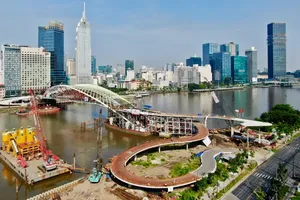
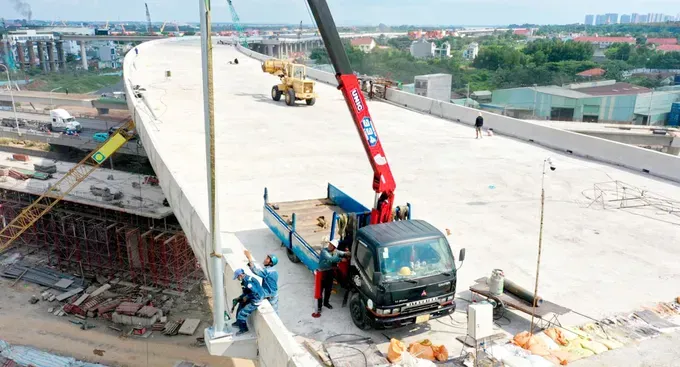
The city also aims to complete approximately 130 kilometers of expressways and ring roads, along with 26 major river-crossing bridges, creating seamless logistics corridors connecting industrial parks with international seaport clusters.
Another priority is to relocate more than 40,000 houses located along and over canals through a range of appropriate solutions and funding sources.
Finally, the city will maximize the use of public-private partnership (PPP) mechanisms and leverage special policy frameworks under National Assembly resolutions and the Law on Urban Development to attract private-sector investment and foreign direct investment (FDI).
These infrastructure priorities are of strategic importance to the city's development orientation in the coming years. The effective mobilization, allocation, and utilization of public investment resources, combined with stronger private-sector investment and PPP arrangements, will help lay the foundation for more integrated urban development, stronger regional connectivity, and improved quality of life for residents.
To achieve its target of 100 percent public investment disbursement in 2026, the city must disburse more than VND36.104 trillion in the fourth quarter, equivalent to 24.5 percent of its annual capital allocation. This represents a major undertaking, requiring sustained determination and a high level of accountability from every agency, unit, and individual.
The city will continue reviewing and assessing the capacity of projects to absorb additional capital, as well as the feasibility of accelerating implementation of several key projects.
Based on assessments of implementation capacity, the city will consider submitting a proposal to the Ho Chi Minh City People's Council to increase the 2026 public investment allocation, with the aim of achieving an additional disbursement rate of 5-7 percent above the total public investment capital assigned by the Prime Minister.
However, efforts to accelerate disbursement must remain aligned with actual implementation capacity, comply with regulations, and ensure genuine progress, rather than pursuing performance targets for their own sake.