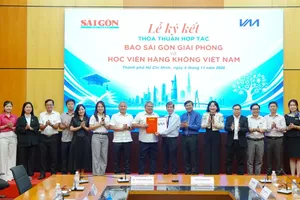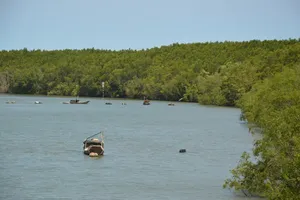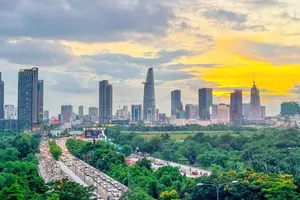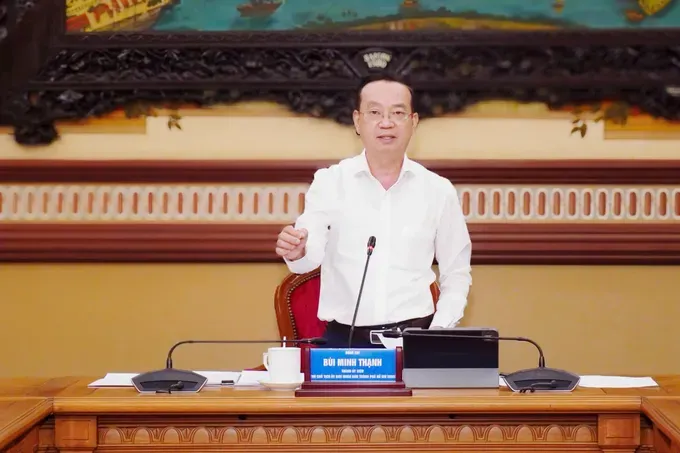
At the meeting, Vice Chairman of the Ho Chi Minh City People's Committee Bui Minh Thanh instructed officials to formulate a hypothetical scenario in which the Saigon River's water source becomes polluted and unextractable, thereby identifying alternative sources and appropriate water supply plans. Similarly, response scenarios must be established for potential incidents involving the Dong Nai River, which supplies approximately half of the city's water.
Response plans should correspond to levels 1, 2, and 3, clearly defining specific scenarios and countermeasures integrated with climate change impacts and Ho Chi Minh City's master plan. Mr. Thanh also requested the development of annual drill plans at the ward and commune levels to proactively respond to potential emergencies.
Reporting at the meeting, Mr. Nguyen Minh Chanh, Deputy Director of the Ho Chi Minh City Department of Agriculture and Environment, stated that risks of water shortages, imbalances, and supply disruptions stem from rising demand, droughts, saltwater intrusion, uneven water distribution, and water system incidents. In addition, wastewater, industrial activities, urbanization, upstream water flow fluctuations, and climate change impacts are escalating the risk of water quality deterioration.
Water demand is trending upward, projected to reach approximately 5.858 million cubic meters per day by 2030 and about 9.076 million cubic meters per day by 2050.
Regarding response measures, Mr. Le Quang Dao, Head of the Technical Infrastructure Division under the Ho Chi Minh City Department of Construction, stated that the draft Plan for Water Security and Safety in Ho Chi Minh City for the 2026–2030 period has outlined risk-level scenarios, designating focal units and operational sequences.
Proposed solutions include identifying root causes, rapidly restoring systems, coordinating emergency forces, fostering inter-agency cooperation, mobilizing water tankers from various forces, and organizing emergency rescue operations.
Mr. Le Quang Dao recommended leveraging digital technology and digital transformation to manage and operate the water supply system in real time, closely monitoring risk developments for timely handling.
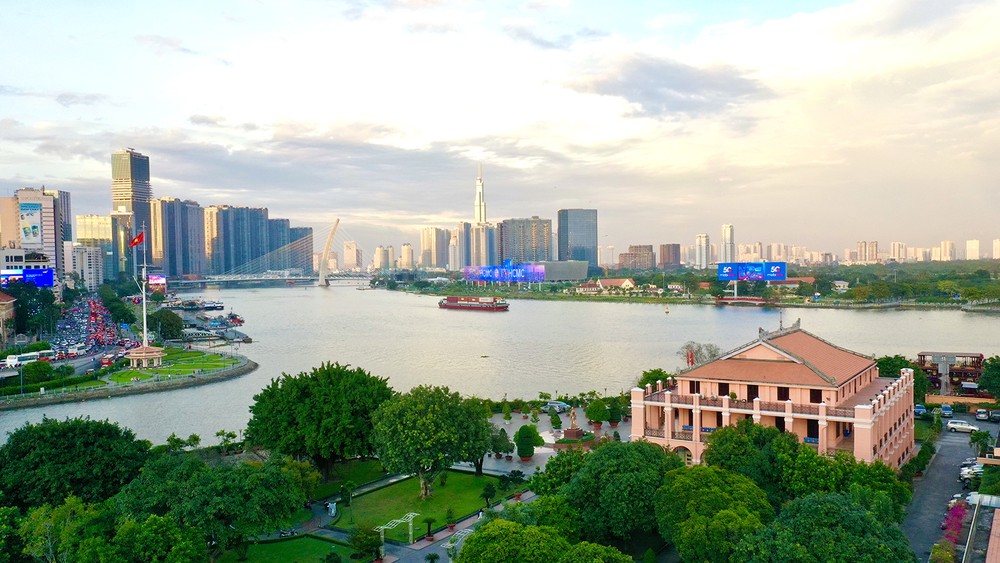
Concluding the meeting, Vice Chairman of the Ho Chi Minh City People's Committee Bui Minh Thanh directed relevant departments and agencies to define immediate tasks and solutions through the end of 2026, as well as long-term strategies, to safeguard Ho Chi Minh City's water security and safety.
According to statistics from the Ho Chi Minh City Department of Agriculture and Environment, the city currently has 4,285 surface water sources, comprising 4,192 rivers, streams, canals, and arroyos; 23 lakes and lagoons; 277 water extraction and utilization facilities; and 3,664 facilities discharging wastewater into water sources. Surface water relies primarily on the Dong Nai, Saigon, Vam Co, and Thi Vai river systems—vital channels for domestic, agricultural, and industrial water supply.
Ho Chi Minh City currently records 3,664 wastewater discharge facilities with a total flow of approximately 1.78 million cubic meters per day. This includes 1,619 industrial production facilities (1.23 million cubic meters per day) and 1,244 domestic facilities (495,000 cubic meters per day).