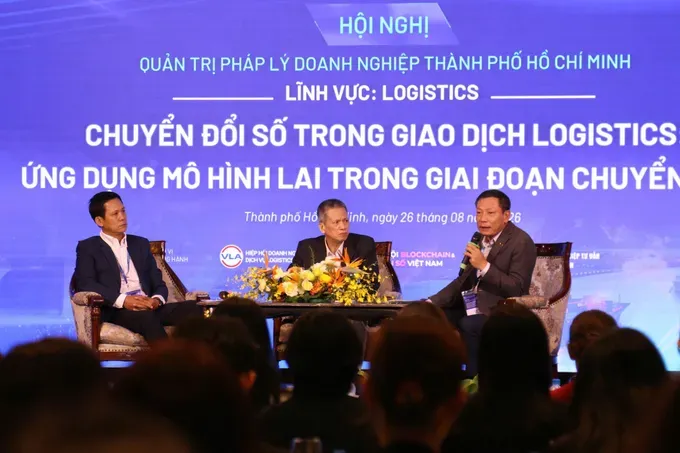
On August 26, the Ho Chi Minh City Trade and Investment Promotion Center (ITPC), in coordination with the Vietnam International Arbitration Center (VIAC), held the Ho Chi Minh City Corporate Legal Governance Conference 2026 – Logistics, themed “Digital Transformation in Logistics Transactions – Applying a Hybrid Model during the Transition Period.” The event attracted more than 200 delegates.
According to Deputy Director of ITPC, Ho Thi Quyen, Vietnam currently has more than 34,000 logistics enterprises, contributing around 4.5–5 percent of GDP, while logistics costs remain at about 16 percent of GDP. Digital transformation has been identified as one of the solutions to help reduce logistics costs to 12 percent–15 percent of GDP during the 2025–2035 period.
However, deeper digitalization also places greater demands on data governance. Ngo Khac Le, an arbitrator at VIAC and a mediator at the Vietnam Mediation Centre (VMC), said logistics businesses currently largely operate under a “digital inside, paper outside” model, rather than relying entirely on paper or completing the digitalization process.
The level of digital transformation also remains uneven across transportation, warehousing, freight forwarding, ports, customs, and cross-border trade. Documents related to ownership rights, payments, and bank guarantees remain more difficult to digitize.

According to Nguyen Duy Hung, Standing Vice Chairman of the Dong Nai Logistics Association, some businesses operating at ports, inland container depots (ICDs), and logistics facilities have adopted warehouse management systems, electronic port management, electronic delivery orders, e-invoices, and cashless payments. However, digitalization is still largely confined to individual businesses or specific stages, without seamless connectivity among transport providers, warehouses, ports, shipping lines, cargo owners, and regulatory authorities.
The overlap between paper-based and electronic transactions also increases the risk of disputes. Lawyer Nguyen Thi Hong Ngan, Director of Tam Chung Law Firm (Vilex Law Firm), said a single logistics transaction could generate data simultaneously from quotation emails, messaging applications, platform logs, bills of lading, and electronic delivery orders.
Businesses therefore need to establish an evidence-management mechanism from the outset, identify official communication channels and authorized personnel responsible for confirmation, and retain complete transaction histories and document versions.
As paper and electronic documents continue to coexist, clearly defining their respective legal value, order of precedence, authentication mechanisms, and data storage procedures is crucial for logistics businesses to accelerate digital transformation while minimizing the risk of disputes.