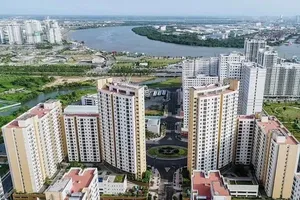
The draft Law on Urban Development reflects a strong commitment to decentralization, increasing local autonomy and creating an institutional framework to support the development of special cities such as Ho Chi Minh City, as well as other cities and special economic zones. However, to truly qualify as a special city, Ho Chi Minh City should be built upon a clear development philosophy that places people at the center, regards culture as the spiritual foundation of development, and considers residents' quality of life and happiness as the ultimate measure of progress.
A special city seeking sustainable development must be founded on a distinctive development philosophy and long-term vision. Professor Tran Ngoc Them from Hung Vuong University in Ho Chi Minh City proposes adding a development philosophy for special cities based on three principles including placing people at the center of development, treating culture as the spiritual foundation of progress, and using residents' quality of life and happiness as the ultimate benchmark for development.
He pointed out that Politburo Resolution No. 80-NQ/TW on the development of Vietnamese culture states that "the development of culture and people is the foundation, an important endogenous resource, a major driving force, a pillar, and a regulating factor for the country's rapid and sustainable development."
Accordingly, the law should require that all urban planning and development strategies focus on human development while preserving and promoting cultural, historical, and local identity. The city should adopt policies to preserve the cultural identity of Saigon-Gia Dinh-Ho Chi Minh City, foster a civilized urban population, promote standards of conduct in public spaces, build responsible digital communities and strengthen urban civic education.
The city should also establish mechanisms to honor authors and artists, promote cultural values through education, invest in public art to enhance tourism, and support creative arts through innovation funds and incentives for cultural industries, Prof. Tran Ngoc Them said.
Urban heritage should likewise be recognized as a development resource. The law should therefore require urban heritage inventories, cultural impact assessments for large-scale redevelopment projects, preservation of distinctive architectural landscapes, and protection of community memory.
In particular, Ho Chi Minh City should expand protection for landscapes associated with the river culture of southern Vietnam. The Saigon-Dong Nai river system and the Can Gio mangrove forest are valuable environmental and landscape assets that should be preserved and developed sustainably.
Therefore, to avoid an approach that relies on "concreting over waterways," the law should incorporate principles for protecting rivers and canals, ecological corridors, natural water surface ratios, inland waterway transportation, riverfront public spaces, and the cultural landscape associated with waterways. Losing these assets would mean losing part of the city's unique identity.
The draft law clearly embraces decentralization for special cities. However, establishing a truly special city also requires wards and communes with sufficient authority and governance capacity.
The professor says that international experience shows that many major cities have devolved substantial authority to the grassroots level. Tokyo's 23 special wards function much like independent cities. Singapore operates a system of Town Councils linked to elected representatives. Many cities in Europe and Latin America have also delegated significant powers to lower-level administrative units.
Based on the central government's strong directives on decentralization and international experience, the Law on Urban Development should more clearly reflect the delegation of authority to wards and communes in general, and to key wards and communes in particular. Special cities could include certain wards and communes with special status. Such an approach would help address Ho Chi Minh City's urban governance challenges by maintaining unified strategic planning while ensuring flexible responses to residents' needs and the diverse characteristics of individual localities.
Alongside decentralization, Professor Tran Ngoc Them adds, mechanisms for meaningful public participation in urban governance should also be strengthened. This could be achieved through mandatory community consultations for major projects, public disclosure of planning data on digital platforms, and public consultation before decisions are made on planning adjustments, urban development projects, large-scale relocations, or the use of public spaces.
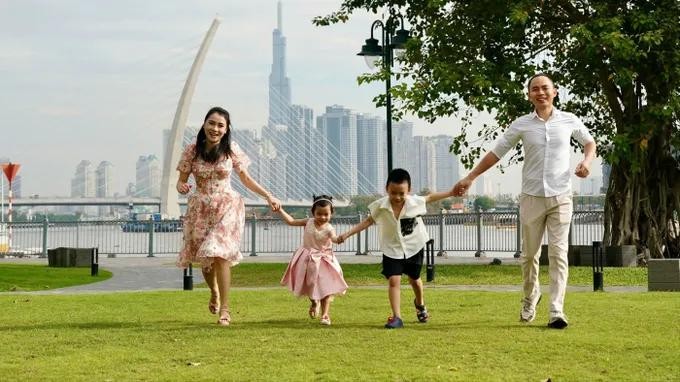
The greatest value of a special city lies not only in its landmark infrastructure or impressive economic growth figures, but in its ability to improve people's lives and well-being. That is also the highest standard of urban governance and the fundamental purpose of all development efforts. Residents' happiness should be both the starting point and the ultimate goal of a special city.
Globally, several indices already measure urban happiness and livability, including the Happy City Index, the OECD Better Life Index, and the UN-Habitat City Prosperity Index.
The professor says that Ho Chi Minh City could draw on these international frameworks to develop its own annual Urban Assessment Index. The index could include criteria such as environmental quality, public transportation, green space, healthcare and education quality, public safety, resident satisfaction, community cohesion, and residents' perceptions of happiness.