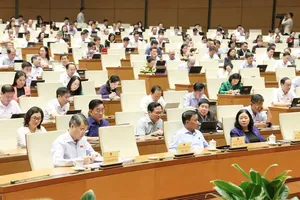
The Vietnam Chamber of Commerce and Industry (VCCI), in coordination with the Ministry of Justice, is scheduled to hold a consultation with the business community on July 22 to gather feedback on the draft revised Housing Law and the draft revised Real Estate Business Law.
Earlier, the Government proposed adding both draft laws to the agenda of the National Assembly's first extraordinary session, expected to take place in August 2026, under an expedited legislative process.
More incentives for social housing
Among the two draft laws, the revised Housing Law serves as the cornerstone legislation governing the development and management of all housing types.
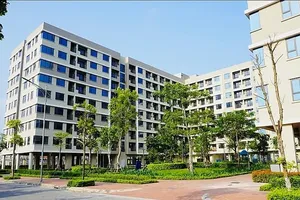
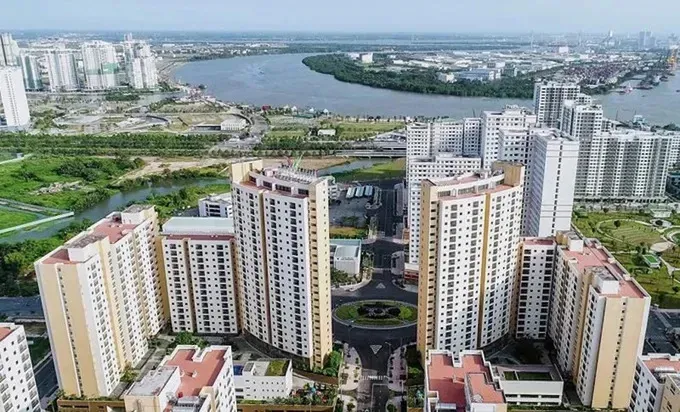
For social housing, the draft retains existing support mechanisms while introducing additional incentives to encourage greater participation from private developers.
Developers would be exempt from land-use fees and land rental charges, significantly reducing investment costs. They would also continue to receive regulated profit margins, along with preferential value-added tax (VAT) and corporate income tax policies.
In addition, developers would be permitted to allocate up to 20 percent of residential land or total floor area within social housing projects for commercial developments. Profits generated from these commercial components would be accounted for separately and would not be included in the cost of social housing units.
Rental housing becomes a new policy pillar
While social housing remains the primary solution for helping low-income households achieve homeownership, rental housing is identified in the draft law as a new pillar of Vietnam's housing policy.
For the first time, the revised Housing Law includes a dedicated chapter on rental housing, with the State expected to play the leading role in developing rental housing stock.
The draft also expands incentives for businesses investing in worker accommodation. Construction costs for worker housing would be recognized as deductible expenses when calculating corporate taxable income.
The policy is expected to encourage investment in a sector where demand is high but profit margins are relatively low and capital recovery periods are long.
A more consistent legal framework
The revised Real Estate Business Law is designed to align closely with the revised Housing Law, creating a more unified legal framework and reducing overlapping regulations.
Specific provisions concerning eligible beneficiaries, transaction conditions, procedures and contracts for social and policy housing would be consolidated under the Housing Law instead of being governed simultaneously by both laws.
The draft also introduces provisions on reasonably priced commercial housing to meet the needs of people who do not qualify for social housing but cannot afford homes sold at prevailing market prices.
Toward a more balanced housing market
Taken together, the two draft laws represent a comprehensive policy package for Vietnam's housing sector.
While the revised Housing Law focuses on social welfare policies and support mechanisms for social and rental housing, the revised Real Estate Business Law seeks to create a more transparent and efficient business environment by simplifying procedures and reducing regulatory overlaps.
Beyond offering tax and land-related incentives, the reforms aim to unlock resources for housing development across multiple market segments.
If adopted and implemented effectively, the proposed legislation is expected to help rebalance Vietnam's real estate market by expanding housing opportunities for low-income households and workers rather than concentrating primarily on high-end developments.