Social welfare keeps pace with development
An urban area is a diverse community comprising entrepreneurs, experts, highly skilled professionals, formal and informal sector workers, recent migrants, and long-term residents. A city's internal strength lies in the diversity of its workforce and the ability of various population groups to contribute to and share in the fruits of development.
The draft Law on Urban Development introduces a series of policies aimed at reshaping the future of cities. On the issue of urban renovation, refurbishment, and redevelopment, the draft emphasizes balancing the interests of residents, the State, and businesses. It places priority on on-site resettlement and encourages communities to take the lead in proposing and implementing their own projects.
In the realm of social welfare, the City People’s Council would gain expanded authority to design mechanisms and policies that broaden eligibility and raise benefit levels. The goal is to build a system that is comprehensive, modern, sustainable, and accessible to all.
The Council would also be empowered to use the local budget to subsidize disease prevention and medical expenses not covered by health insurance, following a phased roadmap. A key requirement is ensuring sufficient resources to meet these commitments. For long-term measures, the draft allows further consideration of how to divide responsibilities between basic budget-funded support and supplementary contributions from social resources.
A defining feature of major urban centers is the large presence of migrant and informal workers who live and work in the city but hold permanent residency elsewhere. They play a direct role in vital sectors such as services, construction, industry, and transportation, contributing significantly to the functioning of urban life.
Yet, when schools, hospitals, housing, transport, and social institutions are planned based primarily on registered population figures, the risk of overcrowding persists. The discrepancy between official records and the actual resident population means that infrastructure often falls short of meeting real demand.
This gap raises concerns about the goal of “universal coverage,” which may inadvertently exclude those who live, work, and contribute daily to the city. Building on the draft law’s objective of universal coverage, policymakers could consider a principle that ties social welfare and public service planning to the actual resident population. Accurate population counts are essential for assessing infrastructure needs, resource allocation, and policy coverage in special-class urban areas. Ultimately, infrastructure and accessibility remain inseparable from policy effectiveness.
The draft outlines mechanisms for transit-oriented urban development, allowing for the capture of land value appreciation and revenues from these areas to fund transport infrastructure. From this basis, it is possible to explore allocating a portion of the resources generated in these very areas toward direct social welfare goals such as resettlement, livelihood transition support, social housing, schools, health clinics, and public amenities since those most directly affected by urban renewal are often long-term residents whose livelihoods are tied to their original locations.
If land values rise due to public investment but those bearing the costs of relocation do not receive commensurate benefits from that development, a significant disparity in benefits can easily emerge. The draft also includes policies for developing social housing, worker accommodation, and rental housing. Beyond mere quantity, greater attention could be paid to quality, affordability, and access to essential services for low-income groups. Coupled with this is the need to bolster infrastructure resilience against flooding, extreme heat, natural disasters, and the increasingly evident impacts of climate change. Whenever an urban "shock" occurs, those who suffer the earliest and most severe consequences are typically the groups with the fewest resources to protect themselves.
Fairness and consensus in urban renewal policies
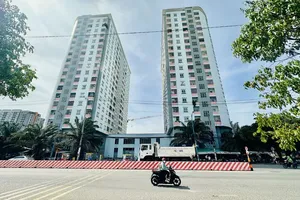
Another crucial foundation is fairness in the policy implementation process. The draft grants city authorities the power to mandate relocation for the sake of renovating or reconstructing apartment complexes and for urban renewal and redevelopment. This is a necessary tool when renovation projects stall—particularly regarding structures that are dilapidated or unsafe. However, relocation and site clearance remain among the most sensitive issues in urban development.
A project may be sound in terms of planning and economically efficient, yet still incur immense social costs if residents are not fully informed, lack opportunities to participate, or cannot envision a stable life after leaving their former homes. Fairness, therefore, lies not merely in the level of compensation, but also in the very process by which decisions are reached. Based on the established principles of harmonizing interests and prioritizing on-site resettlement, further examination can be conducted regarding the requirement to publicly disclose compensation, support, and resettlement plans; mechanisms for consulting residents prior to implementing projects with significant impacts; and appropriate methods for building consensus except in cases involving hazardous structures that require emergency relocation.
A special urban area is defined by its authority, resources, and development capacity, while ultimately measured by the quality of life of its residents. The stronger the decentralization and the more open the mechanisms, the more comprehensive social welfare policies must be—covering the actual resident population, ensuring fairness in renovation and reconstruction, and expanding opportunities for citizens to participate in matters directly affecting their lives.
A truly livable city is reflected in the quality of its infrastructure, its economic competitiveness, and the way it safeguards the lives of groups with limited ability to protect themselves. When citizens are guaranteed their rights, actively engaged, and able to share in the fruits of development, the city gains a stronger foundation to build trust, consensus, and community strength for sustainable growth.
Based on the established principles of balancing interests and prioritizing on-site resettlement, the draft allows for a more detailed examination of requirements regarding the public disclosure of compensation, support, and resettlement plans; mechanisms for consulting residents prior to implementing major projects; and appropriate methods for building consensus—except in cases involving hazardous structures requiring emergency relocation.
Culture and social consensus are inextricably linked to the quality of urban development. Major urban policies invariably affect the livelihoods, housing, habits, and lifestyles of the general public. Social consensus serves as the "soft infrastructure" of development; it requires investment, cultivation, and dedicated effort to build. The draft outlines principles regarding openness, transparency, accountability, public participation, and the roles of social oversight and critical feedback.
Building on this foundation, it is possible to further specify the types of information to be disclosed such as project details, resettlement plans, and decisions to apply special mechanisms as well as the disclosure methods that ensure genuine public access, and the timeframes for addressing community feedback and responding to oversight recommendations. When residents participate from the outset, understand the rationale behind decisions, and see their input acknowledged or addressed, they become active agents in shaping the city.