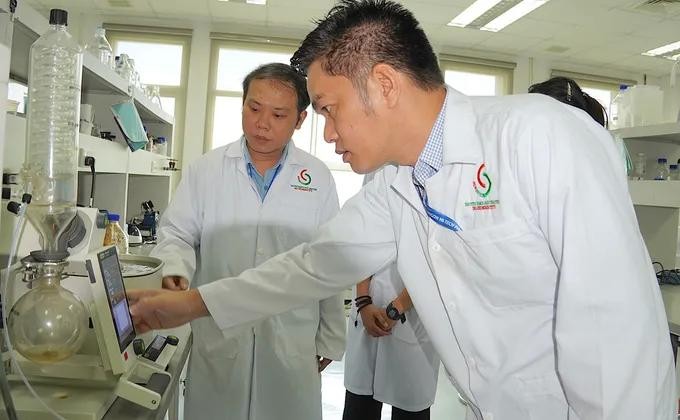
Decades-long transformation into a hub of high-tech innovation
Prof. Dao Van Luong, former director of the Ho Chi Minh City Department of Science, Technology and Environment from 2000 to 2006, recalled that when the department was first established, research and educational institutions were largely depleted, equipment was outdated and there was a severe shortage of highly qualified personnel.
Amid international sanctions and a lack of foreign currency, scientific agencies in Ho Chi Minh City had to rely on manual methods and aging equipment to sustain research activities and develop the city’s science and technology sector. Between 1976 and 1999, the city made extraordinary efforts to bring together dispersed intellectual resources and restore production.
Key universities such as Ho Chi Minh City University of General Sciences, now the University of Science under Vietnam National University-Ho Chi Minh City, gradually rebuilt their facilities and laid the foundation for basic scientific research. In 1999, the university’s Faculty of Biology launched a biotechnology program.
A major milestone came in 2004 when the Ho Chi Minh City People’s Committee established the Ho Chi Minh City Biotechnology Center (HCMBiotech) and the High-Tech Agricultural Park, marking a shift toward applied research in agriculture, healthcare and environmental protection.
To maximize the potential of scientists, including young researchers, the Department of Science, Technology and Environment and the Ho Chi Minh City Youth Union launched the Young Science and Technology Innovation Incubator in 1996. The program was designed to nurture ideas, provide financial and professional support, and help young scientists turn innovative concepts into practical projects.
Over 25 years of operation, the program received 1,937 preliminary applications from 2,265 lecturers, researchers and young professionals from universities, colleges, academies and research institutes across the city. A total of 389 projects have been completed and their results transferred for practical application.
Pham Dinh Dung, head of the Management Board of the Ho Chi Minh City High-Tech Agricultural Park, said high-tech agriculture in the city is more than an economic solution.
“High-tech agriculture is truly a symbol of renewal, creativity and the aspiration to advance urban agriculture. The city has successfully shifted from traditional production thinking to agricultural knowledge, applying breakthrough technologies to optimize productivity and quality,” he said.
Biotechnology to contribute 15 percent of the city's GRDP by 2045
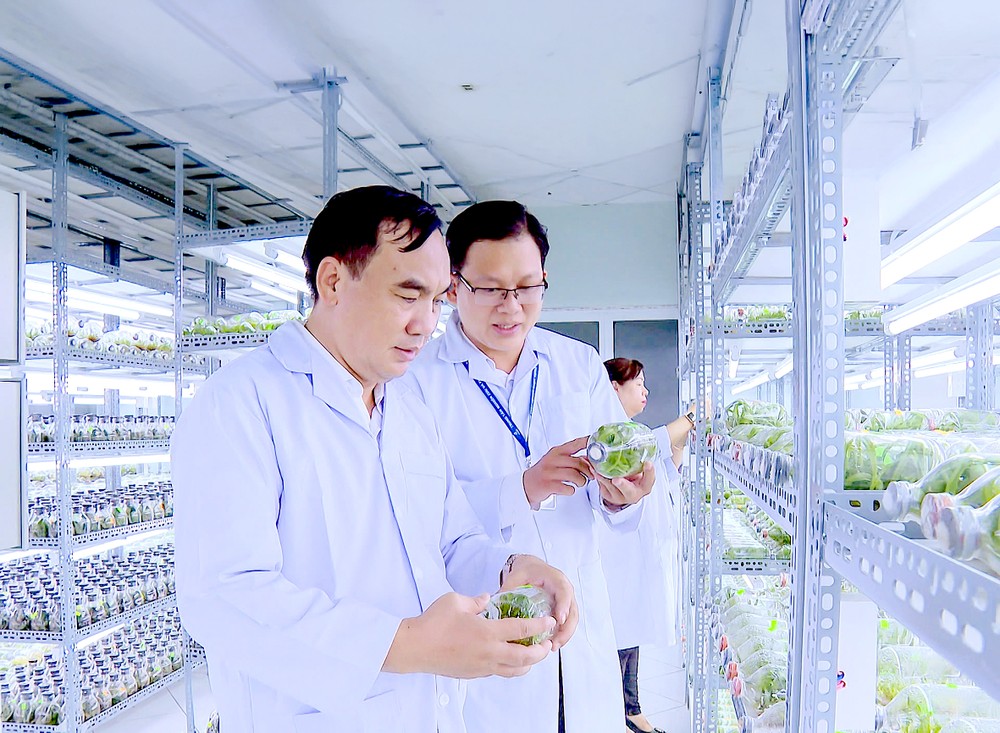
Ho Chi Minh City is now home to hundreds of leading biotechnology experts and scientists. They form the core workforce behind the city’s goal of making biotechnology a key economic and technical sector by 2045, contributing 10 percent-15 percent of the city’s gross regional domestic product.
Among the city’s prominent scientists is Professor Tran Van Hieu, head of the Biosensor Laboratory at the Faculty of Biology and Biotechnology, University of Science, Vietnam National University-Ho Chi Minh City.
Over more than 20 years of teaching and research, he and his colleagues have produced nearly 100 scientific publications, many with significant practical applications. One of the most notable is a study on the production of cancer-support treatment drugs in Vietnam, which achieved effectiveness 300 times greater than previously published products.
The research began in 2013 under a project funded by the Ho Chi Minh City Department of Science and Technology and opened opportunities for the domestic production of off-patent and biosimilar therapeutic proteins, including GM-CSF.
Another leading researcher is Nguyen Thi Dung, head of the Food Biotechnology Division at HCMBiotech. She has led dozens of biotechnology projects applied in everyday life, including a study on the use of earthworms that has been adopted by cosmetic companies in Vietnam and abroad.
According to head Nguyen Thi Dung, earthworms are widely known for recycling organic waste and producing nutrient-rich fertilizer. Her research identified another valuable characteristic: earthworms as a source of protein and essential amino acids for the cosmetics industry.
Using this high-quality raw material, she and her team developed an efficient laboratory-scale extraction process. After repeated testing, the resulting powder consistently achieved protein content






)
)




