Following its administrative expansion, the city has emerged as one of Vietnam's largest industrial, service and logistics hubs, creating an urgent need for highly skilled workers with advanced technological capabilities.
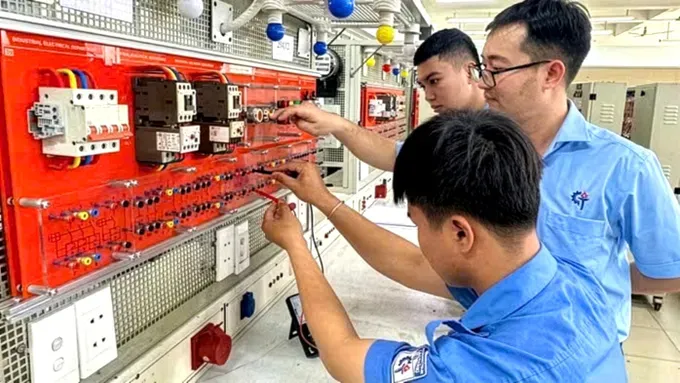
The resolution adopted at the first Congress of the Ho Chi Minh City Party Committee for the 2025–2030 term identifies human resource development as one of the city's key breakthrough programs. Under the plan, the city will comprehensively reform education by promoting standardized curricula, modernization and international integration while expanding the use of digital technologies and AI in teaching. Vocational education will also be aligned more closely with digital transformation and labor market needs.
Authorities also plan to introduce special policies to train, attract and retain talent in priority sectors, including digital technologies, high-tech industries, international finance, logistics and renewable energy. The long-term goal is to establish Ho Chi Minh City as Vietnam's leading education and training hub and a regional center for high-quality human resource development in ASEAN.
According to the Ho Chi Minh City Department of Education and Training, the Politburo's Resolution No. 71-NQ/TW sets the objective of developing the city into a major regional center for economics, finance, science and technology, education, innovation and international integration. The resolution emphasizes that sustainable development begins with people and with a modern education system that combines Vietnamese values with a global outlook.
As digital technologies, AI, big data, the Internet of Things (IoT) and virtual and augmented reality (VR/AR) continue to evolve rapidly, the city is shifting its educational philosophy from simply acquiring knowledge to fostering practical skills, creativity and lifelong learning.
Among the city's priorities is strengthening English-language education to improve international competitiveness. It is raising foreign-language proficiency standards, expanding bilingual programs and increasing cooperation with internationally recognized education providers.
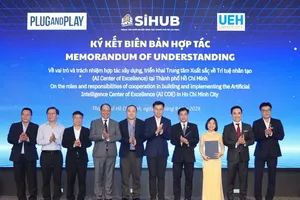
Digital transformation is another central pillar of the reform agenda. Ho Chi Minh City has developed a digital education ecosystem that includes electronic academic records, student competency profiles, learning management systems and an integrated education database. Smart school models have also been introduced across a growing number of institutions, while the city is working to establish an AI Education Center to support AI-powered teaching, administration and personalized learning.
The combination of digital transformation, AI and innovative teaching methods is expected to move the city's education system closer to the Education 4.0 model, which places learners at the center and promotes flexible, lifelong learning.
Education reforms span all levels of schooling. Primary schools are expanding initiatives such as Happy Schools, Digital Schools and social-emotional learning. At the lower secondary level, students are introduced to STEM education, robotics, AI and project-based learning to build digital citizenship. Many upper secondary schools are offering international curricula while promoting personalized learning, entrepreneurship and innovation.
Universities and colleges are being encouraged to become centers of research, innovation and high-quality talent development, supporting the city's ambition to become a "Learning City" and a knowledge-based economy.
Tran Anh Tuan, Vice Chairman of the Ho Chi Minh City Vocational Education Association, said AI will significantly reshape the workforce. He stressed that students need to develop vocational skills, digital competencies, foreign-language proficiency and adaptability to meet evolving labor market demands. Mastering emerging technologies, he added, will improve both productivity and competitiveness.
Pham Thai Son, Director of the Admissions and Communications Center at Ho Chi Minh City University of Industry and Trade (HUIT), said Vietnam continues to face a significant shortage of highly skilled technology professionals, particularly in information technology. Although enrollment in IT-related programs has risen, many graduates still lack the skills required by employers.
He noted that university curricula in many institutions have struggled to keep pace with technological advances, highlighting the need to improve training quality and better align academic programs with the evolving demands of the digital economy.