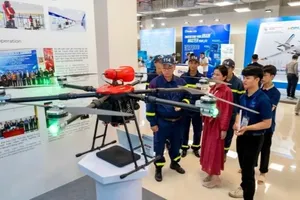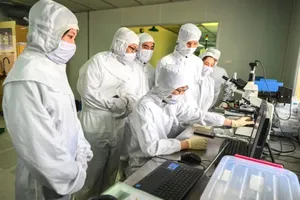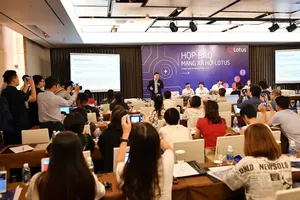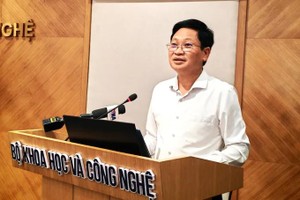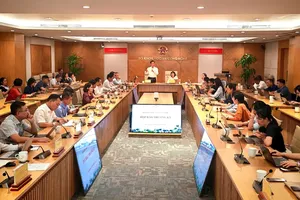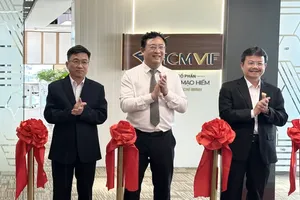
On the morning of June 26, in Hanoi, the Ministry of Science and Technology officially inaugurated the Vietnam National Multi-Project Wafer Coordination Center (VNMPW/CC), supporting pilot production of semiconductor chips.
Delivering his speech at the event, Minister of Science and Technology Vu Hai Quan emphasized that the establishment of the center demonstrates the Government’s strong commitment to implementing key Party resolutions and national strategies, while enhancing technological autonomy and positioning Vietnam as an important link in the global semiconductor supply chain.
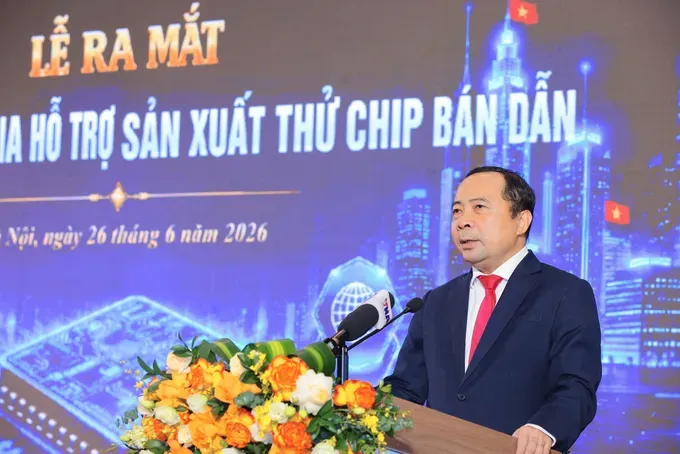
The initiative aligns with Vietnam’s semiconductor industry development strategy toward 2030, with a vision to 2050, and marks one of the few national-level facilities in Southeast Asia capable of supporting pilot chip production.
It is also Vietnam’s first national center dedicated to semiconductor prototype manufacturing, connecting domestic chip design research with the global production ecosystem.
According to Mr. Nguyen Khac Lich, Director of the Authority of IT and Digital Industry under the Ministry of Science and Technology, Vietnam’s semiconductor industry has recorded significant growth. In 2025, the sector’s revenue is expected to exceed US$21 billion, attracting over US$14 billion in foreign direct investment across more than 240 projects.
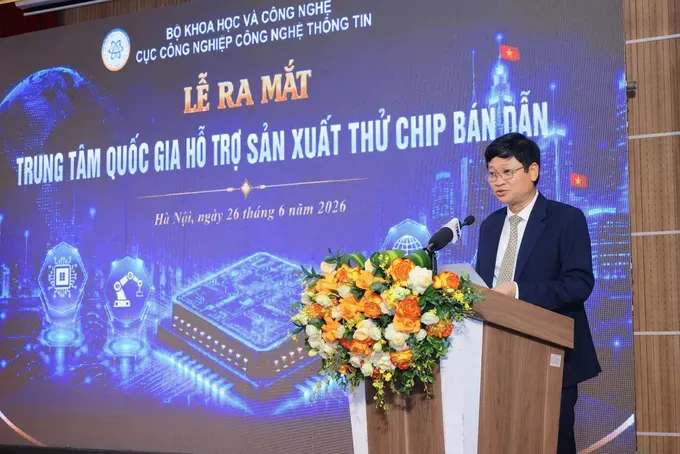
He noted that the new center will serve as a critical link in the national semiconductor ecosystem, helping transform ideas into real products that can be tested, refined and gradually commercialized.
The center will be developed in three phases. From 2026 to 2027, the State will fully cover pilot production costs to encourage universities, research institutes, businesses, and design teams to participate in chip R&D and testing.
From 2028 to 2030, partial subsidies will continue while shared infrastructure is completed to improve design quality and commercialization capacity. From 2030 onward, the center aims to master advanced technologies, expand international cooperation, and become a reputable semiconductor pilot production hub in Southeast Asia.
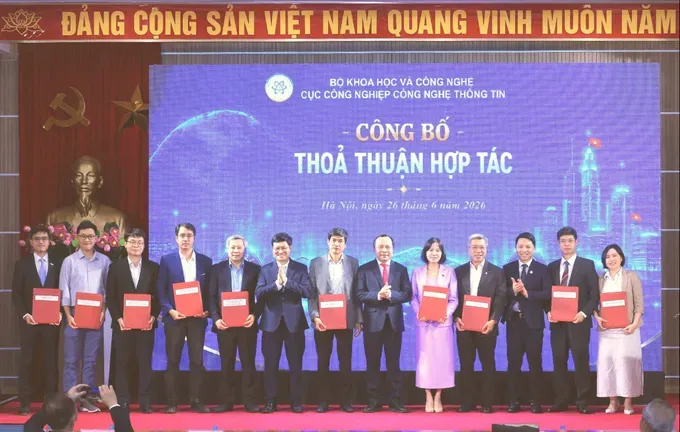
On this occasion, the center also signed memorandums of understanding with 19 domestic and international partners and announced the establishment of a 21-member expert advisory group comprising representatives from global tech corporations, universities and research institutes.