Ho Chi Minh City's investment in science, technology, innovation, and digital transformation has risen sharply, increasing from VND5.373 trillion (US$204 million) in 2025 to VND12.705 trillion (US$483 million) in 2026, an increase of more than 2.3 times. This expanded investment provides a critical financial foundation for the city to develop digital infrastructure, strategic technologies, innovation, and digital transformation.
According to a report by the Ho Chi Minh City Steering Committee for Science and Technology Development, Innovation, and Digital Transformation, the city has shifted from implementing standalone initiatives to adopting a comprehensive approach that positions science and technology, innovation, and digital transformation as key drivers of development.
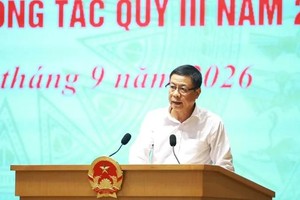
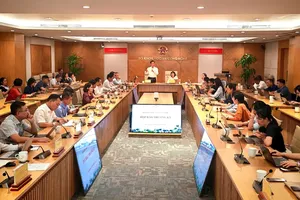
The statment was released at the nationwide conference held in Hanoi on July 1 by the Politburo to review the implementation over the past 18 months of Resolution No. 57-NQ/TW, which outlines breakthrough policies for the development of science and technology, innovation, and national digital transformation.
Ho Chi Minh City has developed a digital transformation plan for businesses, promoting the adoption of digital platforms in corporate governance, manufacturing, business operations, e-commerce, and digital services.
All 164 hospitals in Ho Chi Minh City have implemented electronic medical records, achieving 100 percent coverage. The city's digital transformation efforts have also delivered significant progress in the healthcare, education, and social welfare sectors.
Ho Chi Minh City has stepped up efforts to attract domestic and international resources, particularly for high-tech projects, data centers, semiconductor development, and research and development (R&D). In 2025, the city attracted US$8.5 billion in investment, with an estimated 40 percent directed toward high-tech industries and the digital economy. During the first six months of 2026, investment in high-tech and digital economy projects exceeded US$1.23 billion, accounting for approximately 32 percent of the city's total foreign direct investment (FDI).
The upgraded Technology Exchange Platform serves as a marketplace connecting technology supply with market demand while supporting the commercialization of research outcomes. To date, it has facilitated connections involving nearly 25,000 technologies and pieces of equipment and more than 1,100 experts, attracting over 191,000 visits. In the first six months of 2026 alone, Ho Chi Minh City recorded 30 technology transfer and equipment procurement contracts with a total value of VND26.7 billion.
The Ho Chi Minh City Venture Capital Fund has been established under a joint-stock company model with an initial charter capital of VND500 billion, with a long-term target of VND5 trillion. The fund is designed to catalyze private investment, support startups, and accelerate the commercialization of technological innovations.

In 2026, Ho Chi Minh City aims to disburse 100 percent of its public investment capital, with approximately VND12 trillion earmarked for innovation and digital transformation. The city will leverage public investment to catalyze private-sector investment, targeting total social investment equivalent to around 30 percent of GRDP.
Despite the notable achievements, several bottlenecks remain, including an incomplete institutional framework, uneven data quality, a shortage of highly skilled human resources, challenges in financing and public investment disbursement, and the lack of an effective mechanism for commercializing intellectual property.
Ho Chi Minh City has proposed that the central government expedite the deployment of the National Science, Technology, and Innovation Data Platform; issue guidance on the integration and utilization of data while addressing overlaps among existing databases; and promptly complete the Administrative Procedures Coordination System together with synchronized sector-specific systems nationwide.
The city also recommended that the central government accelerate the launch of a centralized national digital one-stop portal to provide a unified platform for handling administrative procedures while integrating artificial intelligence (AI) to better support citizens, businesses, and public officials.
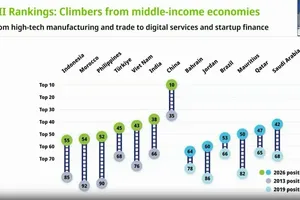
Ho Chi Minh City has achieved a number of notable milestones, including the development of a Science and Technology Urban Area Project in northern Ho Chi Minh City and the implementation of nine strategic technology groups encompassing 26 priority products. The city's startup ecosystem now ranks 98th globally, up 12 places from 2025, with an estimated value of US$7–7.5 billion.
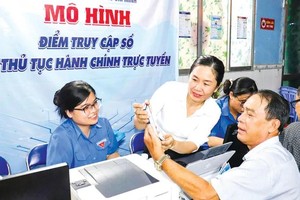
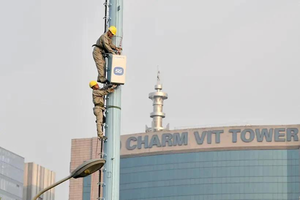
The city's digital transformation has also delivered tangible results. The average processing time for administrative procedures has been reduced by 39.18 percent, while 80.1 percent of administrative procedures are now fully available online. The on-time processing rate has reached 95.99 percent. Ho Chi Minh City has deployed 8,523 5G base stations, providing approximately 95 percent coverage, and has rolled out its digital government platform across 168 wards, communes, and special zones.
During the first six months of 2026, the city provided training to more than 10,400 public officials and civil servants. By mid-June, nearly 3,500 participants had completed the city's digital skills training program. Ho Chi Minh City currently has nearly 5,200 Community Digital Technology Teams with a combined membership of 29,000 and has organized online training programs for more than 6,170 delegates.
Ho Chi Minh City has organized 24 specialized training programs across its 168 wards, communes, and special zones, attracting more than 32,000 participants. The city has also assigned 408 personnel to support science and technology, innovation, and digital transformation initiatives at the grassroots level.
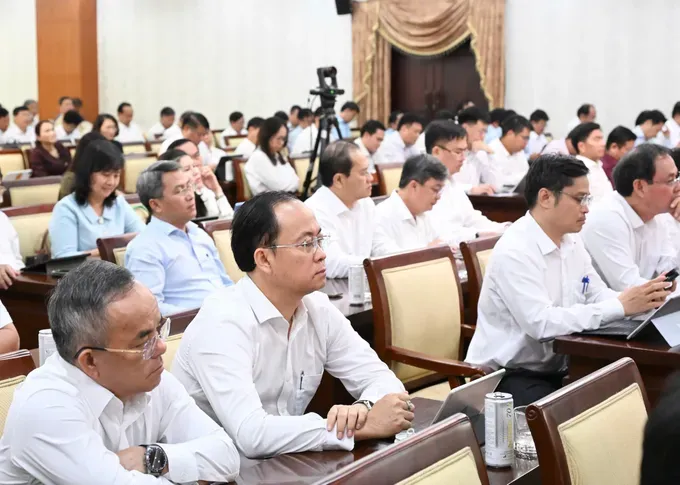
The Office of the Ho Chi Minh City Party Committee, in coordination with the Ho Chi Minh City Cadre Academy, has launched an advanced digital skills training program for 687 officials responsible for advising on digital transformation within Party agencies and the Vietnam Fatherland Front system. The program includes 409 officials from Party agencies and 278 officials from Fatherland Front organizations at various levels.