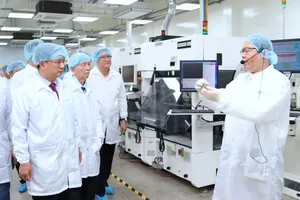
Da Nang City is stepping up efforts to become a semiconductor center in Central Vietnam, with government officials and industry experts identifying advanced chip packaging as a key opportunity for the country to deepen its engagement in the global semiconductor supply chain.
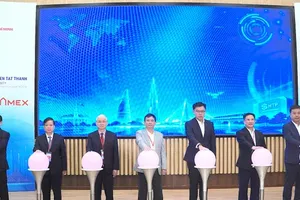
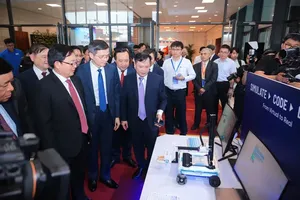
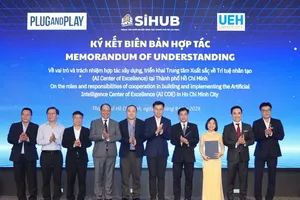
On July 10, as part of Da Nang Economic, Finance and Technology Week 2026, the Da Nang People's Committee hosted the "Da Nang Semiconductor and High Technology 2026" conference.
Ho Quang Buu, Vice Chairman of the Da Nang People's Committee, said the city considers science and technology, innovation, and digital transformation to be new drivers of economic growth, with the semiconductor and high-tech industries playing a strategic role. Da Nang City aims to attract investment, strengthen partnerships in workforce training, and gradually establish itself as the semiconductor integrated circuit center of the Central region.
Experts said the global semiconductor industry is entering a new growth cycle, driven by the rapid expansion of artificial intelligence, data centers, and the Internet of Things. In particular, advanced packaging technology is seen as a promising avenue for Vietnam to deepen its participation in the global semiconductor value chain.
According to Nguyen Thi Bich Yen, a member of the Institute of Electrical and Electronics Engineers (IEEE) in the United States and Chairwoman of the VSAP Lab, building advanced semiconductor fabrication plants requires investments of tens of billions of US dollars and lengthy implementation periods. By contrast, chip packaging and testing require significantly lower investment and allow products to reach the market more quickly. She said Vietnam should focus on developing a highly skilled workforce and gradually establish itself as a regional semiconductor packaging center.
Meanwhile, Babak Sabi, former Amazon vice president and former Intel senior vice president, said artificial intelligence is generating strong demand for high-performance chips, driving rapid growth in advanced packaging technology. He projected that the global semiconductor industry could be worth between US$1 trillion and US$2 trillion by the end of this decade. He added that Vietnam has significant advantages in its workforce and industrial base, positioning it well to capitalize on the next wave of semiconductor investment.