Taking off from promising land
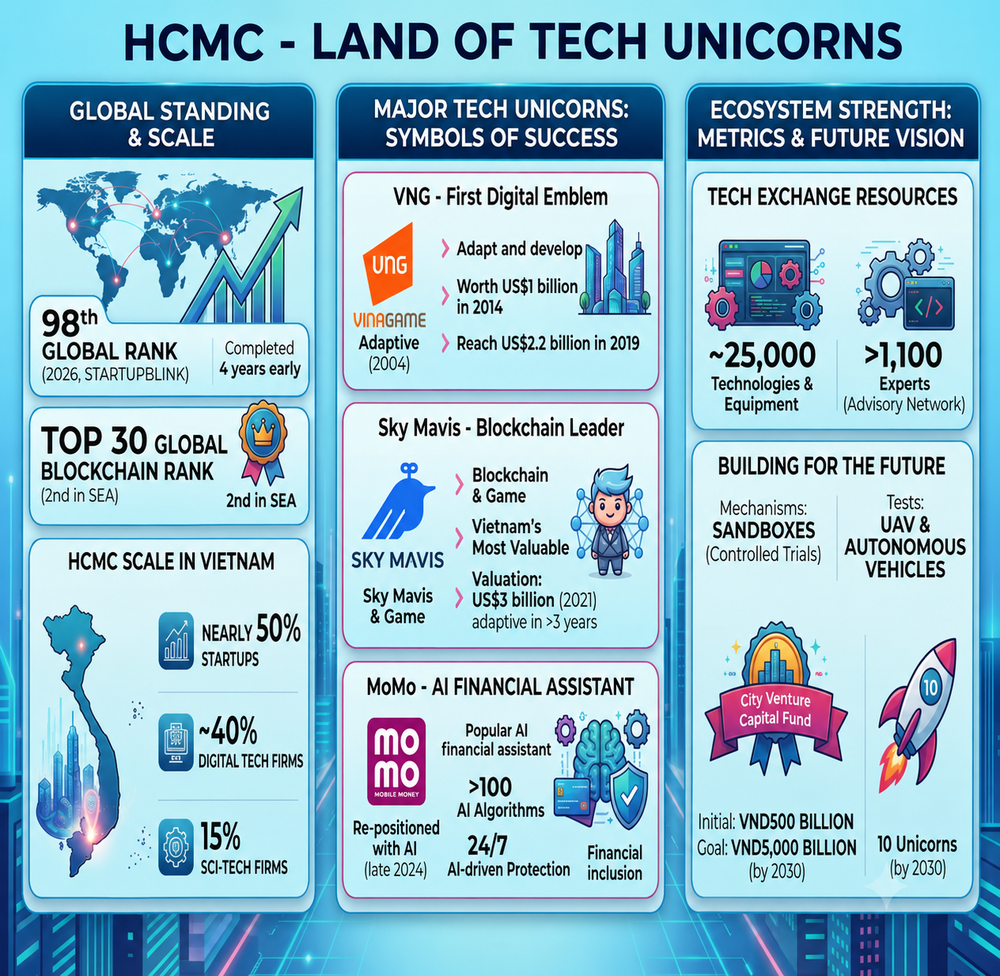
VNG Corporation is widely regarded as a symbol of technological adaptation and taking flight since 2004 under its initial name, Vinagame. This is Vietnam’s very first “tech unicorn,” valued at over US$1 billion. For founder Le Hong Minh, choosing HCMC to begin his startup was an absolute no-brainer due to the region’s inherently dynamic characteristics.
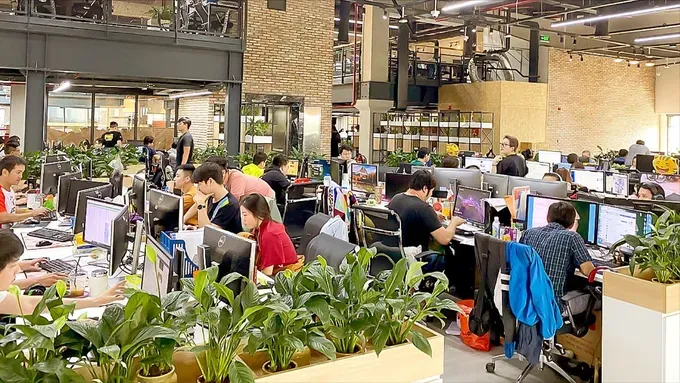
The World Startup Report officially valued VNG at $1 billion in 2014, and that figure skyrocketed to $2.2 billion by 2019. Today, the contemporary influence of the VNG Campus doesn’t stop at simply being a corporate headquarters; rather, it’s highly anticipated to fundamentally alter the Tan Thuan Export Processing Zone in HCMC, systematically transforming it into a high-value technology hub.
If VNG vividly represents the traditional gaming generation, Sky Mavis stands as a resounding testament to the sheer power of Blockchain. After just three years, Sky Mavis remarkably hit a $3 billion valuation in 2021, effectively becoming Vietnam’s most highly valued unicorn. Ultimately, they turned Blockchain into an integral part of everyday life.
Similarly, there’s the meteoric rise of MoMo. Originating as a simple e-wallet, MoMo executed a quantum leap to become a tech unicorn by aggressively democratizing financial services. In late 2024, they announced a brand repositioning as an AI financial assistant. By integrating over 100 algorithms, MoMo acts as a sleepless bodyguard, proactively helping millions of Vietnamese casually access credit without breaking a sweat.
Increasingly robust ecosystem
The emergence of these unicorns isn’t a mere coincidence; it’s the direct culmination of a persistently nurtured innovative ecosystem. HCMC currently boasts the most massive startup ecosystem nationwide, accounting for nearly 50 percent of all startups across Vietnam.
The city’s global ecosystem standing marked a historical milestone in 2026, ranking 98th on the StartupBlink index and crushing its top-100 target four years earlier. Particularly in Blockchain, the city proudly sits in the global top 30. This profound magnetism inherently stems from abundant resources, paired with a deep networking web, concentrating roughly 40 percent of digital technology enterprises, 15 percent of sci-tech businesses, and a series of startup support organizations.
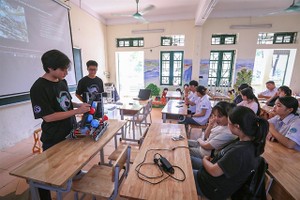
To pave a smooth pathway for startups to cross the ocean, HCMC proactively fostered robust connections with tech giants like NVIDIA and Qualcomm, alongside global strategic partners. It doesn’t stop there; the city selected over 600 innovative projects and trained upward of 3,000 students, forging an abundant digital workforce prepared for intellectual races.
Concurrently, the expansive technology market operates under a highly logical mechanism. According to the HCMC Department of Science and Technology, the tech trading floor interconnects nearly 25,000 specific technologies alongside over 1,100 experts. Within the first six months of 2026, the floor officially recorded 30 transfer contracts boasting a total value of VND26.7 billion ($1 million). This vividly proves that injecting technology directly into production yields highly tangible, real-world value.
Forging ahead with controlled sandbox mechanisms
Harboring high expectations for the birth of vastly more tech unicorns by 2030, HCMC is rolling out unprecedented pilot mechanisms. This intrinsically involves forming controlled testing sandboxes flawlessly aligned with cutting-edge future technologies to boost innovation.
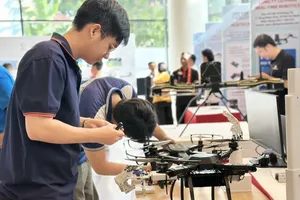
A quintessential example recently emerging is the robust lineup of unmanned aerial vehicle (UAV) products pioneered by Real-Time Robotics Vietnam. Nearly 100 percent of the company’s sophisticated products have been exported to US and European markets.
For founder and CEO Luong Viet Quoc of Real-Time Robotics Vietnam, the vision is crystal clear. Throughout grueling working sessions, he didn’t hide his profound ambition to determinedly secure a valuation exceeding $1 billion well before 2029. Consequently, the company has been heavily prioritized for robust support by HCMC leaders to smoothly materialize the expectation of adding another unicorn to the city’s roster.
The metropolis has also trailblazed the path by officially permitting rigorous testing of novel technologies directly within Saigon Hi-Tech Park. Launching the Can Gio – Vung Tau UAV delivery route or deploying them to monitor protection forests has unlocked a brand-new trajectory for modernized logistics. These managerial experiences will finally serve as a crucial preparatory step before deploying such technologies on a widespread scale.
To ensure startups grow formidably, HCMC established a municipal venture capital fund boasting an initial charter capital of VND500 billion ($20 million). They fiercely strive to hit the VND5,000 billion ($200 million) mark by 2030. Alongside this, sweeping schemes to construct international-standard Centers of Excellence are being accelerated to attract experts and master strategic technologies like hyperscale artificial intelligence.
The city doesn’t merely possess sprawling infrastructure. What’s much more important is a fresh governance mindset centered around constructive innovation through controlled sandboxes.

For Vice Chairman Nguyen Manh Cuong of the HCMC People’s Committee, the roadmap is clear. “HCMC explicitly identified the crucial task of propagating technology models to other localities,” he noted.
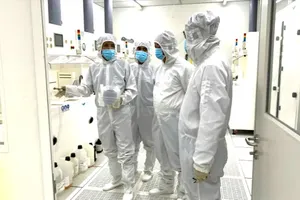
Armed with a sandbox mechanism, the city is actively drafting testing regulations for novel technologies like UAVs. Furthermore, they’re aggressively expanding Saigon Hi-Tech Park and kicking off a microchip laboratory at Vietnam National University-HCMC. In the end, they’re comprehensively deploying hyperscale AI data centers and organically forging an interlinked regional sandbox network.
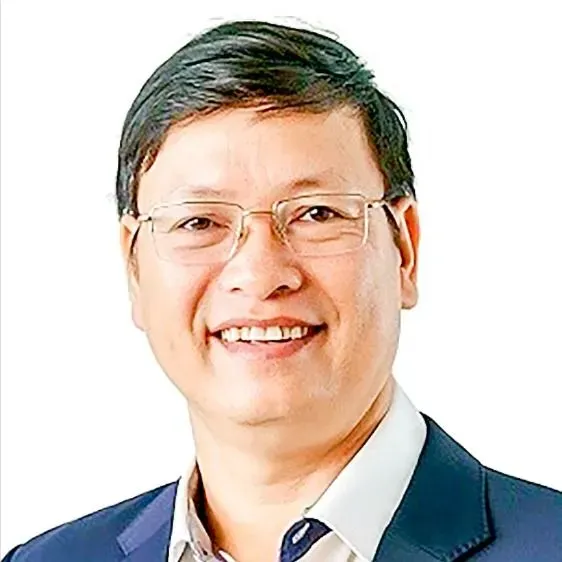
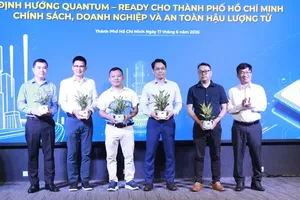
Meanwhile, Dr Tran Quy from the Vietnam Digital Economy Development Institute offered an optimistic perspective. He explained that having the digital economy account for 30 percent of the GRDP by 2030 is entirely feasible since HCMC has established a robust growth pillar. Ultimately, it doesn’t just construct an ecosystem; it cultivates a profoundly nurturing environment for globally capable startups.