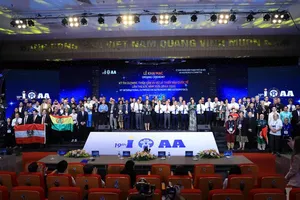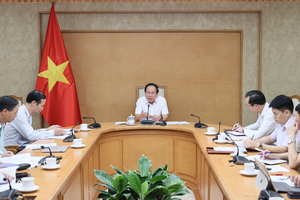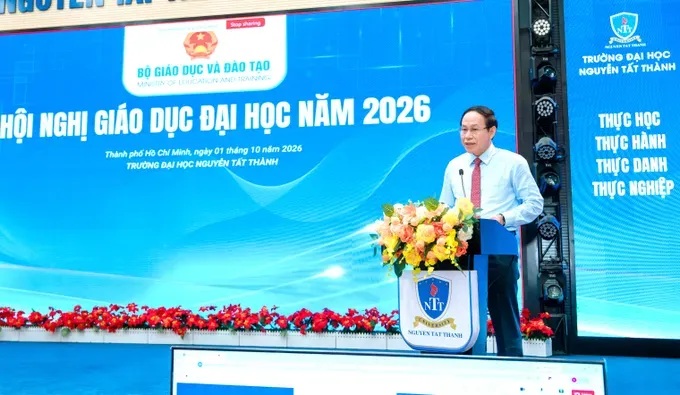
Held in a hybrid format combining in-person and nationwide online participation, the event drew representatives from hundreds of higher education institutions across the country. Deputy Prime Minister Le Tien Chau attended and delivered the concluding address.
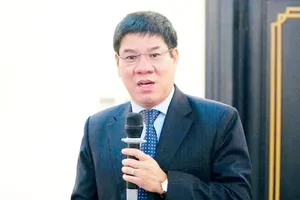
Minister of Education and Training Hoang Minh Son chaired the conference, which was also attended by Do Ngoc Huynh, Vice Chairman of the Government Office; Nguyen Manh Cuong, Vice Chairman of the Ho Chi Minh City People's Committee; alongside representatives from various ministries, agencies, and hundreds of university leaders.
Strong shifts in mindset, institutions, and policies
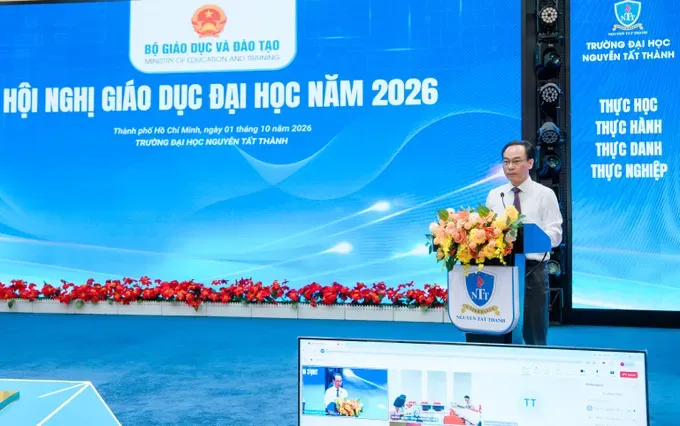
According to Minister of Education and Training Hoang Minh Son, the conference comes as the higher education system enters a new academic year, following a year of implementing two major Politburo resolutions: Resolution 71 on breakthroughs in education and training development, and Resolution 57 on breakthroughs in science and technology development, innovation, and national digital transformation. These serve as two key pillars for the development of higher education.
Reporting at the conference, the education chief stated that with special attention from Party and State leaders, the entire sector has achieved significant results over the past year, marked by strong shifts in mindset, institutional frameworks, and policies, alongside concrete outcomes. Notably, the legal framework governing higher education has undergone major reform and is virtually complete. For the first time, a dedicated decree on autonomy mechanisms for higher education has been issued. Numerous new policies—ranging from commissioned training programs and target output standards to faculty and student support—have also been rolled out.
The national higher education development strategy, along with the adjusted network planning for public higher education and vocational training institutions, has been formally issued. Furthermore, a series of programs and projects aimed at developing key higher education institutions, regional training centers, and human resources in critical fields have received official approval.
Higher education institutions have consolidated their leadership structures, reviewed and refined their development strategies and governance models, strengthened faculty capacity, upgraded facilities, and intensified research and innovation activities. Most universities have now completed their 2026 admissions process and officially launched the new academic year.
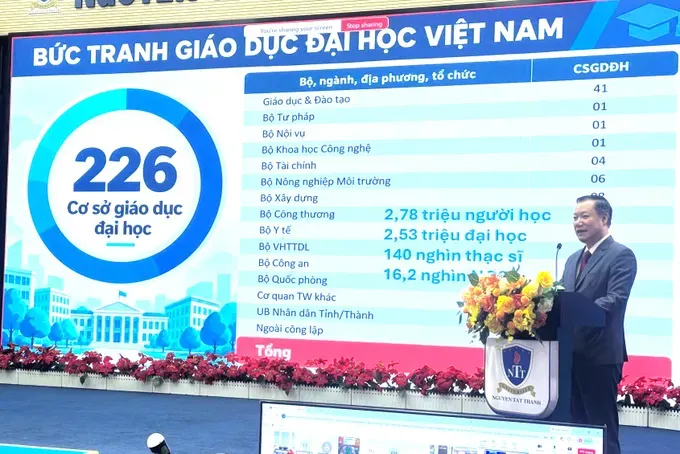
Minister Hoang Minh Son urged higher education institutions to address two major issues—not only during the conference, but also throughout the coming academic year. First, regarding the higher education strategy for the upcoming period, institutions must clarify what needs to change to adapt to the new era—particularly in light of advancements in artificial intelligence—and to align with the country's evolving development demands.
Second, each institution and the system as a whole must define actionable steps to deliver tangible value to students and society while contributing to national growth, alongside ensuring the most efficient use of resources from the State, businesses, and learners to generate that value.
Rather than focusing on where a university will rank on top lists, the Minister suggested seeking answers to different questions: "What values are being created for learners, society, and the country? Why do students choose this university or this major? Why does the State invest in this institution or field? Why do businesses partner with this research group or university?"
Third, at the current pace, the target of 260 university students per 10,000 residents will be achieved by 2030. More importantly, however, the focus must shift to elevating training quality across the entire system to deliver real, substantive improvements.
Universities must undergo a strong quality transformation
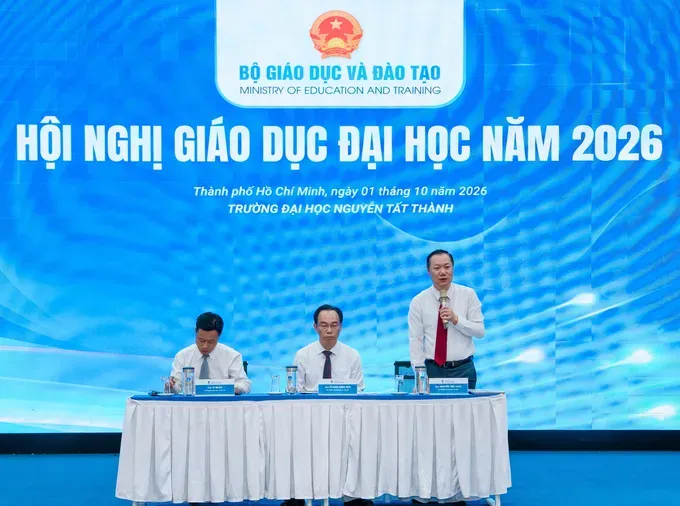
Speaking at the conference, Deputy Prime Minister Le Tien Chau commended the entire sector for its efforts over the past academic year. Highlighting key achievements, he noted that higher education institutions and governance mindsets have continued to innovate. Numerous new policies regarding autonomy, management, faculty, science and technology, innovation, data, and quality assurance have been institutionalized.
Furthermore, management approaches are progressively shifting from administrative control to governance based on standards, data, accountability, and output results. The scale and structure of training have also seen positive shifts, evidenced by continued growth in postgraduate education, increased focus on basic sciences, STEM, high-tech, and strategic technology fields, and the growing role of universities in science, technology, and innovation.
In 2025, higher education institutions contributed over 83 percent of the country's total international publications. Research, intellectual property, technology transfer, and corporate partnerships have all made progress. Quality assurance, digital transformation, and international integration continue to be promoted, gradually laying the groundwork for transition to data- and outcome-driven system governance.
However, the Deputy Prime Minister noted that while these achievements are commendable, a candid assessment reveals remaining bottlenecks that must be directly addressed with decisive solutions, particularly when measured against the upcoming requirements for high-quality workforce development, science, technology, and national competitiveness enhancement.
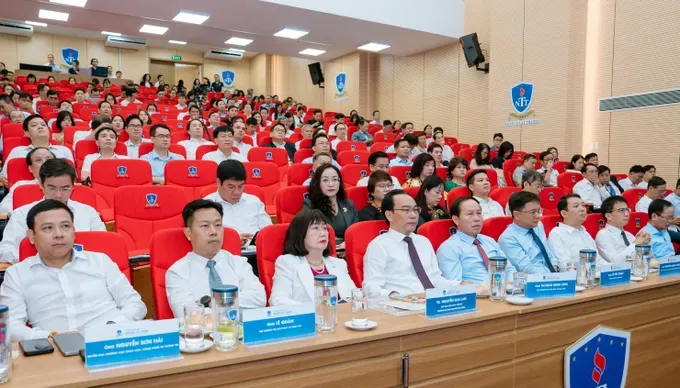
Deputy Prime Minister Le Tien Chau emphasized that the goal is not merely addressing immediate shortcomings but clearly defining the actual standing and capacity of Vietnamese higher education over the next 5, 10, or 20 years. He noted that many nations with much smaller populations than Vietnam have successfully built world-class universities. The issue is not just rankings but why Vietnam has yet to establish universities capable of world-leading training, research, talent attraction, and knowledge creation. This, he stressed, is a question that the Ministry of Education and Training and every higher education institution must seriously ponder and answer through tangible results.
The Deputy Prime Minister directed the sector to shift decisively from policy formulation to concrete, practical implementation to achieve the targets set out in Resolution 71 and the Higher Education Development Strategy. He called for reorganizing the university network based on quality, institutional mission, regional development needs, and resource efficiency, while emphasizing that quality must serve as an overriding priority under outcome-based governance. Furthermore, he stressed that higher education must take proactive, forward-looking measures to prepare high-quality human resources, elite personnel, and top talents for the future. Universities must be transformed into genuine hubs for scientific research, innovation, and technological development, alongside driving breakthroughs in data-driven governance, digital transformation, and proactive adaptation to artificial intelligence.
"The Government will continue to shape the institutional framework, remove bottlenecks, expand institutional autonomy, and concentrate resources on priority tasks and institutions with breakthrough potential. As for higher education institutions, I urge you to proactively innovate from within, clearly define your core mission, capitalize on your strengths, make effective use of autonomy, and take full, ultimate responsibility for output quality and operational efficiency—rather than chasing scale, formality, or short-term accolades. The goal is not merely to train students to meet current market demands but to prepare a future-ready workforce and generate new knowledge, technology, and value for the nation," Deputy Prime Minister Le Tien Chau underscored.