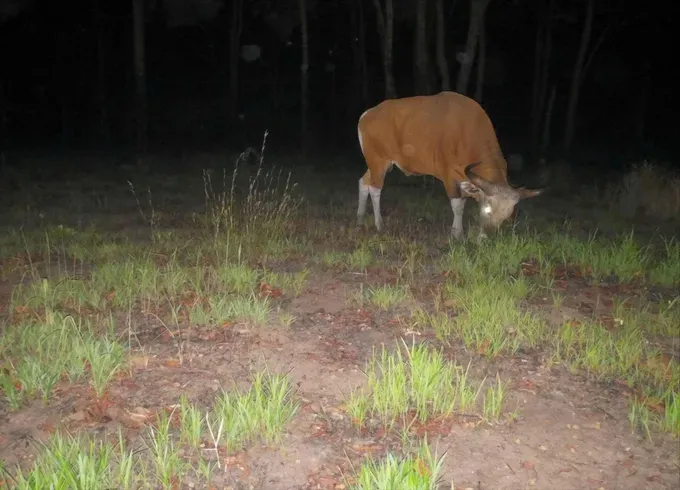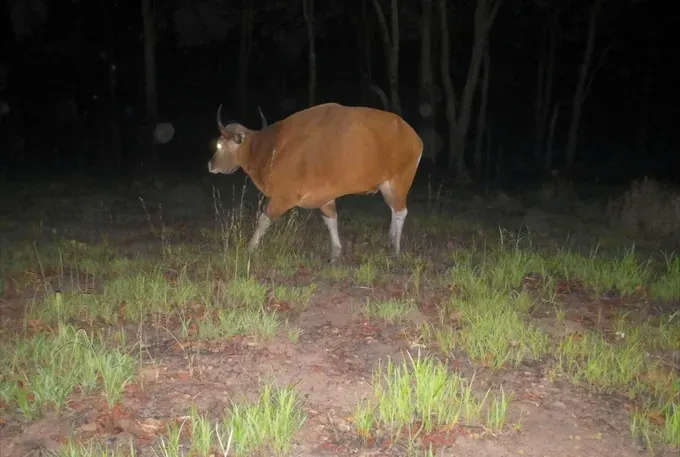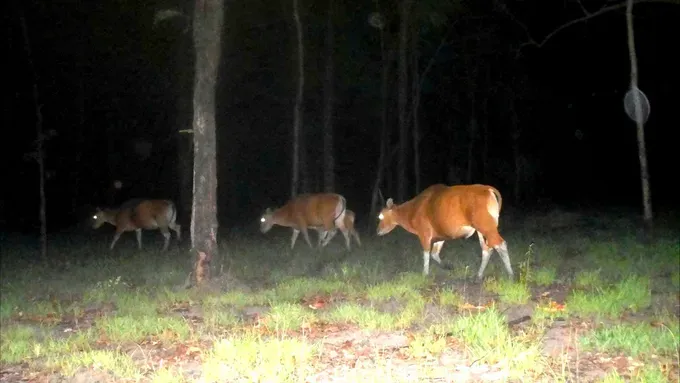
Accordingly, the herd was detected in April 2026 within the forest area managed by Yok Don National Park. This species is classified under Group IB—Vietnam's highest level of protection for endangered, rare, and precious wildlife—and listed as Endangered (EN) on the IUCN Red List.
Initial images captured by camera traps show approximately four individuals. However, based on traces found at the site, the actual number of animals is believed to be higher.
Following the discovery of the wild cattle herd, rangers at Yok Don National Park have stepped up patrols and tightened monitoring measures in areas where the animals are known to roam. Functional forces are also conducting inspections and removing traps set by residents to hunt wild animals.
Covering an area of approximately 115,000 hectares, Yok Don National Park is home to rich biodiversity. The park provides habitat for many large mammals, including elephants, wild cattle, gaurs, and deer—all of which are rare wildlife species requiring strict management and protection.
Wild cattle typically inhabit low mountainous areas and open forests. Classified under Group IB — the highest protection category for forest wildlife in Vietnam — the species is considered extremely rare and valuable. All acts of hunting, slaughtering, captive breeding, transportation, and trading of the species are strictly prohibited.