Behind the headline figure lies a surge in imports of production materials, growing high-tech investment and a gradual transition toward industries with higher value-added output.
Electronics and technology products gain prominence
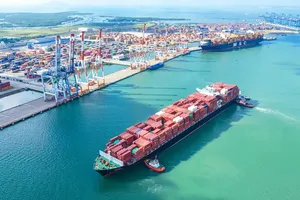
According to the Ministry of Industry and Trade, Vietnam’s merchandise exports reached US$215.66 billion in the first five months of 2026, up 19.5 percent from a year earlier. Twenty-six product categories generated more than US$1 billion in export revenue, including seven that exceeded US$10 billion.
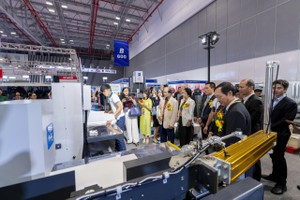
High-tech products continued to be the main drivers of export growth. Exports of computers, electronic products and components totaled more than US$56 billion, up over 46 percent year-on-year. Mobile phones and components generated nearly US$29 billion, while machinery, equipment and spare parts contributed approximately US$28 billion. Together, these three categories accounted for more than half of Vietnam’s total export value during the period.
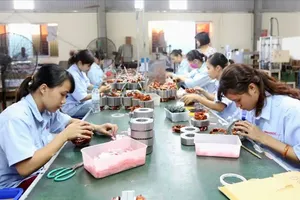
Compared with three to five years ago, Vietnam’s export structure has changed significantly. While textiles, footwear, wood products and agricultural goods once served as the primary growth engines, electronics, technology equipment and machinery are now taking on a larger share.
Vietnam’s exports are not only growing in volume but are also gradually shifting toward industries with higher added value, said Director General of the Trade Promotion Agency under the Ministry of Industry and Trade Vu Ba Phu.
A new growth driver is also emerging through cross-border e-commerce. According to Senior Customer Account Manager, Amazon Global Selling Vietnam Huyen Vu, the number of Vietnamese products sold through Amazon increased by 35 percent, while the number of Vietnamese businesses generating annual sales of at least US$1 million rose by 65 percent.
The figures highlight how Vietnamese businesses are increasingly using digital channels to expand their global presence and build direct relationships with customers around the world.

According to Nguyen Yen Ngoc, Head of the Foreign Trade Remedies Investigation Division at the Trade Remedies Authority of Vietnam (TRAV) under the Ministry of Industry and Trade, Vietnamese products are currently involved in 321 trade-remedy investigations worldwide. However, nearly half of these cases have been resolved through the termination of investigations, helping many industries maintain competitiveness in key export markets.
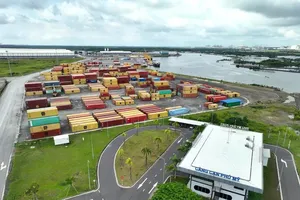
In the past, industrial parks relied primarily on cheap labor and ample land to attract investors. Today, however, data infrastructure, technological capacity and innovation ecosystems are increasingly determining investment decisions, said Nguyen Ky Phung, Head of the Saigon Hi-Tech Park Management Board.
High-tech investment strengthens momentum
Although Vietnam recorded a trade deficit of approximately US$13.8 billion, the Ministry of Industry and Trade noted that 94.1 percent of imports consisted of production inputs, including machinery, equipment, components and raw materials. This indicates that most imported capital goods are being used to expand manufacturing capacity and upgrade technology, laying the groundwork for future export growth.
According to Chairwoman of the Ho Chi Minh City Food and Foodstuff Association (FFA) Ly Kim Chi, exporters are facing increasingly demanding standards in areas such as ESG, food safety, sustainability and traceability. Meeting these expectations requires companies to adopt new technologies, modernize operations and continuously improve product quality.
This transformation is being reinforced by rising inflows of high-tech foreign direct investment. In recent years, FDI has increasingly targeted sectors such as electronics, semiconductors, artificial intelligence, data centers and research and development.
Vietnam has attracted 241 semiconductor-related FDI projects with total registered capital exceeding US$14.2 billion. The country now hosts an ecosystem of more than 50 chip design companies and approximately 7,000 semiconductor engineers, providing a foundation for the development of a domestic high-tech industry.
According to Mr. Nguyen Ky Phung, Ho Chi Minh City granted investment certificates to four high-tech projects worth more than US$1.23 billion in total at the end of April.
If industrial parks once competed primarily on low labor costs and land availability, data infrastructure, technological capabilities and innovation ecosystems are now becoming the key factors in attracting investment, he said.
Vietnam’s export growth drivers are shifting from cost advantages to technological capabilities and innovation, enabling the country to move further up the global value chain and generate greater value-added output.