Prime Minister Pham Minh Chinh has urged authorities to rein in commercial housing prices, particularly for apartments, stressing that prices should better reflect household income levels, prevailing economic conditions, and market fundamentals.
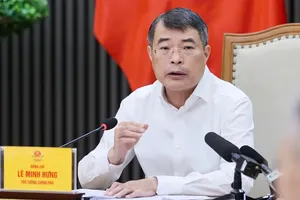
Addressing the fifth meeting of the Central Steering Committee on Housing Policy and Real Estate Market virtually connected to all 34 cities and provinces on January 13, PM Pham Minh Chinh praised ministries, agencies, and local authorities for drastically following resolutions, conclusions, and directions from the Party Central Committee, its Politburo and Secretariat, National Assembly, and Government. Efforts to expand housing supply and manage the real estate market have been pursued with strong determination, clear priorities, and focus on key tasks.
He requested completing the legal framework and removing regulatory and planning bottlenecks, unlocking land reserves, cutting administrative procedures, and establishing housing funds and real estate transaction centers.
Reaffirming that “all housing policies must be people-centered, with citizens as the core focus and primary beneficiaries, leaving no one behind,” the PM stressed that housing is a basic human need and a pillar of social welfare policy. It also serves as a key factor for socio-political stability and the country’s sustainable development. He underscored the imperative to ensure safe, stable housing, especially for vulnerable groups.
He called for a fundamental shift in mindset, from top-down administrative control to genuine service orientation, with public satisfaction serving as the ultimate measure of success. Businesses, he said, play a crucial role in bringing these aspirations to life, while the State must act as a facilitator that sets direction, guides development, and ensures fairness.
Specific tasks were also assigned to ministries, the Vietnam Fatherland Front Central Committee, and localities.
Firms were asked to continue demonstrating a strong sense of responsibility by proactively and actively engaging in social housing and affordable rental housing projects, guided by the spirit of national solidarity and shared responsibility, with harmonized interests and shared risks. Such efforts, he said, would contribute to a healthier, more stable, and more sustainable real estate market.
Stressing that housing is a major social welfare issue and a fundamental right of citizens, he urged ministries, agencies, and local authorities to exercise the highest level of responsibility and act with maximum political resolve, commitment, empathy, and solidarity, ensuring every citizen gains access to appropriate housing, achieves stable living conditions, and contributes to national progress.
In 2025, authorities nationwide approved investment plans for 428 commercial housing projects, with total capital estimated at around VND3.8 quadrillion (US$146 billion). Construction permits were issued for 164 new projects, comprising roughly 53,000 apartments, houses, and land plots, while 208 projects were completed, delivering more than 49,000 units.
Apartment transaction prices rose by 20–30 percent compared with 2024. Villas and detached houses saw price rises of 10–20 percent, while land plot prices climbed 20–25 percent.
On a positive note, more than 103,000 social housing units were completed nationwide, exceeding the annual target by 3 percent, with 20 localities either meeting or surpassing their assigned quotas.