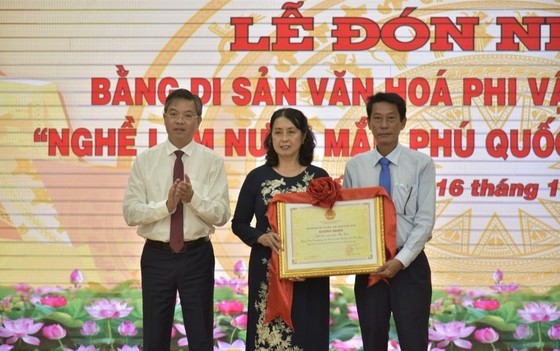
 Ms. Ho Kim Lien, Chairwoman of the Phu Quoc Fish Sauce Association, on behalf of 54 members, receives the certificate of national intangible cultural heritage. (Photo: SGGP)
The traditional fish sauce craft in Phu Quoc has been established and developed for more than 200 years.
Ha Tan Tai, the owner of the Dai Duc fish sauce factory in Duong Dong Ward in Phu Quoc City of Kien Giang Province, said that he was the sixth generation in a family that had been making fish sauce since the early 19th century. He still keeps many valuable artifacts, images, and documents about the long-standing fish sauce craftsmanship in Phu Quoc.
According to historical records (mostly written by the French or by the Vietnamese in French), the inhabitants of Phu Quoc Island have caught a lot of anchovies around the island since the early days. This type of fish is small but firm and has a sweet taste and a nice fragrance when being cooked with salt.
From the technique of making fish sauce of the inhabitants in the Mekong Delta, people in Phu Quoc Island mixed anchovies with salt and then incubated in terracotta jars and dried them in the open for about 12 months, then extracted fish sauce to use.
From making fish sauce for domestic use to selling throughout the provinces and cities across the country, everyone realizes that Phu Quoc fish sauce has a salty taste at first, then a mild sweetness later. The fish sauce with a special strong aroma and the puce color is a little bit thick instead of thin.
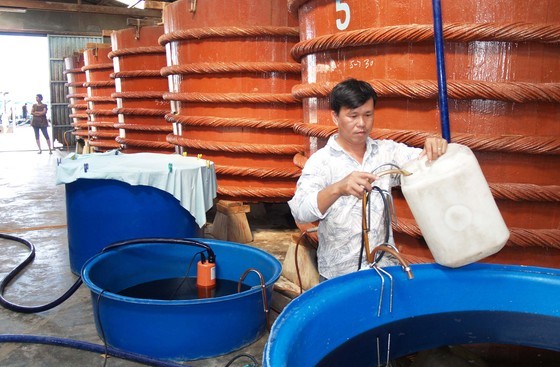 The fish sauce maker checks the nitrogen level before bottling it. (Photo: SGGP)
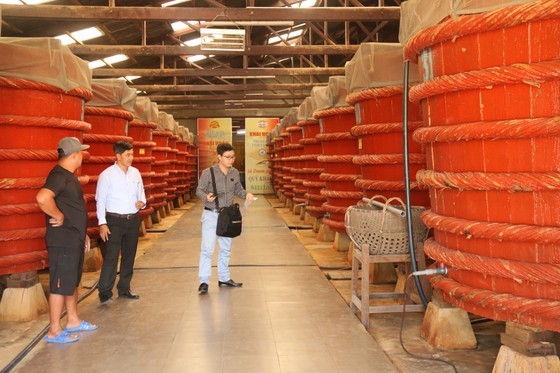 Tourists visit a fish sauce production facility in Phu Quoc. (Photo: SGGP)
Currently, Phu Quoc Fish Sauce Association has 54 members. Fish sauce production facilities are concentrated mainly in Duong Dong and An Thoi wards, with a total of 7,009 wooden barrels for fermenting fish. Each barrel can hold from 7-15 tons of fish. The average fish production is about 25,000-30,000 tons of anchovies, giving an annual output of 25-30 million liters of fish sauce with nitrogen level from 20 to 43, achieving a revenue of more than VND600 billion per year and creating jobs for tens of thousands of workers.